New Zealand's ruling centre-right National Party and the main opposition Labour party were nearly deadlocked in the popular vote following the initial count of the nationwide general election on Saturday. According to results from the Electoral Commission, both parties were polling just short of 30% of the popular vote with more than 95% of the ballots counted, separated by only a few thousand votes.
A projection from the Electoral Commission indicated that the current three-party ruling coalition led by National would have a majority of two seats. The election has been dominated by a struggling economy and voter disillusionment with the two largest contenders.
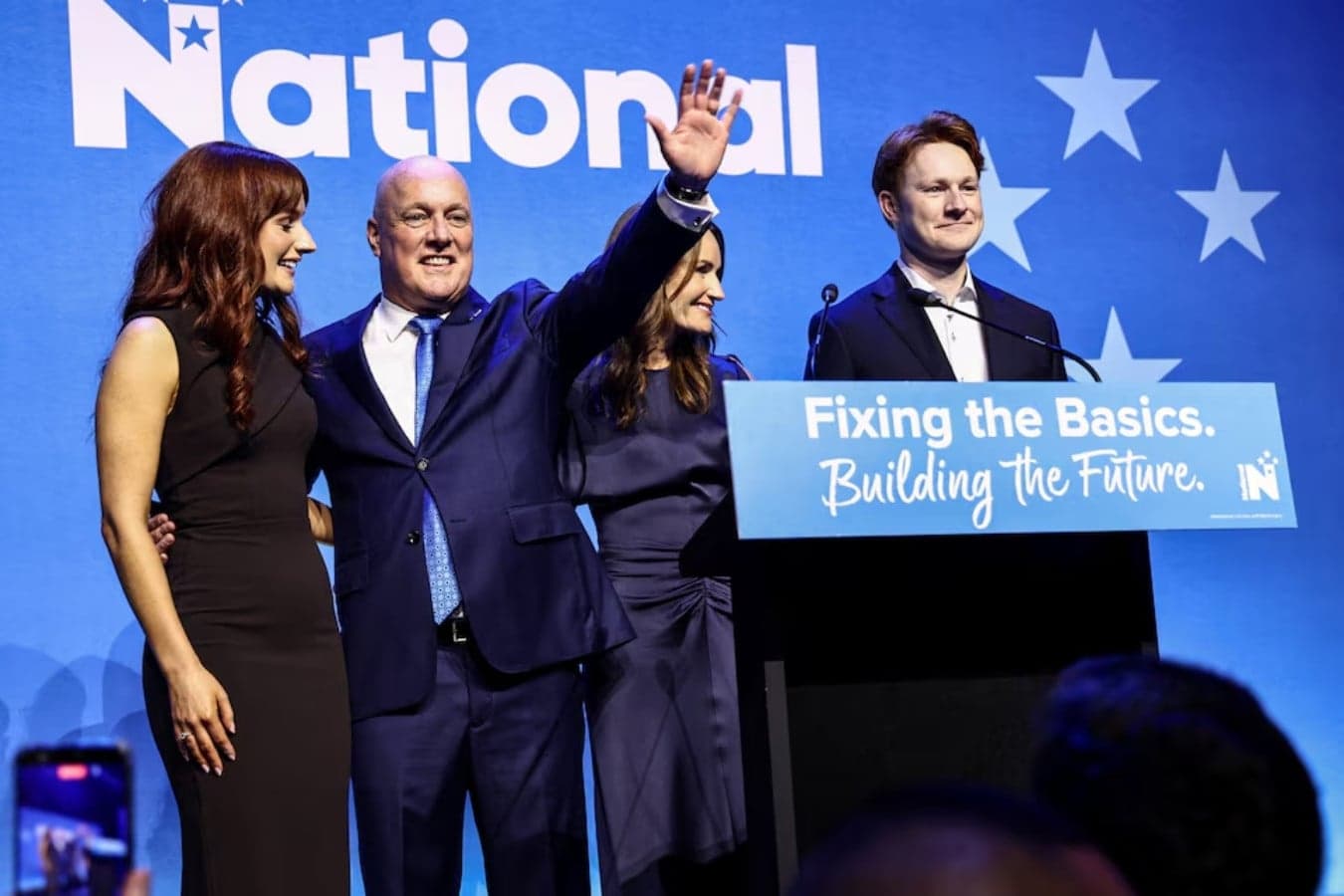
Prime Minister Christopher Luxon told supporters in Auckland that it was heartening to see National as the largest party in parliament based on the numbers so far, stating that they have a pathway to forming the next government, but he added, "But I have to tell you right now, it is too close to call."
Labour leader Chris Hipkins delivered a similar message in Upper Hutt, northeast of Wellington, telling supporters, "Tonight, New Zealand has spoken. It may take us a little bit longer to figure out exactly what it is that you've said."
According to votes so far, the National Party has won 32% of the seats and Labour has won 27%. Neither party currently holds a majority. Only Jacinda Ardern was able to guide the Labour Party to win a majority of seats in 2020, for the first time since 1993.
The final government could take weeks to determine as special votes, including those from overseas voters or people outside their electorate, will not be included until official results are released on November 27. These votes could be key in tight races between Labour and National candidates.
Because New Zealand uses a mixed-member proportional system introduced in 1996, where voters choose both a party and a local constituency candidate, coalitions are the norm. With 71 constituency seats and at least 49 party seats, a majority is required to form a government. The tightness of the race means one or more smaller parties will almost certainly participate in a governing coalition.