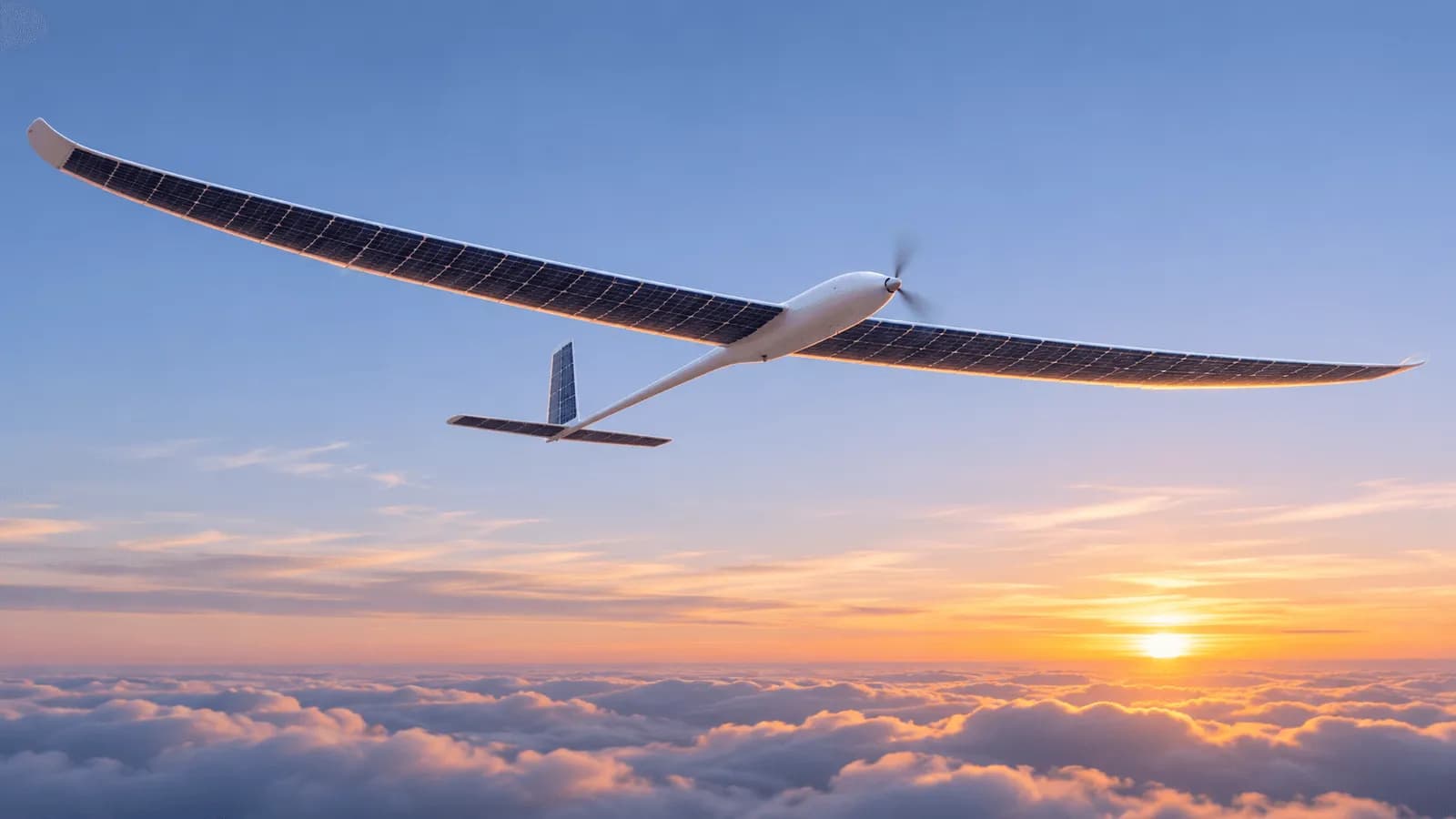
The 11th Academy of China Aerospace Science and Technology Corporation (CASC) completed the first flight of its small-to-medium solar-powered drone, named Qingqibing, on November 11 at an airport in northwest China. The name Qingqibing translates roughly as "Light Cavalry."
The aircraft is described as a commercial-grade electric drone that relies entirely on solar energy. This power is drawn from photovoltaic cells located across its wing surfaces during daylight hours. The drone measures 3.2 meters in length with an 8-meter wingspan. While the reports state the aircraft has a maximum designed endurance of 30 hours, the 11th Academy did not release the actual duration of the first flight or any specific flight-test results for endurance.
The drone features a modular payload design intended for quick installation of equipment for remote-sensing observation or communications relay. It is capable of being launched from a vehicle with about 20 minutes of ground preparation, allowing for deployment in areas without runways. According to reports, this capability makes the drone suitable for temporary monitoring and emergency communications where rapid response is necessary.
The organization characterizes the aircraft as China's first commercial-grade small-to-medium pure-solar drone. The 11th Academy, which also operates as the China Academy of Aerospace Aerodynamics, has a history of solar-powered flight. In 2017, the academy flew a much larger aircraft from its Rainbow, or Caihong, series, which People's Daily Overseas reported completed a near-space test at an altitude of about 20 kilometers.
Unlike the larger Rainbow series, the new Qingqibing drone is aimed at low-altitude, quick-deployment missions. Several specifications remain unpublished, including the cruise speed, service ceiling, payload weight, the number of units produced, and any delivery schedules for customers.