Chinese experts warn that allegations surrounding Nvidia CEO Jensen Huang could become a "balloon event" for US-China relations, potentially providing US hardliners with fresh ammunition to push for tougher curbs on AI chip exports to China.
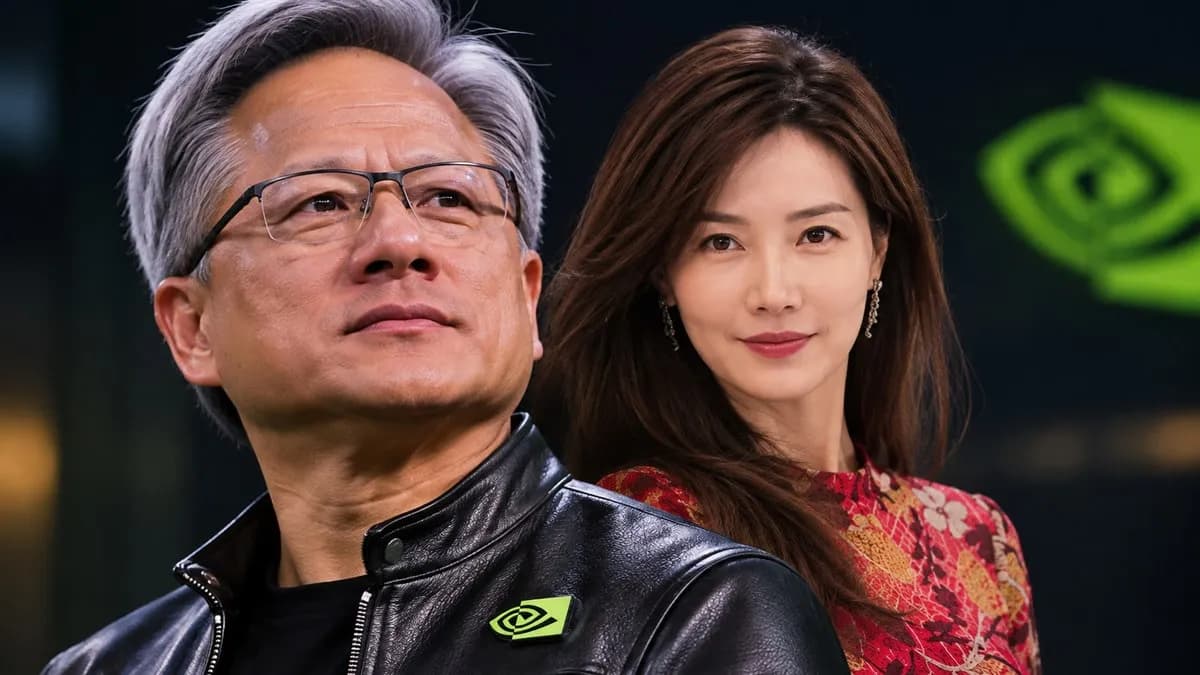
The controversy follows Huang's admission over the weekend of having an extramarital affair after the New York Times reported that a Chinese businesswoman with whom he had close ties might have been working for Beijing’s intelligence services. The report identified the woman as Alice Huang, or Huang Le, chief executive of a Singapore-based data centre company. Beijing has rejected the espionage claims as “groundless fabrication designed to smear China”.
Zhu Feng, dean of Nanjing University’s school of international studies, compared the potential fallout to the 2023 “spy balloon” incident. Zhu expects heightened AI decoupling and an “increased crackdown” on China’s hi-tech sectors, noting that the process of the investigation itself will bring on another anti-China wave. He stated that congressional hawks would seize the moment to demand wider export controls and harsher restrictions against Chinese AI platforms.
Other analysts offered varying degrees of certainty on the diplomatic impact. Xin Qiang, a professor and deputy director of the Centre for American Studies at Fudan University, said the controversy would still weigh on China-US ties regardless of whether formal charges are filed, though he suggested it might not derail relations entirely. Xin warned that the US would likely tighten oversight on less advanced processors, enforcing stricter end-user checks and tracking of chips routed through third countries. He also noted that cooperation on AI governance, mentioned during the Xi–Trump summit in September, would become more difficult.
Sun Chenghao, a fellow with Tsinghua University’s Centre for International Security and Strategy, argued the controversy is unlikely to trigger a diplomatic crisis comparable to the 2023 balloon incident because there is no public evidence establishing Chinese government involvement. However, Sun warned it could intensify scrutiny of semiconductor exports and disrupt trade talks. He noted that if restrictions are written into law, Donald Trump’s room to adjust chip licences in negotiations with China will narrow, primarily impacting industrial cooperation, cloud computing, and joint research.
The scandal broke just days before President Trump and Chinese leader Xi Jinping are expected to meet at the Asia-Pacific Economic Cooperation summit in Shenzhen next week. Huang was part of the US delegation during Trump’s May state visit to Beijing and sat alongside Xi at a White House state dinner four months later. On Monday, Trump defended Huang as “an honourable guy” who had done an “amazing job for our country”. Trump told reporters he asked Huang directly if he knew Alice Huang was a spy, to which Huang reportedly said, “I had no idea that she was a spy”. Trump said he is open to bringing Huang to the Shenzhen summit.
Three House Republican committee chairs have asked Huang to attend a closed-door joint briefing on November 18 regarding Nvidia’s “security protocols against foreign adversary espionage”, though it remains unclear whether he will appear.
Peking University professor Rao Yi suggested the uproar exposes double standards rooted in racial bias against ethnic Chinese in the United States. In a social media post on Tuesday, Rao questioned why Huang’s situation was elevated to a national security crisis while white tycoons like Rupert Murdoch did not face similar scrutiny over personal scandals involving Chinese nationals.
While other tech leaders like Bill Gates and Jeff Bezos have faced public scrutiny for extramarital affairs, those cases remained tabloid fodder. Gates acknowledged three affairs during a June House Oversight Committee hearing, and Bezos' relationship with Lauren Sanchez emerged during his 2019 divorce.