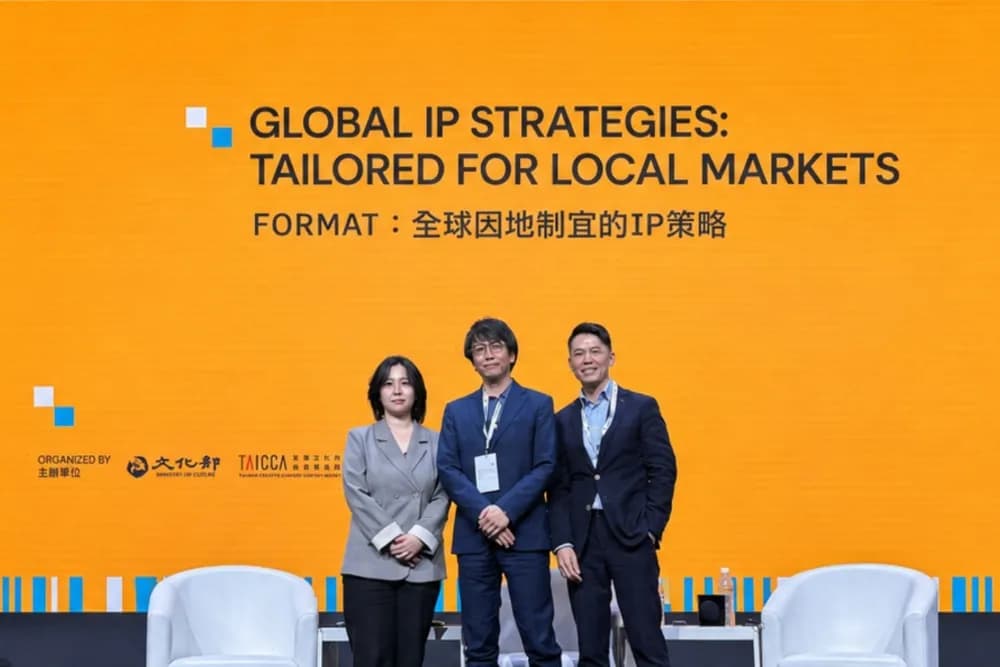
During the Taiwan Creative Content Fest (TCCF) in Taipei, executives from NBCUniversal and TBS Television explained the process of localizing international television formats. Linfield Ng, VP of format sales and production, Asia at NBCUniversal Formats, and Fukaya Shunsuke, head of new format sales, Europe at TBS Television, shared a stage with moderator Emily Chang to discuss how hits are adapted for different markets.
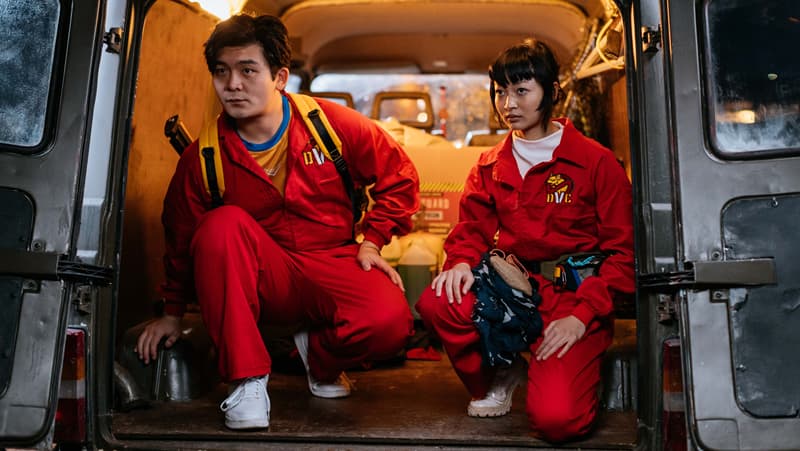
Ng explained that the Japanese version of "Suits" swapped the marijuana found in a briefcase during the pilot's job interview for money because drugs cannot be shown on Japanese television. He noted that while the content changed, the core "DNA" of the show remained the same. Ng also cited "SNL Korea" as an example of localization, where producers removed musical segments due to a glut of similar shows in Korea and softened politically pointed cold opens to suit local sensitivities.
For "Suits," Ng stated that every legal case is localized while keeping the central story of a man with no law degree intact. To manage these adaptations, NBCUniversal holds pre-production calls with local partners weeks or months in advance and sends a producer to the set during filming. Ng noted that Asian versions often include agreed-upon additions like celebrity panels and behind-the-scenes drama to ensure there are no surprises before a show airs.
Fukaya highlighted "Sasuke," known internationally as "Ninja Warrior," as a major success with versions in 25 countries. He attributed its success to a universal theme of humans versus giant obstacles. TBS maintains a brand guide for the show, defining it as an Olympics for unknown athletes, and uses this concept to measure local changes. Fukaya mentioned that when the U.S. and U.K. requested a head-to-head version, TBS created a derivative race format, providing more ways to sell the brand.
The executives noted that host-driven talk shows are difficult to license as formats because the banter between specific hosts cannot be reproduced. Fukaya discussed co-developing "Lovers or Liars?" with U.K. distributor All3Media International in 2024 and "Tono" in 2025. During "Lovers or Liars?", a conflict arose over ballroom dancing, which Fukaya felt was not part of Japanese culture. The teams settled on choreography with plenty of touching to achieve the creative intent of showing body contact.
Regarding distribution, Ng mentioned that NBCUniversal has sold more than 40 format brands across Asia. He noted that some formats do not cross over at all; for example, MBC’s "Dad! Where Are We Going?" could not work in Europe because celebrities there are often unwilling to put their children on TV for privacy reasons.
Ng also observed that while entertainment and game shows account for about 59% of formats that sell well globally, they only account for about 40% in Asia, and game shows do not work in Korea. He advised Asian creators to research their markets and ensure their shows can grab attention within the first one to two minutes.
Regarding intellectual property, Fukaya, who joined the advisory board of the Format Recognition and Protection Association (FRAPA) in 2026, stated that the group sets criteria for where a protected idea begins and ends. He noted that building an exact replica of "Ninja Warrior’s" Warped Wall would be a clear violation. Ng added that NBCUniversal would never partner with a company that copies, stating, "No one wants to buy a copy version."