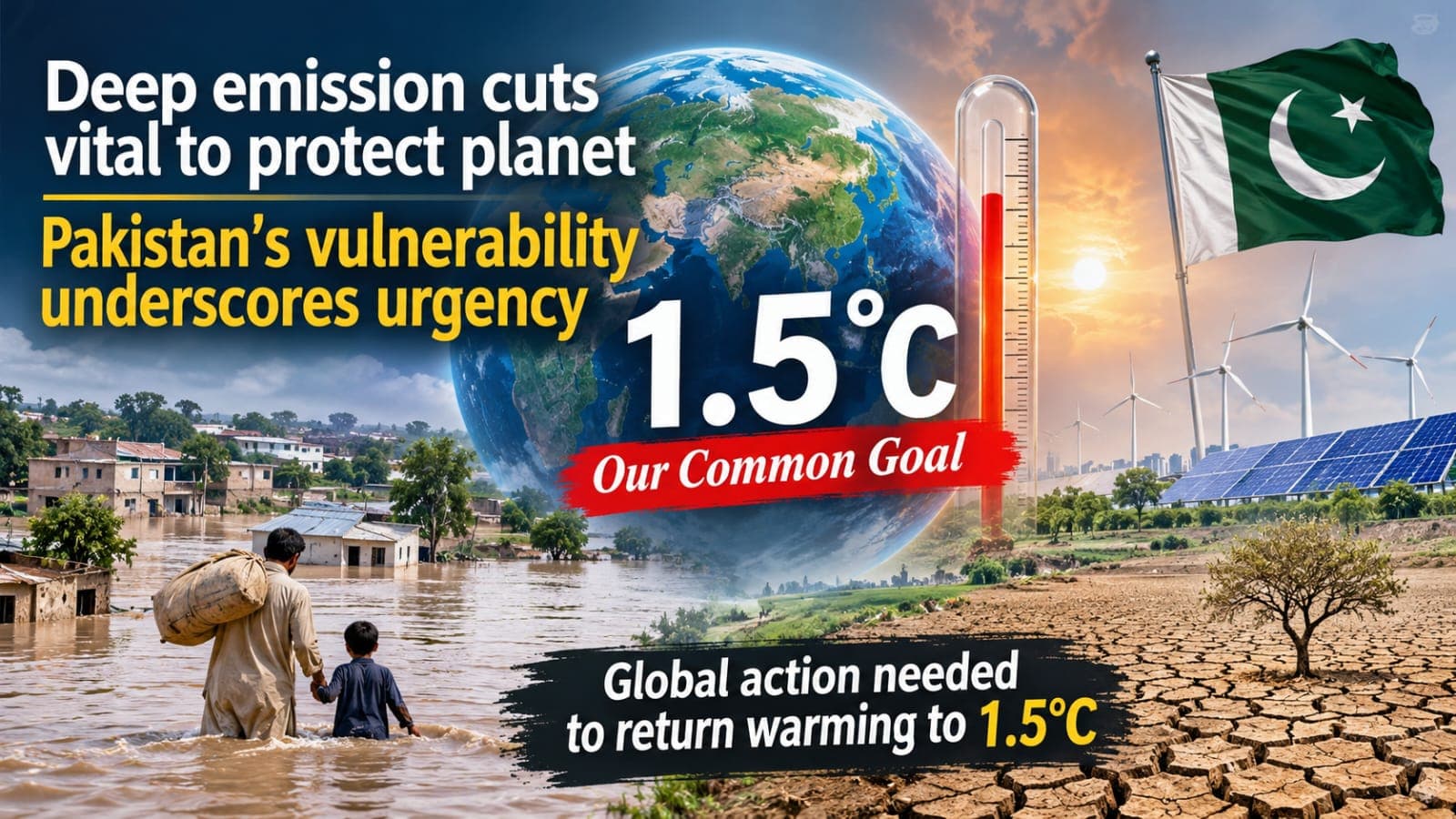
A political economist and visiting research fellow at Hebei University, China, argues that climate change represents a more severe challenge than artificial intelligence or pandemics because it threatens both human civilization and the planet itself. While AI challenges human intelligence and pandemics disrupt mobility and markets, climate change requires an urgent, unified response based on the principle of common but differentiated responsibility.
Under this principle, industrialized countries are expected to lead by reducing greenhouse gas emissions and providing financial resources to less developed nations. However, the author states that the 2009 agreement by developed countries to mobilize $100 billion annually remains a distant dream. The author claims developed countries have used various tactics to delay this mobilization.
The author alleges that developed countries deliberately fudged data regarding their commitments. According to an Oxfam report, developed countries announced they had mobilized $116 billion in climate finance in 2022, but data showed the actual amount was around $28-35 billion. Furthermore, the author notes that official development assistance (ODA) is expected to shrink by 9% in 2024 and 9-17% in 2025, according to the OECD, which is problematic as many countries account for parts of ODA as climate financing.
The author contends that developed countries, the private sector, and multilateral institutions have turned climate financing into an opportunity to extract benefits from the developing world. Data analysis showed that almost 65-70% of climate financing came through loans, and 40% of climate financing from multilateral development banks was in the form of loans. The author states these were not concessional but were market-rate or expensive loans. For instance, it was estimated that for every $5 loan, institutions were getting $7, as developing countries paid back $88 billion and received $65 billion in 2022.
The author highlights a disparity in funding, noting that Oxfam's 2025 report showed only $15-18 billion was allocated to adaptation, while the actual requirement was around $310-365 billion. The author describes the most shocking fact as rich countries and big corporations exploiting disasters in vulnerable countries for profit.
The author cites Pakistan as a recent example, stating the 2022 floods caused losses of roughly $30 billion. Despite major promises, Pakistan secured only a few million dollars, forcing the country to borrow more money, increase taxes, and face a worsening debt and poverty crisis. The author notes that the market value of disaster-related impacts is projected to reach $92 billion.
Regarding the Loss and Damage Fund, the author states that developed countries and financiers are hesitating to provide resources and are trying to turn it into an opportunity for extracting benefits. The author identifies three culprits for the UNFCCC's failure to reach consensus: states, the private sector, and the donor-think tank nexus.
The author describes the donor-think tank nexus as the most damaging actor. Donors, including developed countries and the private sector, use this nexus to divert attention from their responsibilities and shape global discourse to achieve objectives of delay or responsibility-shifting. The author also claims donors use the nexus to create direct influence on policymakers by having think tanks hire bureaucrats at lucrative consultancies.
To address this, the author proposes two actions. At the national level, countries should develop mechanisms to hold think tanks and donors accountable and require heads and employees to declare assets before joining think tanks every 10 years. At the UNFCCC level, the author proposes that the UNFCCC must ban donor-funded think tanks from attending COPs, allowing only self- or national government-funded think tanks to participate.