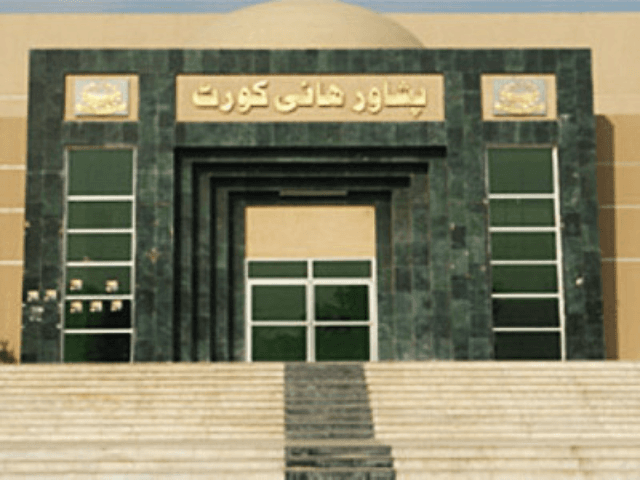
The Peshawar High Court (PHC) removed all writ petitions from its cause list on Saturday that challenged the imposition of emergency and governor’s rule in Khyber-Pakhtunkhwa (K-P). This action also included petitions regarding arrests made under the Maintenance of Public Order (3-MPO) ordinances.
The removal follows a decision by the Federal Constitutional Court (FCC) made a day earlier, which stripped the PHC of jurisdiction over K-P cases filed after October 12, including those related to the emergency and governor’s rule. Prior to that, on November 5, the FCC barred the PHC from hearing cases concerning arrests under the Maintenance of Public Order (MPO) Ordinance. These directions were issued after the PHC granted bail to 23 Pakistan Tehreek-e-Insaf (PTI) workers arrested under Section 3 of the MPO Ordinance.
The petitions struck from the cause list included those seeking the recovery of K-P Chief Minister Sohail Afridi, Provincial Assembly Speaker Babar Saleem Swati, and PTI provincial president Junaid Akbar. Several high-profile petitions challenging the emergency and governor’s rule were pending, including pleas from PTI Chairman Barrister Gohar Ali Khan, National Assembly Opposition Leader Mahmood Khan Achakzai, the Khyber-Pakhtunkhwa Bar Council, National Democratic Movement Chairman Mohsin Dawar, and Member of the National Assembly Shandana Gulzar.
In compliance with the FCC’s orders, the PHC’s Administrative Committee issued a formal notification stating that no writ petitions filed on or after October 12 are to be fixed for hearing. The committee ordered that petitions filed under Article 199 of the Constitution be returned to the petitioners, advising them to approach the appropriate forum for relief.
The emergency and governor’s rule were established on October 11, when President Asif Ali Zardari approved Prime Minister Shehbaz Sharif’s advice to impose the measures under Articles 232 and 234 of the Constitution. The government cited a deteriorating security situation, increased terrorist attacks, and a failure by the provincial administration to cooperate in counter-terrorism efforts.