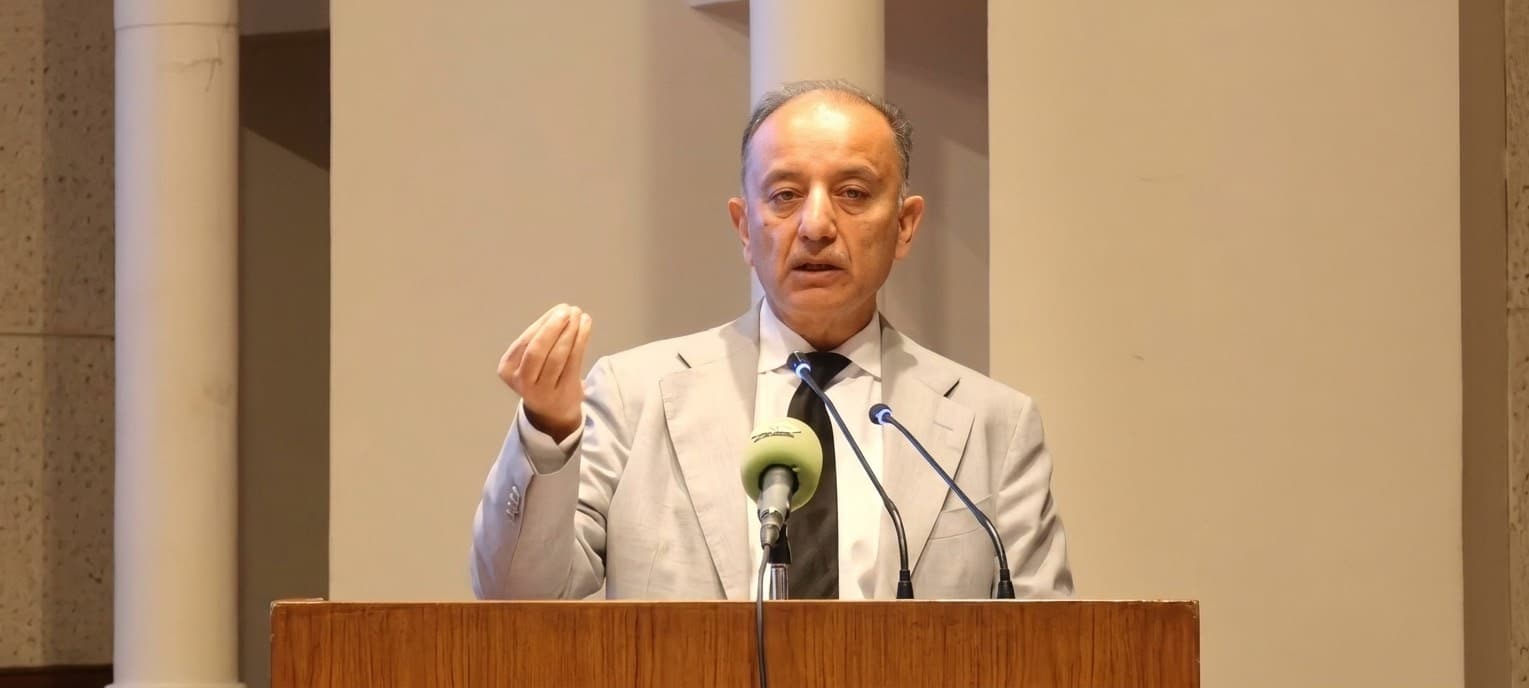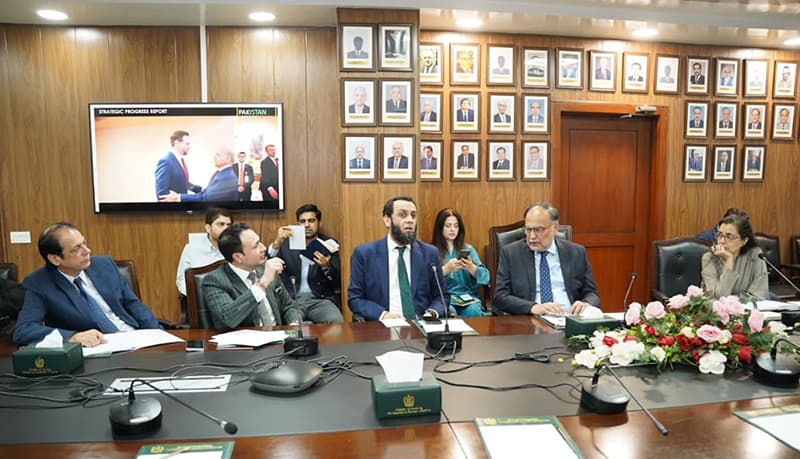
Federal Minister for Planning, Development and Special Initiatives Professor Ahsan Iqbal has called on the media to take a proactive role in strengthening public accountability and highlighting the challenges facing Pakistan’s economic growth and long-term progress. Speaking at a "Media Dialogue on Effective Development Communication" at the Planning Ministry on Friday, the Minister stated that the country's future relies on addressing important issues that are frequently ignored due to political controversies.
Professor Iqbal emphasized that the media is responsible for setting national priorities and holding institutions accountable, noting that issues not discussed publicly often fail to receive the attention necessary for resolution. He identified specific areas requiring regular media attention, including slow progress in literacy, population growth, early childhood development, limited access to higher education, poor export performance, and the misuse of public development funds.
Regarding the economy, the Minister warned that Pakistan’s economic independence is at risk without a significant increase in exports. He established a target to increase exports to USD100 billion by 2035 to decrease the nation's reliance on foreign loans and financial assistance from the International Monetary Fund (IMF). To illustrate the need for growth, he compared Pakistan's exports to Vietnam's; while both countries had exports of USD6 billion and USD2.5 billion respectively in 1990, Vietnam’s exports have risen to USD475 billion while Pakistan’s remain around USD40 billion.
The Minister also highlighted the risk of a population explosion and the neglect of early childhood education, noting that approximately 90 per cent of a person’s mental abilities develop during the first five years of life. He stated, “Pakistan 2047 is in its mother’s lap today,” to underscore the importance of investing in children's early development. He further noted that only 13 per cent of young people in Pakistan have access to higher education, contrasting this with 30 per cent in a neighbouring country, 25 per cent in Bangladesh, and 60 per cent in China.