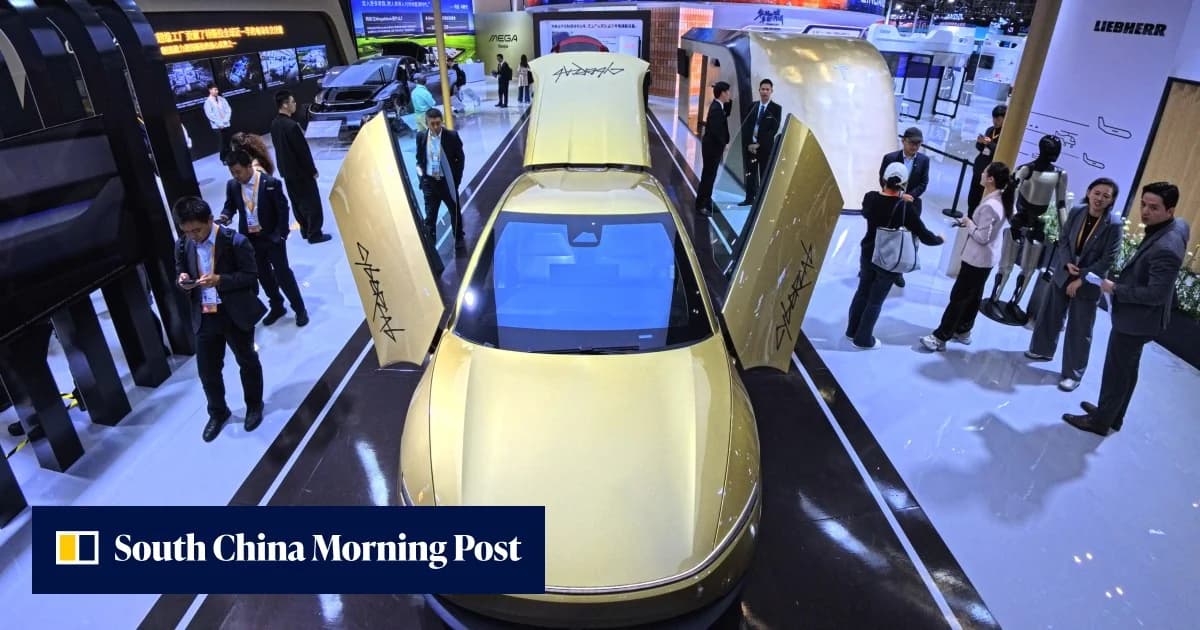
Foreign car brands, ranging from Tesla to General Motors (GM), are attempting to regain ground in China by emphasizing product quality and reliability as Beijing increases oversight on domestic electric vehicles (EVs). Analysts suggest that international brands are becoming more confident in promoting their products despite being viewed by some as "imitators" or "followers." Phate Zhang, founder of Shanghai-based industry data provider CnEVPost, stated that more local consumers have come to realize that the strength of these foreign brands lies in their product quality.
At the China International Import Expo (CIIE) in Shanghai, which runs through Tuesday, approximately 10 foreign carmakers displayed new EV technologies and premium models. GM’s luxury brand Cadillac reported it is accelerating efforts to provide an intelligent electric-driving experience for Chinese customers while maintaining a focus on reliability. John Roth, president of GM China and Asia, stated that the all-new XT5 plug-in hybrid SUV, priced from 279,900 yuan (US$42,000), has been Cadillac’s bestselling product in China since its September launch. Roth added that the company will continue to deliver an intelligent luxury experience tailored to Chinese consumers.
The shift comes as foreign brands lose market share to Chinese rivals like BYD and Leapmotor. Data from the China Passenger Car Association showed that foreign brands accounted for less than 30 per cent of deliveries in the third quarter of 2026, a drop from 34.6 per cent a year earlier, with only 1.38 million cars delivered on the mainland. Eric Han, a senior manager at Shanghai-based consultancy Suolei, stated that regulators' stepped-up oversight of domestic brands' design and production has given international marques a golden opportunity to mount a comeback, noting that some consumers are set to turn to conventional, established brands.
The regulatory shift began in August when Xin Guobin, China’s vice-minister of industry and information technology, announced at a Beijing press briefing that new automotive products and technologies would be barred from the market unless they passed stricter approval procedures. He stated that regulators identified rapidly developed smart EVs with innovative designs that lacked sufficient testing and verification. Last month, Beijing published draft rules requiring new models to undergo sufficient vetting, including 30,000km (18,641 miles) of road testing, before being offered to consumers.
Nissan also used the CIIE to announce it would start presales of its all-new NX7 SUV next week. The Japanese carmaker stated it strictly adheres to unified global standards for quality, safety, and durability, and conducts extensive localized vehicle testing in compliance with local regulations.
However, some experts warn that foreign brands still face hurdles. Carlo Diego D’Andrea, vice-president of the European Union Chamber of Commerce in China and chairman of its Shanghai chapter, said foreign carmakers must improve technology and design to keep pace with the fast-changing market. He noted that when encouraged to buy foreign products, Chinese consumers may say "yes, but you are not selling us the products that we want." He emphasized that this is the key point European companies need to realize.
Zhou Zhuo, a researcher at the Shanghai Academy of Social Sciences, noted that the CIIE provides opportunities for foreign companies to learn about customer needs and gain insights into sales strategies from local distribution partners, offering opportunities to expand sales channels and identify the right customers.