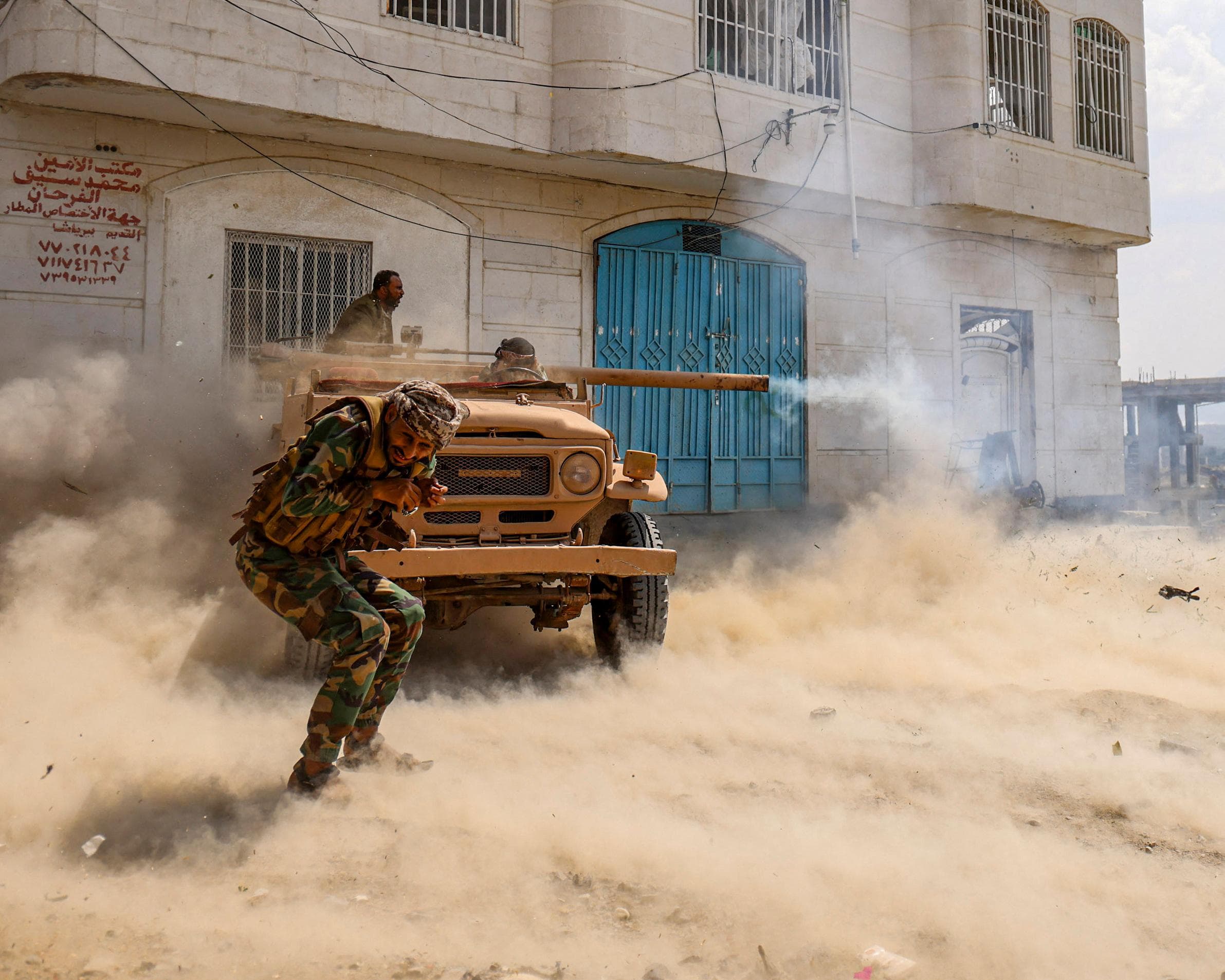
Yemen’s president has dismissed several ministers and military officers in an effort to reverse Houthi military successes and address pressure from southern Yemenis for increased power. The reshuffle follows a failed counteroffensive launched on 5 October, which aimed to liberate the country from Houthi control but resulted in thousands dead on both sides.
The government is currently attempting to regain territory lost to the Houthis in September and lift a four-week siege on Taiz, the nation's third largest city. Despite Saudi Arabia providing air superiority, the government has struggled to make ground progress. Reuters reported on Monday that Houthi forces were only about 37 miles (60km) from Aden, the nominal seat of the UN-recognised government.
To rebalance the north-south divide within the administration, President Rashad al-Alimi sacked the long-serving information minister, Muammar al-Eryani. He replaced him with Prof Salem al-Awlaki, who previously served as a minister for the civil service and was a spokesperson for the Southern Transitional Council (STC) from 2017 to 2019. Alimi also appointed two other southerners as ministers for the civil service and local administration, and appointed new leaders for the ministry of transport, the ports of Aden, and the civil aviation authority.
In military leadership, Alimi sacked Yusuf al-Sharaji, the military figure responsible for the Taiz front, and brigadier Abu Bakr al-Jabouli, who was responsible for the Tor al-Baha axis. Al-Sharaji faced widespread accusations regarding his failure to manage operations, which led to the fall of several areas and districts to the Houthis. The task of lifting the siege of Taiz and coordinating forces has been handed to career officer Maj Gen Rashad al-Yousfi.
The government remains dependent on southern troops to stop Houthi advances, though these forces insist they will fight only to defend land inside former South Yemen. Tensions exist between these factions; it has been claimed that Abu Zara’a, the leader of the Southern Giants, has fallen out with the Homeland Shield Forces, which are funded by Saudi Arabia and affiliated with Abdulrahman al-Lahji. Following heavy losses, al-Lahji filed an official report accusing Abu Zara’a of treason and warned that the situation in Dhubab, close to the strategic Bab al-Mandab strait, had become extremely dangerous for the government.
The administration faces criticism for being a “hotel government,” as some senior figures are based in hotels in Riyadh while the government relies on Saudi money for salaries. Meanwhile, STC officials have aired fresh claims in the media that they were coerced by the Saudis into dissolving their organisation against their will, expressing confidence that if the north is lost to the Houthis, the Saudis will have to let the STC operate openly.