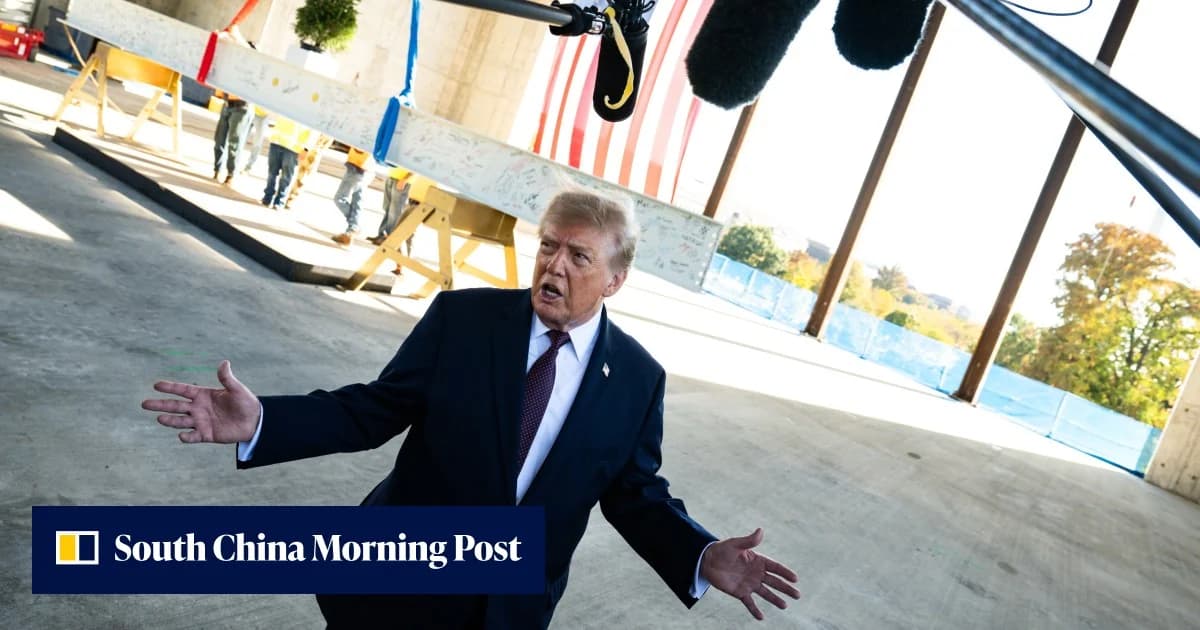
President Donald Trump is expected to spend the final two years of his term as a "lame duck" following midterm elections that resulted in Republicans losing congressional control. The White House is widely expected to respond to this "blue tsunami" by doubling down on unilateral actions and adopting a more aggressive foreign policy.
Trump has already signaled his intent to use his veto power, posting a photo of his red campaign cap with the word "VETO" on social media. As president, he can reject any bill passed by the incoming Democratic Congress. Overriding him requires a two-thirds vote in both chambers – a threshold far beyond Democrats’ reach. Trump has suggested he could brandish his veto pen for “a month or two” before negotiating agreements with Democratic leaders.
Data from The American Presidency Project under the University of California, Santa Barbara, shows Trump has issued an average of 166 executive orders per year during his second term, a figure higher than any president since Franklin D. Roosevelt. Lindsay Newman, an associate fellow at Chatham House, stated in a Wednesday note that Trump’s plan was always to lean on executive authority while treating Congress as an optional partner. Newman added that domestic priorities regarding energy, deregulation, immigration, and artificial intelligence will likely be funneled through the president’s office.
However, Democrats maintain significant leverage regarding federal funding and the national borrowing limit. Josh Lipsky, a former International Monetary Fund adviser, noted in a Wednesday research note that Congress' powers of the purse give Democrats a strong hand. This mirrors Trump's first term, when Democrats reclaimed the House in 2018 and effectively suffocated projects like the border wall and federal infrastructure spending. The first major clash is expected as federal funding expires on December 11, with a budget fight appearing inevitable in 2027.
Congress can also stall Trump by blocking personnel appointments. Conversely, trade and foreign affairs are areas where lawmakers may struggle to constrain the president. Jorn Fleck, senior director of the Atlantic Council’s Europe Centre, argued in a Wednesday note that Trump is likely to pivot abroad to burnish his legacy. While Democrats may seek to reclaim trade and tariff powers ceded to the executive branch, Fleck noted that hard limits on his power are unlikely.
Trump’s potential overtures to Moscow could create friction, with lawmakers potentially creating hurdles for energy-focused deals regarding the Ukraine war. Landon Derentz, vice-president for energy and infrastructure at the Atlantic Council, warned in a Wednesday note that diplomatic compromise may face legal and political barriers due to cross-party resistance to easing sanctions and the European Union’s commitment to phase out Russian gas by 2027.
Regarding potential investigations, Representative Robert Garcia, a California Democrat, warned Republicans on Tuesday night to "Lawyer up." Garcia has signaled plans to investigate Elon Musk’s role in the Department of Government Efficiency, the Trump family’s business interests, alleged abuses within Immigration and Customs Enforcement, and the Jeffrey Epstein scandal. While impeachment faces the same two-thirds supermajority hurdle that led to acquittals during Trump's first term, sub-impeachment inquiries could still disrupt daily operations, as committees possess broad subpoena powers to probe executive ethics and alleged conflicts of interest.