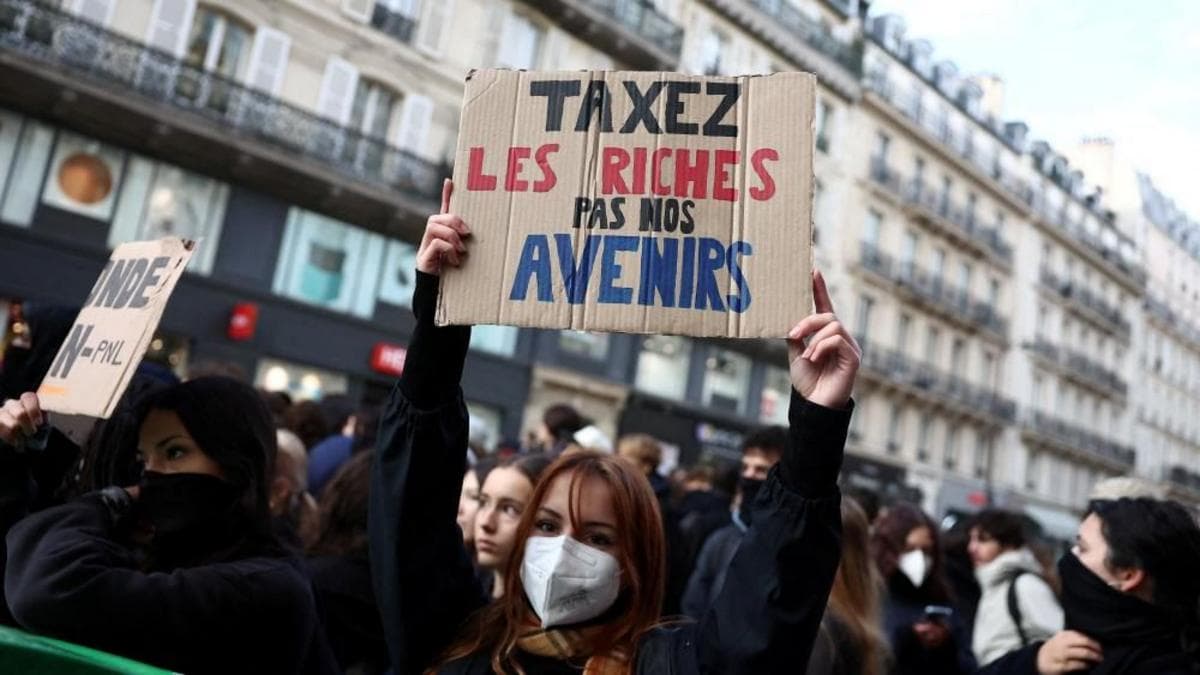
France is preparing for a massive national day of action on November 5, with five unions joining forces to organize strikes and protests. Authorities expect between 500,000 and 700,000 people to participate in marches across the country, with tens of thousands more expected in Paris alone. One union leader described the event as "a great day of convergence."
The movement began in September with high school students protesting poor resources and conditions in education. It has since expanded to include workers and the "yellow-vest" movement. The united unions are demanding protected public services and higher wages to counter the cost of living. Specifically, they are seeking a rise in the minimum wage, or Smic, which currently stands at €12.31 (£10) an hour. Marylise Léon, head of the CFDT union, stated that the group is asking for a net increase of €100 a month.
Interior Minister Laurent Nuñez announced that 70,000 police and gendarmes will be deployed to ensure "an extremely firm response" to any potential violence. More than 250 separate actions are scheduled for November 5. Disruptions have already been reported in hospitals, schools, and public transport. Workers have been asked to stop production at oil refineries, and because of ongoing disruption at nuclear plants, France is expected to import more electricity than it produces on Thursday.
The education ministry reported that 81 lycées were shut on Thursday morning, while approximately 17.5% of primary schools were also affected. To address public anger over prices, the government has released 10 million barrels of diesel from strategic reserves to lower fuel costs. Additionally, ministers promised students that the Parcoursup university admissions platform would be reformed and eventually replaced by 2028.
The route of the march in Paris has been a point of contention. While the march is allowed through the center of Paris, it will not follow the unions' proposed route between Place de la Bastille and Place de la Concorde, which would have passed near the National Assembly, the Élysée Palace, and the prime minister's residence at Hôtel Matignon. Instead, the march will go from Place de la République to Place de la Nation. The CFDT union complained that receiving court approval for this route only on Wednesday evening made organization more difficult.
Union leaders noted that previous marches were kept away from the center of Paris due to violence on October 17, which resulted in the looting of more than 2,000 stores and the burning of historic buildings. Sophie Binet, another union leader, stated, "The time has come to take the mobilisation to the next level; the strike must take over." Meanwhile, the revived gilets jaunes movement has called for further blockades and protests on Friday and Saturday.
Nuñez identified three potential risks for Thursday: radical left "black blocs" groups, looting, and wildcat marches without union authorization.