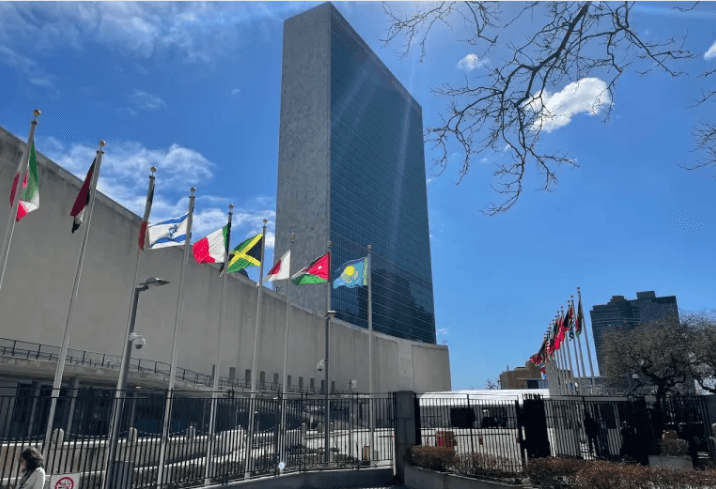
Bruno Lemarquis, the Deputy Special Representative of the Secretary-General for Afghanistan and the UN’s Resident and Humanitarian Coordinator, warned at a news conference in New York on November 6 that Afghanistan's fragile security is being undermined by economic collapse, severe rights restrictions, and a deepening humanitarian crisis. This assessment comes more than five years after the Taliban returned to power.
Lemarquis highlighted that women and girls continue to face “severe and sweeping” restrictions on their freedoms, including being deprived of spaces to work, learn, and participate in public life. He identified the restriction of girls' access to education as “one of the world’s most sensitive…education challenges.” According to Lemarquis, over 2.6 million girls have been denied secondary education since 2021, and female university enrollment is currently at zero. He noted that higher education is in crisis overall, as economic frailty is causing some families to keep their boys out of school as well.
When asked about the Taliban's justification for these restrictions, Lemarquis stated their explanations are a mix of religious extremism and deep historical practices of control and discrimination. He noted that despite public statements from the Organization of Islamic Cooperation (OIC) and representations by Muslim countries and Islamic scholars, there has been no perceptible change in the Taliban’s tough policy toward women and girls. Lemarquis pointed out that since September 2025, Afghan women staffers have been banned from entering United Nations premises across the country, a ban that remains in place.
The country is also facing pressure from the “massive” return of 6.7 million nationals since 2020, many of whom were forcibly expelled from neighboring countries like Pakistan and Iran. Lemarquis reported meeting people who returned to Afghanistan despite never having lived there, including a 45-year-old father born abroad who returned to his ancestral village with his children. He emphasized that these returnees require legal documentation, protection, and “jobs, jobs, jobs.”
Regarding narcotics, Lemarquis noted that while cultivation dropped following a 2022 Taliban ban, a recent UN report found opium poppy production increased by 330 per cent during 2025 because farmers found ways to hide production. He stated that for eradication to work, there must be viable alternatives for livelihoods, quoting some farmers who told him, “We cannot survive. And we don’t want to die,” regarding their lack of income without opium.
Humanitarian needs are expected to rise starkly in 2027 due to regional instability, the mass influx of returnees, and a strong El Niño weather pattern threatening food security. However, funding is being cut annually. The humanitarian response reached $2 billion in 2023, halved to $1 billion in 2025, and has only reached $570 million so far in 2026. Lemarquis warned that 40 per cent of primary healthcare facilities—700 out of 1,900 posts—are expected to close between 2025 and 2026.
Lemarquis stressed that the consequences of these issues are “very, very, very significant” and warned that the international community must not turn its back on the country. He cited an Afghan saying, “What is happening in Afghanistan is not staying in Afghanistan,” adding that consequences could affect regional security, stability, and migration pathways.