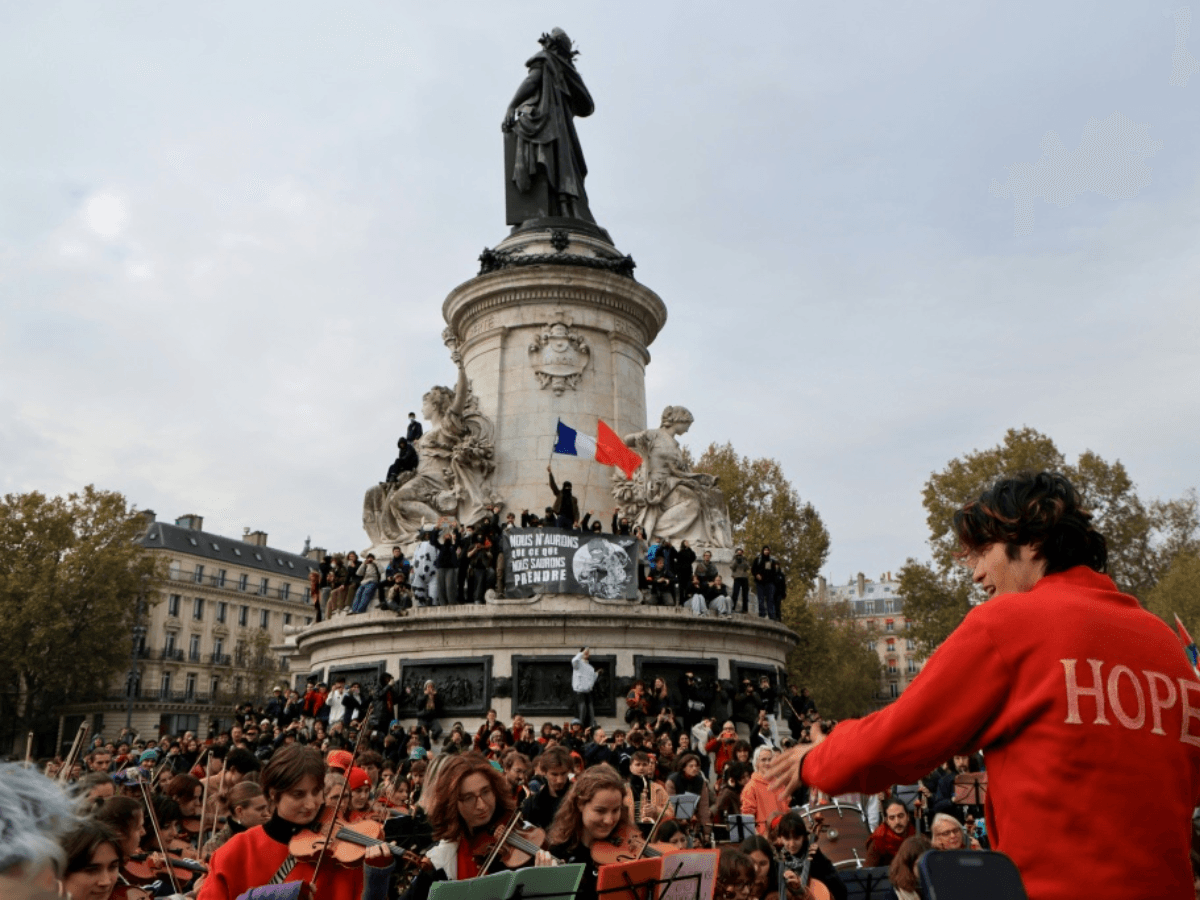
French authorities are preparing for a day of protests on Saturday as student groups and trade unions prepare to take to the streets. While these groups have organized an authorized march in central Paris to protest the high cost of living and support young people, the Yellow Vests movement plans a separate rally at Place de la Concorde. This second rally is planned despite a ban by authorities on demonstrations in that specific area.
The Yellow Vests, which first gained prominence eight years ago protesting fuel-tax hikes, are urging "mass disobedience," according to Benjamin Ball, a member of the movement's coordinating committee.
Interior Minister Laurent Nunez announced that 70,000 police officers and security forces will be deployed across the country to manage the demonstrations. Nunez stated, "If there are any rioters or looters... we'll be ready and waiting for them."
The current unrest follows weeks of nationwide strikes and youth-led protests involving hundreds of thousands of workers. On Thursday, hundreds of thousands of striking workers participated in mostly orderly protests across France, though clashes between police and demonstrators occurred in several cities. The interior ministry reported that Thursday's protests had "generally gone well" despite 642 arrests.
The demonstrations have been largely peaceful, but the country saw its worst rioting in years on October 17. Authorities are working to prevent a repeat of the rioting and looting from that date. However, the police response has drawn criticism for being heavy-handed, leading to dozens of internal investigations into allegations of brutality.
The news agency AFP urged protection for its journalists on Friday following several instances of apparent police brutality against reporters covering the protests. Reporters Without Borders (RSF) reported recording 40 cases of journalists being obstructed by security forces, including 21 cases involving physical violence.
The protests come less than six months before the May 2027 election to replace President Emmanuel Macron, with opinion polls currently showing the far right in the lead. An inter-union coalition stated on Friday that "The only thing that will bring the protests to an end is a response to the demands that have been put forward for several weeks by workers, civil servants, young people and pensioners." These demands include tax reforms, across-the-board wage raises, better learning conditions for young people, and an increase in the minimum wage, which has not seen a discretionary boost since 2012.
Prime Minister Sebastien Lecornu said he will discuss wages and purchasing power with representatives of employers' organizations and trade unions on Monday. The government currently faces limited scope to appease protesters as the European Union's second-largest economy is under pressure to reduce debt.