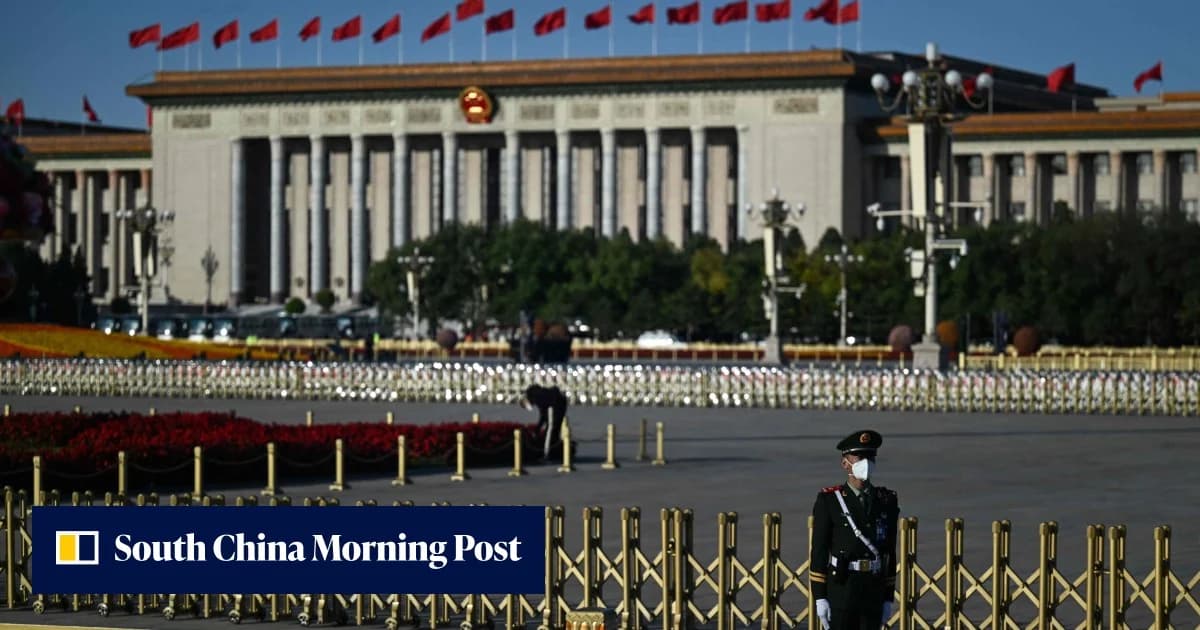
China’s ruling Communist Party has declared a policy of “zero tolerance” for bribery and other forms of election interference as it begins selecting delegates for next year’s national congress. According to state news agency Xinhua, the party issued specific guidelines for the selection process, which will be managed by its Organisation Department.
The 21st national party congress is scheduled for the second half of next year. Xinhua reports that the event is expected to feature a major reshuffle of China’s top political and military leadership. The congress is expected to gather 2,360 delegates who will vote to elect more than 300 members of the Central Committee from a vetted list of candidates. These delegates are to be chosen by 38 electoral units across the country.
Central leadership has ordered that political standards be the top priority during selection to ensure the group has a “reasonable composition, broad representation and the support of party members”. Xinhua reported that the party stated: “[We must] strictly vet candidates on political grounds, conduct thorough assessments of their political qualities, strengthen evaluations of their party spirit and focus on their political stance … Anyone deemed politically unqualified will be rejected outright.”
Candidates must also be evaluated on their commitment to the “Two Safeguards,” a slogan regarding the obligation to uphold the core leadership of Xi Jinping and the authority of the Central Committee. The party maintains requirements for the delegation's composition, including exemplary figures from the frontline workforce, a specific proportion of women and ethnic minority members, and representatives from various sectors. Furthermore, the party requires the election to be competitive, demanding that the number of candidates exceeds available seats by more than 15 per cent.
The Central Committee issued a stern warning regarding the conduct of the vote, stating: “Supervision must be strengthened throughout the entire delegate election process, with zero tolerance for violations of regulations or the law.” The committee cited previous instances of vote-buying, canvassing, and other disruptions as cautionary examples for educational campaigns.