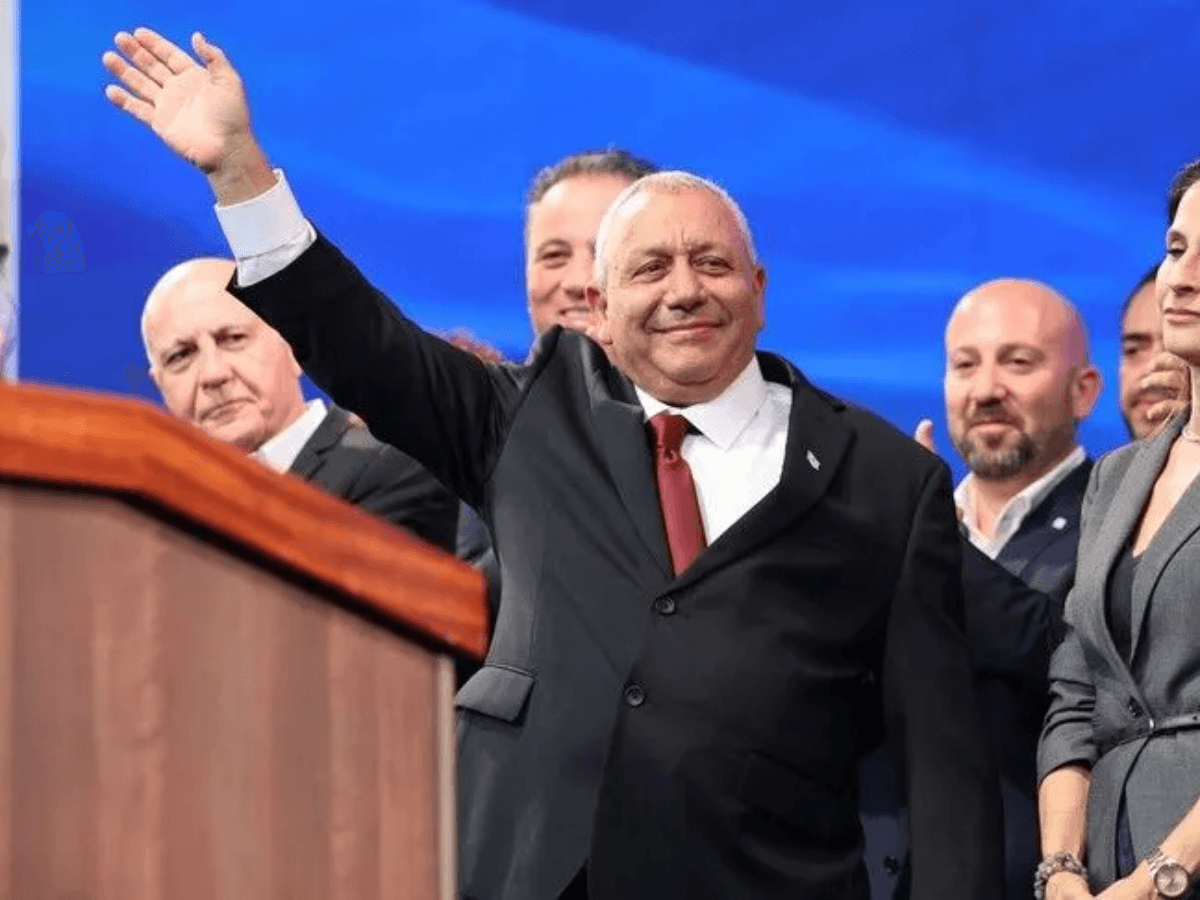
Israeli President Isaac Herzog tasked Yashar party leader Gadi Eisenkot with forming a new government on Sunday. The move follows parliamentary elections that left the bloc of Eisenkot and Prime Minister Benjamin Netanyahu’s alliance short of a majority.
According to Israel’s public broadcaster KAN, Eisenkot formally received the mandate during a meeting with Herzog at the presidential residence in West Jerusalem. The appointment occurred after Herzog consulted with parties in the Knesset. During the process, 67 lawmakers recommended Eisenkot, 46 backed Netanyahu, and seven declined to recommend either candidate.
Speaking at the handover ceremony, Herzog stated that Eisenkot had secured clear support to form a government. Herzog emphasized that Israel needs a “stable government,” and called for efforts to unite Israeli society, continue the 20-point plan for the Gaza Strip, negotiate with regional countries, respond to developments in the US, and address military conscription.
Upon accepting the mandate, Eisenkot stated he was taking on the task “out of a deep sense of duty and an awareness of the weight of the responsibility.” He warned that Israel is facing “a critical national emergency,” noting that while war objectives remain unachieved, the country faces a serious political and diplomatic crisis. Eisenkot said even close allies are calling for a reassessment of their relations with Israel, adding that the country is going through one of the most difficult periods in its democratic history and could reach a “point of no return” if the situation continues.
Eisenkot pledged to work toward a “national emergency government,” stating the situation allows for neither delays nor another election. He said, “Israel needs a change of course after the difficult years it has been through.” He invited the Likud party and the Religious Zionism party to join his government but made no mention of the Jewish Power party.
In a statement from his office, Eisenkot said he would approach all parliamentary factions and parties in the Knesset to invite them to join, provided they accept four principles. He did not detail these principles. Eisenkot noted that honoring every campaign pledge would be impossible and that parties must make mutual concessions. He described unity as “a core value grounded in genuine partnership” and stated his door is open to anyone willing to act for Israel. He also left open the possibility of forming a government with support from the United Arab List (Ra’am) and the Joint List.
Eisenkot warned that anyone obstructing the formation of a government for personal reasons rather than substantive ones will go down in history as someone who failed to save Israel in its hour of emergency. He expressed confidence that his partners understand the need to install a new government and that their abilities are essential to “steering Israel to safety.”
Under Israeli law, Eisenkot has 28 days to form a governing coalition, with a possible 14-day extension from the president. If he fails, the president may task another Knesset member with the task for 28 days without an extension. If that fails, a majority of Knesset members may nominate a colleague to try to form a government within an additional 14 days.