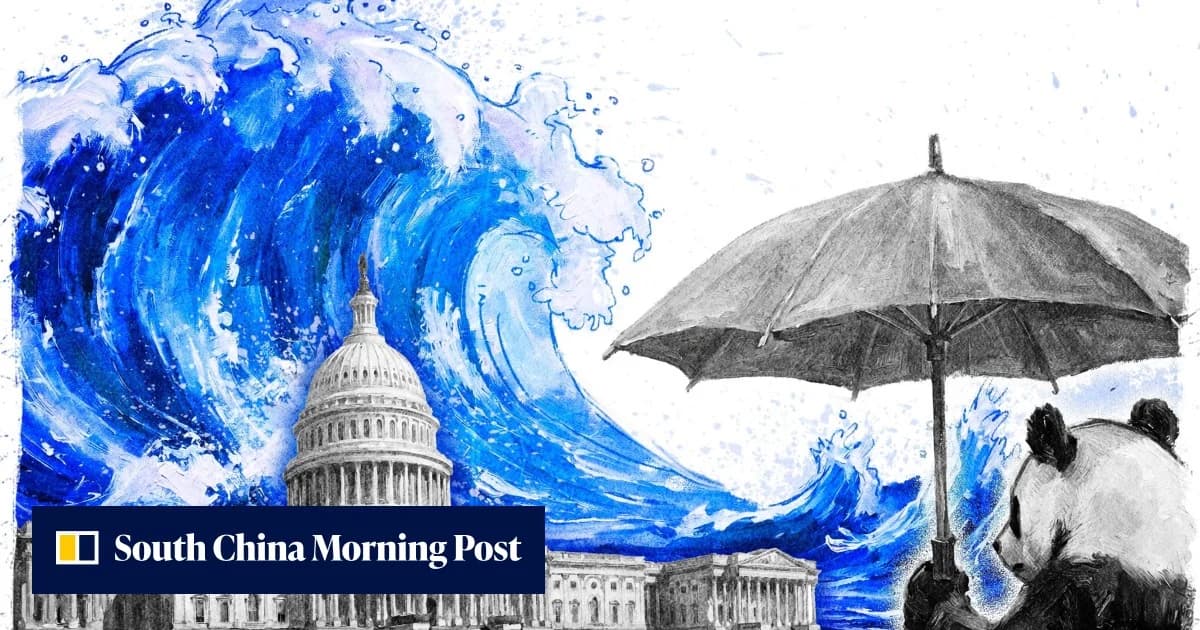
China may begin seeking ways to make its agreements with the United States less dependent on the personal rapport between President Xi Jinping and President Donald Trump. Analysts suggest this shift follows midterm elections that left the US leader in a weaker position to deliver results.
Some observers believe Beijing will focus more on what the White House can achieve without congressional support. Others suggest China may seek closer engagement with the Democrats, given their ability to "poison" relations between the two countries. On Tuesday, the Democrats were set to take control of both the House and Senate in January after a "blue tsunami" flipped former Republican strongholds.
While Beijing maintains that the midterms were strictly a domestic affair and stated it would continue pushing for closer cooperation with Washington, the results are expected to severely weaken Trump’s hand. A Democratic majority grants the power to block legislation, control federal spending, and launch investigations into the Trump administration for the final two years of his term.
This shift could test efforts to stabilize ties, which have seen Trump and Xi meet twice this year. Further meetings are expected at the Asia-Pacific Economic Cooperation summit in Shenzhen next week and the Group of 20 meeting in Miami in December. Xin Qiang, a professor and deputy director of the Centre for American Studies at Fudan University, said the Democrats could "make things difficult" ahead of these meetings. "They could create various obstacles, poison the atmosphere of US-China relations, and sour the mood for these encounters," Xin said.
Xin also stated the Democrats could pressure Trump over Taiwan, which Beijing considers a red line. He expected Congress to press Trump to resume put-on-hold arms sales to Taiwan and push bills strengthening US military support for the self-ruled island. "With the Democratic Party in control, Congress will almost certainly initiate more pro-Taiwan actions in these areas," Xin said. "Given the constraints imposed by Congress, it is likely to become even more difficult for Trump to elevate US-China relations."