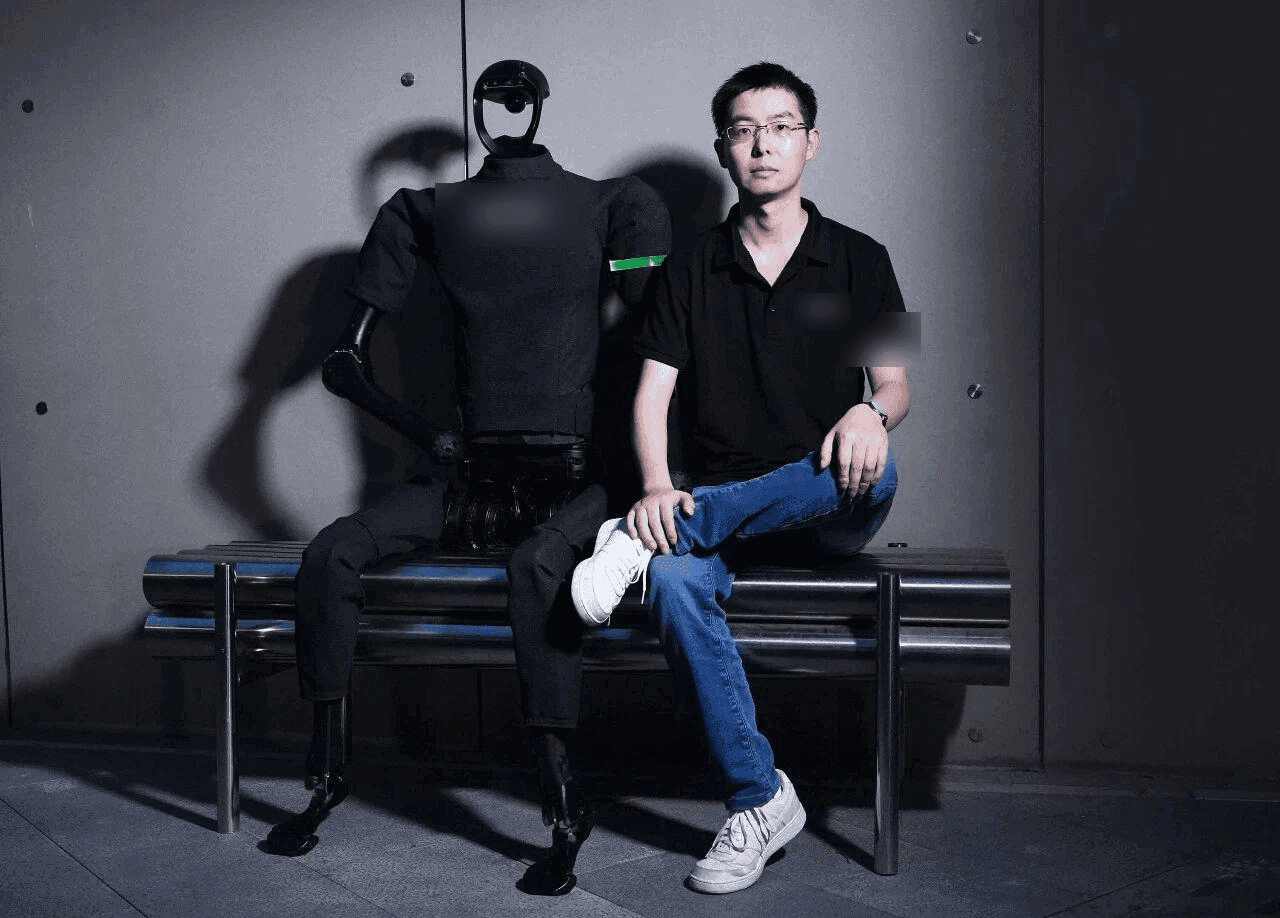
Unitree founder and chairman Wang Xingxing told a business conference in Hangzhou on November 6 that security is a promising next application for robots. Jiemian News reported that Wang noted overseas demand for intelligent security robots is strong. These remarks were made at the eighth Zhejiang entrepreneurs' conference and were intended as an outlook, not a product launch.
During the talk, Wang showed demonstration clips of Unitree robots in security and emergency scenarios. These clips included a robot restraining a simulated attacker, stopping a vehicle trying to force its way through, and performing an emergency rescue. Jiemian noted that Unitree has not announced a dedicated security product, customers, or field deployments related to these remarks, and the clips do not establish how the robots perform in real incidents.
Wang emphasized that robots should do practical work rather than just perform. He stated that Unitree has pursued factory applications since 2020, working with several automakers and auto-parts suppliers as well as in its own plant. While robots trained for specific tasks in fixed settings like factories can approach a 100% success rate, Wang acknowledged that homes remain the biggest obstacle because layouts vary so widely. He stated his goal is a robot that can work autonomously in any environment without prior training.
Wang predicted that next year or the year after, robots may complete around 80% of tasks in completely unfamiliar environments from voice instructions alone. He called this the moment embodied AI reaches its equivalent of a breakthrough consumer chatbot. However, he said the main obstacle is that model outputs and physical robot actions are not yet precisely matched, leaving errors of a few millimeters.
Regarding AI progress, Wang argued it now comes less from new algorithms than from automated loops of data collection, scoring, training, and refinement. He said this makes computing power and chip capacity decisive, and suggested the same logic could apply to humanoid robots once large-scale self-training works. Wang compared today's robots to personal computers more than 20 years ago, when many people saw them mainly as gaming machines because software was immature.