A US space policy analyst suggests that China’s lunar landing strategy, while potentially slower, offers a safer path than Nasa’s cheaper bet on commercial landers. This assessment follows updates from both nations regarding their lunar missions within a single week.
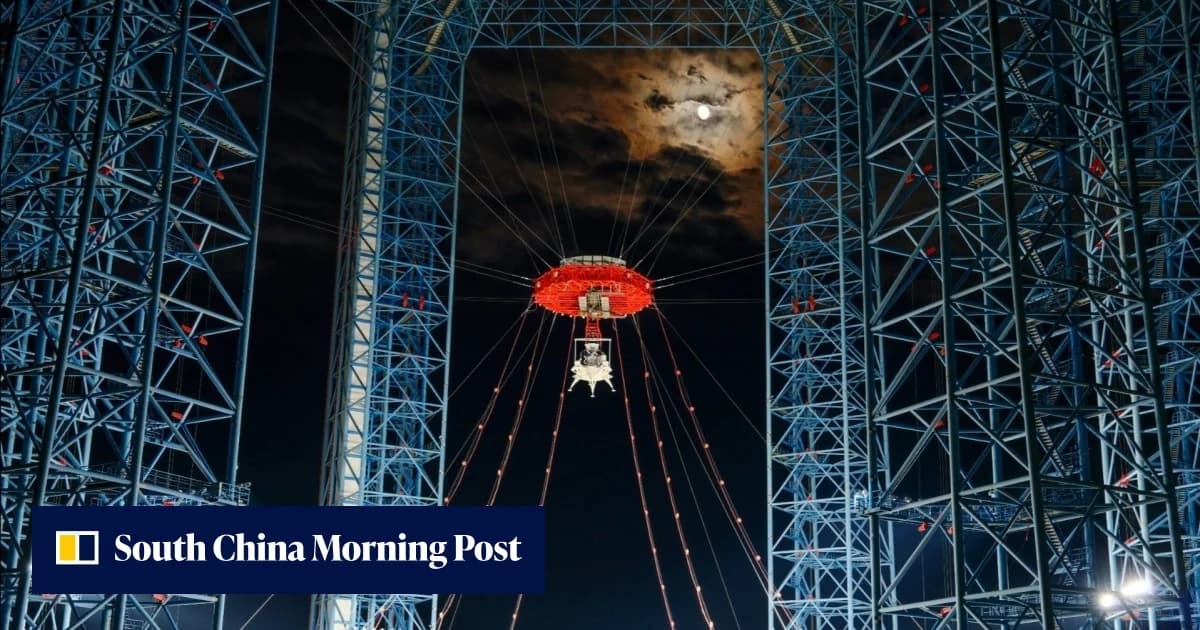
On October 31, Wang Xiang, the deputy chief designer of China’s crewed space programme, stated in Beijing that China intends to dock the Lanyue lander and Mengzhou spacecraft in lunar orbit before sending any astronauts. According to Wang, the Lanyue lander will perform a touchdown, lift off, and redock as part of the preparation.
In contrast, Nasa administrator Jared Isaacman announced at a briefing on October 23 that Nasa plans to have its crews practice docking with commercial landers from SpaceX and Blue Origin in Earth orbit in 2027. The goal is to attempt to reach the lunar surface in 2028.
Casey Dreier, chief of space policy at The Planetary Society, described China’s plan to fly the entire landing mission uncrewed as the more cautious approach. Dreier noted that while this strategy might strain Beijing’s objective of landing humans on the moon before 2030 by squeezing many “firsts” into roughly three years, it avoids the danger of discovering hardware problems halfway to the moon with a crew.
Dreier warned that the US plan involves a riskier wager by relying on private firms to deliver a vehicle that only a government programme has previously produced. He highlighted that the Apollo lunar module cost approximately US$29 billion in today’s money, whereas Nasa is paying SpaceX and Blue Origin about US$7 billion combined.
Dreier cautioned that this commercial arrangement shifts a significant burden onto the private companies, stating, “This type of commercial relationship for such an unproven and difficult capability has never been done before and it’s an enormous risk carried by these two companies.” He added that the logistics are difficult, requiring several rocket launches timed within days of each other and requiring Nasa to be ready to dock with two different landers. Dreier concluded, “So yes, it’s all risky.”