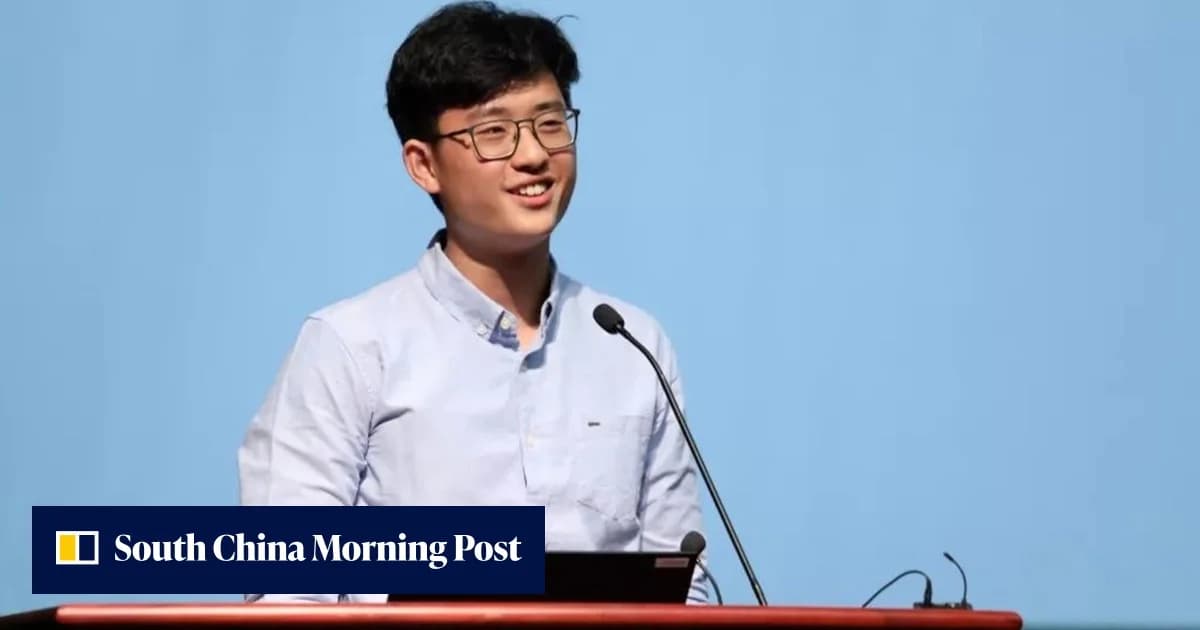
Tencent Holdings’ chief AI scientist Vinces Yao Shunyu warned during a public appearance on Saturday that artificial intelligence models will soon be powerful enough to master biology. While this progress could accelerate the discovery of new drugs and treatments, Yao stated that the cyber abilities of AI models and soon the bio ability of models will reach a threshold where it’s actually possible to do harm.
Speaking at a science symposium co-hosted by the Future Science Prize and the Hong Kong Academy of Sciences, Yao emphasized that all Chinese or any open model company needs to be very responsible and very serious about those security and safety concerns. He noted that biological capabilities are "dual-use," meaning they can be used by both attackers and defenders. Yao suggested that managing these capabilities may be more complicated than cyber capabilities because the attack and defence functions may be harder to disentangle.
Yao outlined Tencent’s plans to operate autonomous science labs that use AI systems to run complex experiments end-to-end, such as for inverse protein folding. Regarding the technical hurdles of these labs, he stated, I think all the technical changes can be solved, where it’s just a matter of time, adding that the bigger challenge is societal and organisational.
The warning follows the release of Tencent's flagship model, Hy4, on Wednesday. According to benchmarking firm Artificial Analysis, Hy4 ranked as the second-best performing model produced in China. In its release announcement, Tencent stated it removed Hy4’s cyber hacking capabilities while retaining its cyber defence capabilities by filtering out relevant data during the model training stage. The company also claimed that Hy4’s biological capabilities remained well below its high-risk threshold because the model remains unable to turn foundational biological knowledge into actionable protocols.
Addressing the debate over open-weight versus closed-source models, Yao noted that US companies such as Anthropic have made a strong argument that frontier AI models should be closed to prevent significant societal harms. However, he argued that open-weight models can bolster defences, citing an incident where Hugging Face used a Chinese open model to defend against a cyberattack after closed US models refused to help due to security guardrails. Yao suggested the best way forward is still a mix of closed and open-source models because you still want to empower everyone to leverage the technology for defence.