Landslides triggered by intense rains have disrupted electricity production and transport in Gilgit-Baltistan. On the Karakoram Highway near Chilas town, two trucks carrying solar panels have been stranded for 24 hours due to a blocked road. Simultaneously, a landslide in the Ghizer district struck a water channel feeding a hydel powerhouse, interrupting a main electricity source, while another landslide blocked an alternative source.
The rains reportedly caused more than Rs20 billion in losses across seven districts in 2025, though local estimates including agricultural and infrastructure damage put the figure closer to Rs30 billion. Muhammad Anwar, a driver of one of the stranded trucks and a beneficiary of the government's free solar scheme, stated, “I should have been in Gilgit today. The road is closed, the panels are in the truck, and at home we still have no light at night.”
The region relies heavily on hydropower, but the mountainous terrain leaves infrastructure vulnerable to floods, landslides, and glacial lake outburst floods (GLOFs). In May 2022, floodwaters submerged two hydropower projects and damaged a bridge, agricultural land, homes, and water channels. A GLOF from Shishper in 2025 further damaged infrastructure and disrupted electricity in Hassanabad. While the combined capacity of 46 stations rose from 17.18 MW in 2009 to 65.319 MW in 2025, the expansion has increased the amount of infrastructure exposed to mountain hazards.
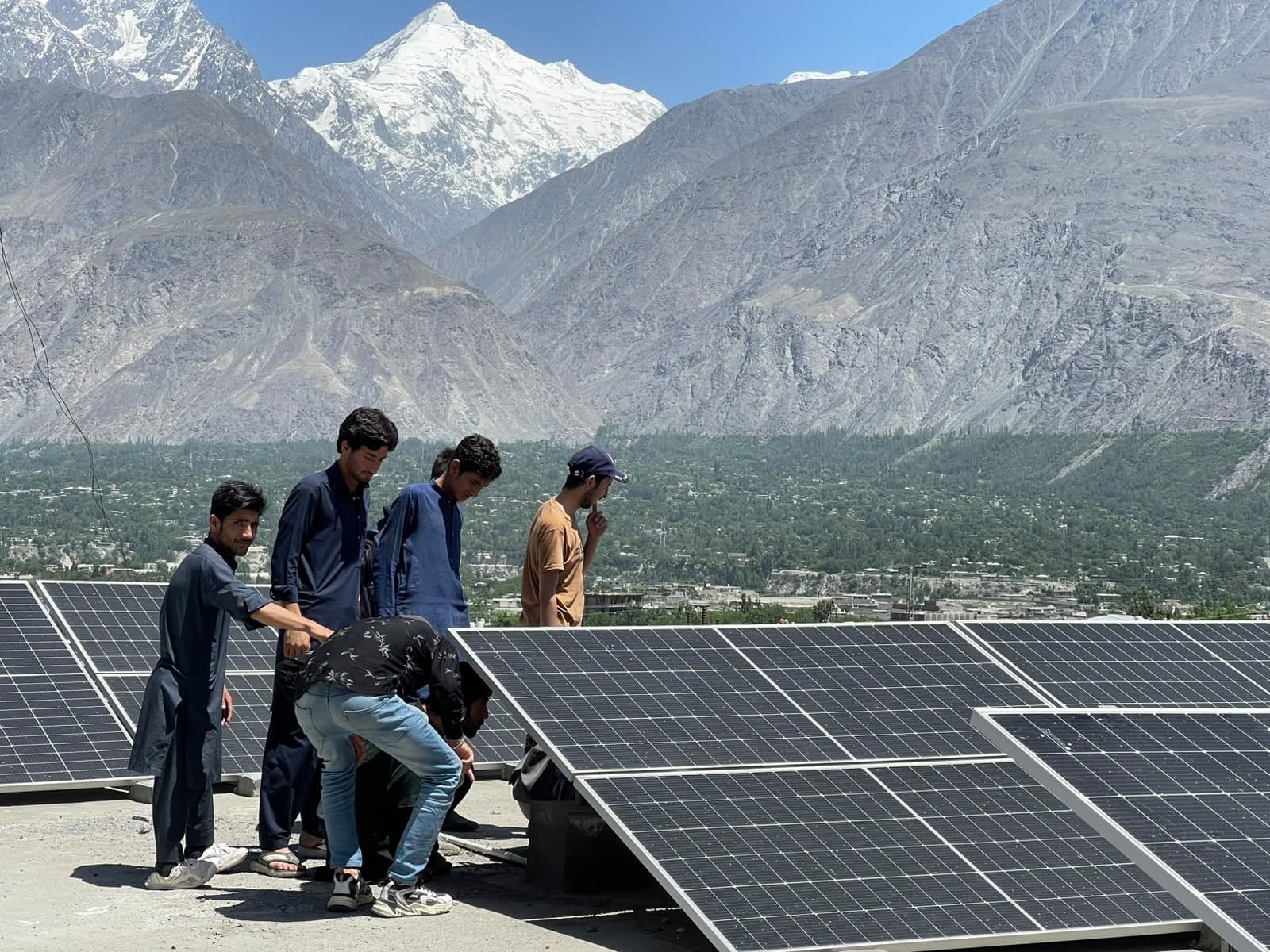
An Islamabad-based think-tank focusing on sustainable development stated that decentralised power is particularly critical for Gilgit-Baltistan because frequent disasters disrupt the central grid. However, the challenge remains ensuring households can afford complete systems, including batteries. In March 2026, the federal government allocated 58 MW of solar capacity for the region, including 40 MW for domestic consumers. While the government intended to reach nearly 148,000 households with free solar panels, only 15,733 households were selected through balloting. Of these, 12,008 families collected their units, while 3,725 left the panels in warehouses.
Officials acknowledge that additional costs have discouraged people from collecting or installing the equipment. A panel is only one component; households must also arrange an inverter, battery, wiring, mounting structure, transport, and installation. These expenses can add Rs90,000 to more than Rs180,000 to the cost. One beneficiary in Gilgit who left solar plates in their lawn said, “We went to buy the panel. They said it is free, but we have to buy the battery and inverter from the market. They asked for Rs150,000. We came back. How can we pay that?”