Key Takeaways
- Shoppers in France rushed to buy air conditioners during a heatwave.
- Politicians are using ACs as a tool in cultural debates.
- Air conditioning is crucial for productivity and health, especially among the elderly.
As temperatures soared across Europe, particularly in June, consumers in France found themselves scrambling to secure air conditioners. Reports indicate that shoppers literally forced their way into stores to purchase portable fans and AC units before supplies ran out.
The International Energy Agency (IEA) predicts a significant rise in the demand for cooling systems, with two-thirds of households expected to own an air conditioner by 2050. This trend is not limited to France; similar scenes are likely to play out across Europe as climate change intensifies heatwaves and raises temperatures.
Political parties have begun leveraging ACs in their broader cultural debates. Far-right figure Marine Le Pen has pledged to roll out air-conditioning systems across France if her party comes to power, while the British Conservatives vow to overturn net-zero rules that restrict AC installation in new builds. On the left, critics argue that ACs would primarily benefit the wealthy and exacerbate energy consumption.
The debate extends beyond comfort; air conditioning is increasingly seen as essential for maintaining productivity and concentration. In poorly ventilated schools, children struggle to focus during hot weather, while adults find it challenging to work effectively in extreme heat. The health implications are also significant, with research suggesting that ACs can prevent nearly 200,000 premature deaths among people over 65 annually.
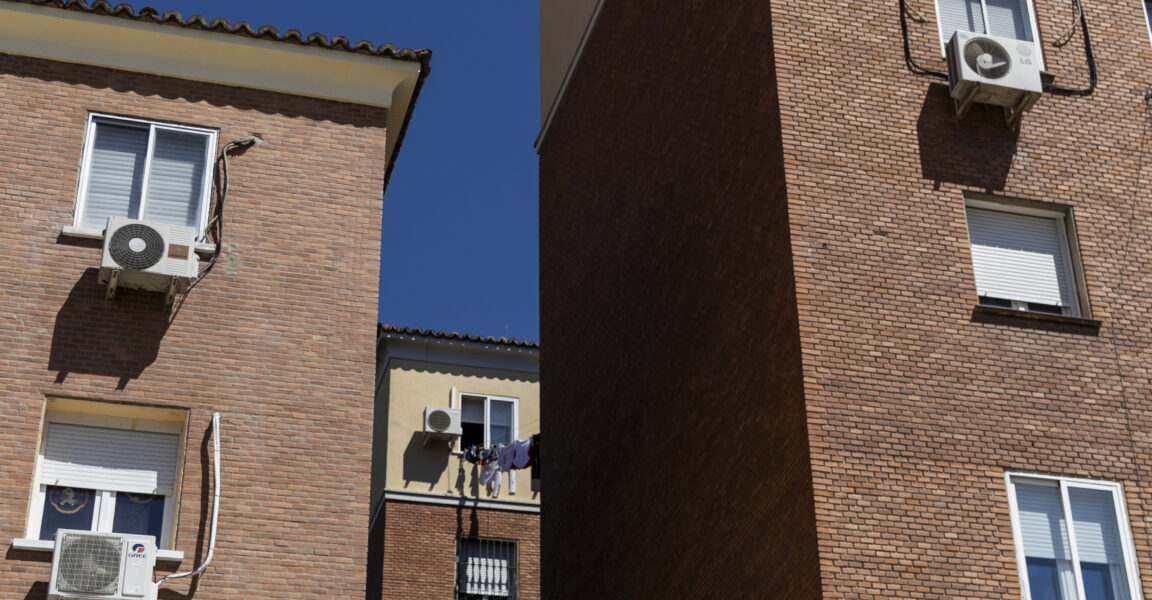
Currently, only around 20 percent of Europeans have air conditioning at home, compared to roughly 90 percent in the United States, where electricity is considerably cheaper. In the UK, this figure drops to a mere 4 percent. However, as temperatures continue to rise, the need for ACs becomes more pressing.
The debate over AC installation highlights the complex interplay between climate change and energy policy. While some argue that ACs are necessary for public health and productivity, others fear they will lock Europe into a high-energy consumption spiral similar to what is seen in the US and Asia. The challenge lies in finding a balance between addressing immediate needs and long-term sustainability.
As the world warms, the demand for cooling systems is set to increase dramatically. European policymakers must navigate this shift carefully, balancing public health concerns with environmental goals.