Key Takeaways
- Eclipse glasses are essential for viewing the sun during an eclipse.
- Using shadows can help observe partial eclipses without special equipment.
- Proper eye protection is crucial to avoid vision damage.
During a solar eclipse, it's important to protect your eyes from harmful sunlight. The shadow of the moon moving across Earth during an alignment with the sun creates a unique viewing opportunity that can be safely observed using specific methods.
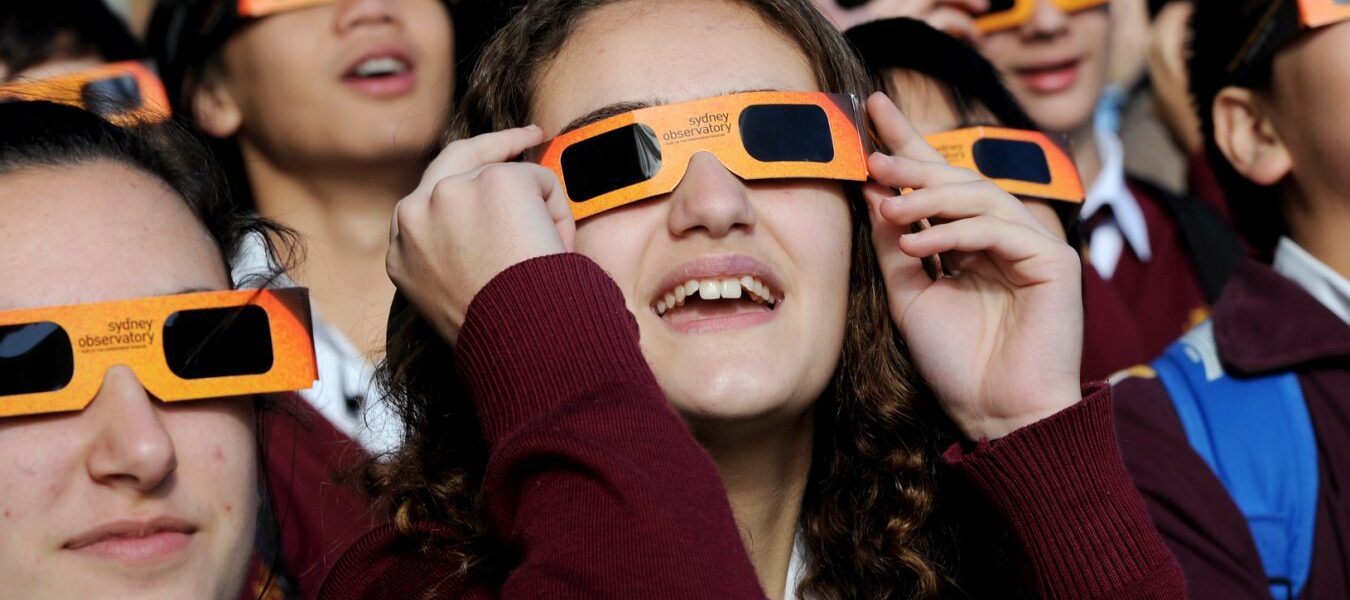
Eclipse glasses are about 100,000 times darker than regular sunglasses and should be worn when looking directly at the sun. These glasses block out enough light to prevent retinal damage, which could lead to permanent vision loss if unprotected exposure occurs.

Regular sunglasses or other types of filters are not sufficient for viewing a solar eclipse. The American Astronomical Society recommends using only trusted suppliers for these protective devices, available here: [link].
For those without access to special glasses, there are alternative methods such as projecting the sun's image onto a surface. This can be done by using small openings like a colander or cheese grater to cast shadows of the eclipse.
Even simple household items can be used for this purpose. For example, standing under a tree and observing the shadows created by leaves can reveal how much of the sun is hidden behind the moon during a partial eclipse.
Using telescopes or binoculars requires additional protection as they magnify the sunlight. Ensure any magnifying device has a proper solar filter over its objective lenses to avoid damaging your eyesight.
Proper eye protection and viewing methods are crucial, especially during totality when the sun is completely covered by the moon. This period is the only time it's safe to look directly at the sun without any filters or projections.
Remember, improper viewing can lead to serious vision damage. Always use appropriate safety measures when observing a solar eclipse.