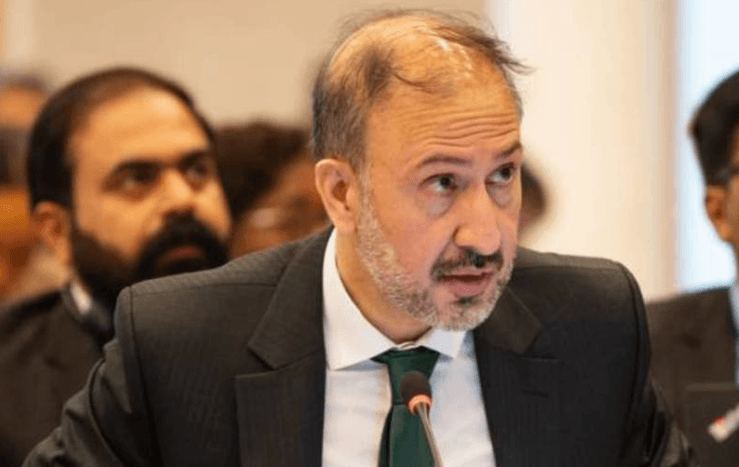
Pakistan has called for strategic reforms to protect United Nations peacekeeping operations from geopolitical divisions and funding cuts. Ambassador Syed Haider Shah, the permanent representative of Pakistan to the UN, told the General Assembly’s Fourth Committee on Friday that peacekeeping is a vital and cost-effective tool for global security.
Ambassador Shah stated that while reform is necessary, it must have a strategic purpose to maintain the UN's operational capacity. He argued that the UN must keep the ability to deploy a credible international presence for future ceasefires, political settlements, or emerging crises. He emphasized that efficiency and cost reduction should strengthen peacekeeping rather than "hollow out the capabilities that give UN peacekeeping its unique value."
The debate opened with Mohamed Khaled Khiari, Assistant Secretary-General in the Departments of Political and Peacebuilding Affairs and Peace Operations, who noted that peacekeepers keep dialogue alive and stand between civilians and violence at great personal risk. Khiari called on States to pay their contributions in full, noting that missions were forced to reduce expenditure by 15 per cent, which resulted in the repatriation of 13,296 troops and 1,212 police. He remarked that while support for peacekeeping is broad, "consistent political backing is harder to secure."
Ambassador Shah reaffirmed Pakistan’s commitment as a major troop-contributing country and a host state. He noted that over 170,000 Pakistani peacekeepers have served under the UN flag, with 183 making the ultimate sacrifice. He also noted that Pakistan hosts the United Nations Military Observer Group in India and Pakistan (UNMOGIP), which monitors the Line of Control in the disputed Jammu and Kashmir.
Addressing mounting pressures, Ambassador Shah argued that the rise of regional arrangements and ad hoc operations highlights the need for a credible UN presence. He stated, "What is needed is the political will in the Security Council to use this important instrument when circumstances require." He called for several specific actions: reinforcing the primacy of political solutions, matching focused mandates with adequate resources, preserving institutional strengths, preparing for future requirements, strengthening peacekeeper safety and accountability, and maintaining peacekeeping as a collective UN instrument.
Shah warned against allowing financial ceilings to dictate operational requirements, insisting that political objectives should determine mandates. He highlighted the need to preserve the UN's comparative advantages, such as universal legitimacy, predictable financing, and established command systems. Additionally, he pointed to Pakistan’s leadership, alongside Denmark, in advancing Security Council Resolution 2823, which was adopted with 153 co-sponsors.