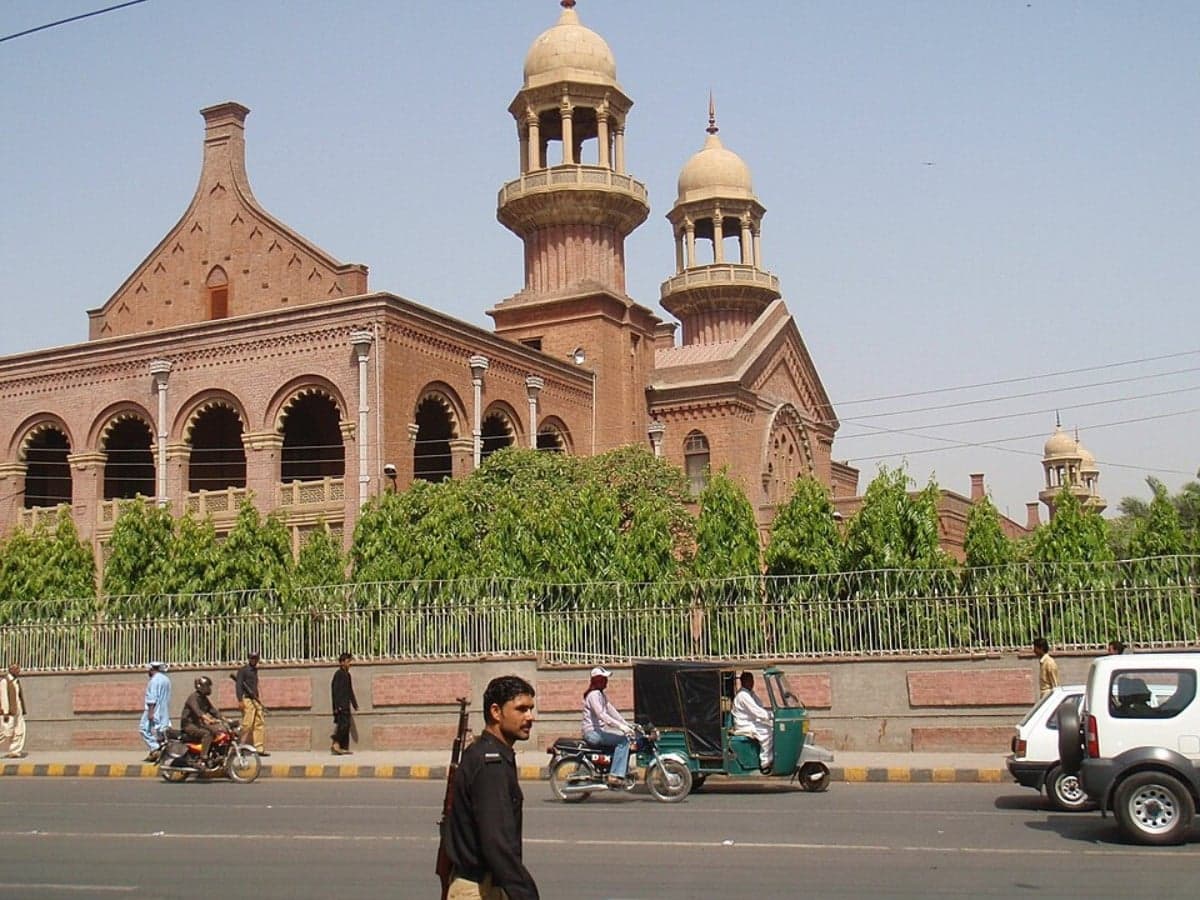
The Lahore High Court (LHC) has ordered two private medical and dental colleges to adjust or refund excess tuition fees to students within 30 working days from October 30. The court ruled that these institutions must follow the fee limits prescribed by the Pakistan Medical and Dental Council (PM&DC) in accordance with regulatory notifications and the court's own findings.
In a detailed judgment, Justice Khalid Ishaq dismissed three petitions filed by private medical institutions that challenged the PM&DC's fee regulations. Simultaneously, the court allowed 12 connected petitions filed by students and their guardians who were seeking the enforcement of those prescribed fee limits.
Justice Ishaq upheld the PM&DC’s statutory authority to regulate and cap tuition fees. He ruled that medical and dental colleges cannot operate as purely commercial enterprises divorced from their responsibility towards society, citing the connection between medical education, human life, and public health. The court held that these colleges have no unrestricted right to determine tuition fees and that the PM&DC is empowered to scrutinize proposed fee structures and financial justifications to protect students against profiteering and exorbitant charges.
The court found that the council's authority to regulate fees flows from a harmonious reading of Sections 9 and 20 of the Pakistan Medical and Dental Council Act, 2022, along with Section 47. Justice Ishaq noted that the requirement for colleges to submit financial statements and fee justifications under Section 20(8) of the Act is not a mere formality; if the regulator had no authority to question an unjustified proposal, the statutory requirement would be rendered meaningless.
The institutions argued that fee regulation violated their fundamental right to conduct business under Article 18 of the Constitution. The court rejected this, stating that the freedom to carry on a lawful profession is not absolute and can be subjected to reasonable restrictions in the public interest. However, the court clarified that the regulator must consider legitimate institutional costs, noting that affordability alone cannot justify a measure that prevents institutions from maintaining required educational standards.
The court also dismissed arguments that the colleges were being discriminated against under Article 25 of the Constitution. Justice Ishaq held that while medical institutions operate under a distinct framework involving clinical training and professional qualifications, common regulation cannot justify arbitrary treatment of institutions with materially different financial circumstances.
Regarding the specific institutions involved, the court examined the audited accounts of University Medical and Dental College, Faisalabad, which recorded an income of Rs5.099 billion and a profit of Rs378.659 million for 2025. The court noted that the college was liable to refund Rs841,317 per student for excessive amounts collected. Similarly, FMH College of Medicine and Dentistry, Lahore, reported an annual income of Rs1.867 billion and a profit of Rs111.941 million, with a liability to refund Rs741,802 per student.
The court recorded the specific annual tuition fee ceilings prescribed under a March 11 notification: Rs2,026,341 for University Medical and Dental College, Faisalabad, and Rs2,052,099 for FMH College of Medicine and Dentistry, Lahore. The court noted that the PM&DC initially fixed the annual tuition fee for MBBS and BDS programmes at Rs1.8 million on April 28, 2025, with subsequent increases linked to the Consumer Price Index (CPI) inflation rate.
The court pointed out that the institutions had participated in the fee-determination process, including the sixth meeting of the Fee Justification Committee on February 18, and could not subsequently challenge the regulator's authority. The court directed the institutions to refrain from any prejudicial treatment against students who are litigating their rights, warning that students subjected to unlawful treatment could approach the court for contempt proceedings.