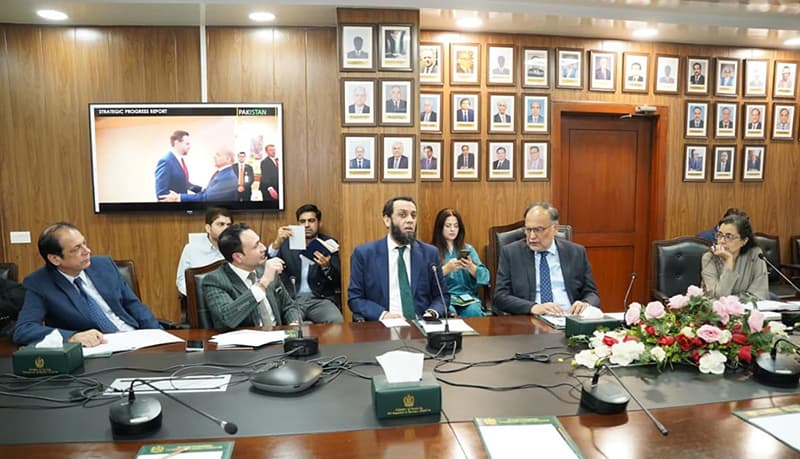
Federal Minister for Planning, Development and Special Initiatives Professor Ahsan Iqbal directed officials on Friday to prepare comprehensive proposals to restructure Islamabad's education sector. During a meeting of the Joint Committee on ICT Education Reforms, the minister stated that the Prime Minister had ordered an accelerated and actionable reform plan to enhance governance and education quality in the capital.
The minister proposed the establishment of an autonomous education authority. He emphasized that this body should feature a Board of Governors with an independent majority and a Chief Executive Officer chosen on merit, supported by clearly defined powers and terms of reference. He instructed authorities to draft the necessary legislation and a transition roadmap within 60 days, while ensuring the Federal Directorate of Education (FDE) remains operational during the shift.
Professor Iqbal noted that public-sector schools are failing to deliver results despite significant government spending. He highlighted that approximately 77 per cent of the FDE’s expenditure ceiling is spent on employee-related costs, stressing the need to ensure value for public money.
Regarding the planned recruitment of 1,100 teachers through the Federal Public Service Commission (FPSC), the minister called for a review of the process. He suggested exploring a contractual hiring model to attract talented young professionals, citing Punjab’s five-year contract initiative as a potential model. He also directed authorities to look into legal aspects of appointments to allow for local recruitment and school-based placements to prevent unnecessary transfers.
The minister suggested that Pakistan should look to international models, specifically China’s focus on teacher-student engagement. He stated that reforms must prioritize equity, student welfare, teaching standards, and curriculum outcomes. On infrastructure, he ordered that safe, functional buildings be the priority, followed by a verified plan to bring all institutions to model standards, specifically noting rural schools and girls' education.
MNA Raja Khurram Nawaz noted a shortage of facilities in government schools, specifically requesting more blocks for girls. He also advocated for a uniformed curriculum across public and private schools to bridge the social divide.
The Planning Commission informed the committee that the FDE network currently includes 432 institutions, though a larger number of private, low-fee, informal, and special education schools operate in Islamabad. The commission noted that the government is responsible for ensuring quality across all these institutions.
Three working groups have been formed to focus on infrastructure, governance, and academics. The proposed framework covers governance, safe schools, financing, teacher leadership, curriculum, assessment, and equity. The meeting included MNA Raja Khurram Nawaz, Parliamentary Secretary for Education Wajiha Qamar, Secretary Education, members of the Planning Commission, and private sector experts.