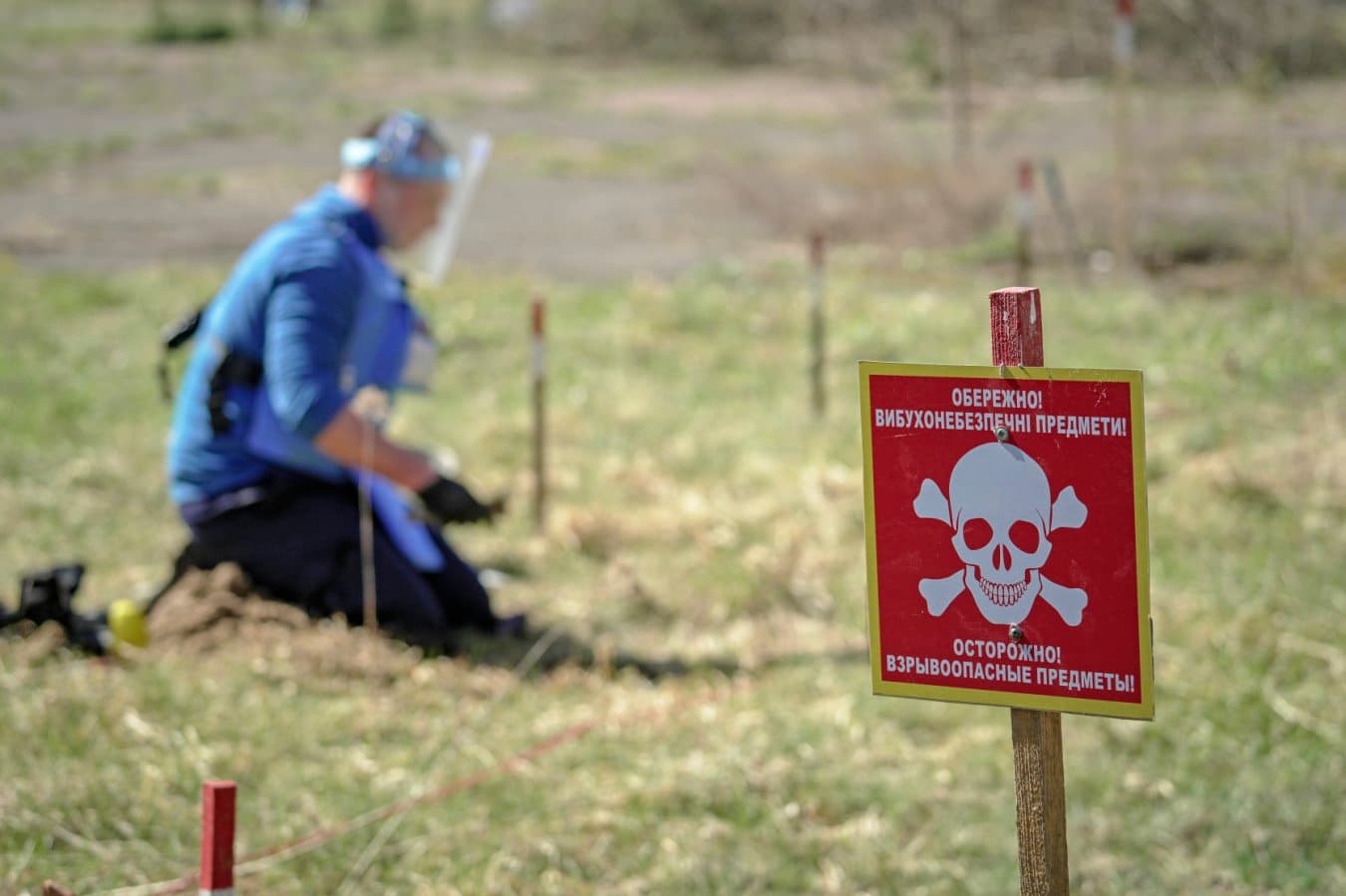
Antipersonnel (AP) mines are making a comeback in 2026, threatening global safety despite a 1997 international ban. Seán Moorhouse, an explosive ordnance disposal consultant, states that these weapons are now cheap to produce and offer a level of sophistication that actors could not have reproduced for a hundred times the price only a few years ago.
Moorhouse identifies three specific technologies driving this resurgence in Ukraine: 3D printing, microcontrollers, and drone delivery. 3D printing allows any frontline unit to manufacture their own mines in various shapes, sizes, and colors, making them harder to detect. For example, curved green Caterpillar mines can blend into vegetation, while urban mines may resemble pieces of brick or concrete.
The use of microcontrollers has also changed how mines are triggered. Fragmentation mines can now be activated by sensors rather than traditional tripwires. In Ukraine, the most common type, nicknamed Jonik (“little soldier”), is magnetic and can be set off by a nearby rifle. Other sensors can detect movement via Doppler microwaves, body heat, or vibration, while a new variety is triggered by the approach of any Bluetooth device.
Drone delivery has also been transformational for both blast and fragmentation mines. Drones can slip behind enemy lines to place mines precisely on tracks, paths, or around trenches, increasing the likelihood of finding a victim compared to random scattering. Human rights organizations and a UN commission have reported that Russian forces are using drones to drop AP mines to target civilians in the city of Kherson.
Roy Gardiner of the non-profit group Defense Tech for Ukraine says these simple devices can be rapidly produced by any group with access to explosives, enabling a significant expansion of mine warfare. Moorhouse predicts that the triad of drone delivery, 3D printing, and microcontrollers will proliferate worldwide.
The shift in military calculus is reflected in international policy. While the Ottawa Treaty was signed in 1997 to ban mines because the lasting danger to civilians outweighed military value, Ukraine has suspended its implementation. Moorhouse notes that five countries—Poland, Finland, Latvia, Lithuania, and Estonia—have pulled out of the treaty, which he suggests indicates that mines have some utility.