Lithuania is establishing itself as a major player in the global semiconductor and artificial intelligence (AI) hardware supply chain by becoming a laser powerhouse. Last month, laser manufacturer Litilit launched a new factory in the capital, Vilnius, which the company claims will have the world’s largest potential production capacity for its class of advanced femtosecond lasers.
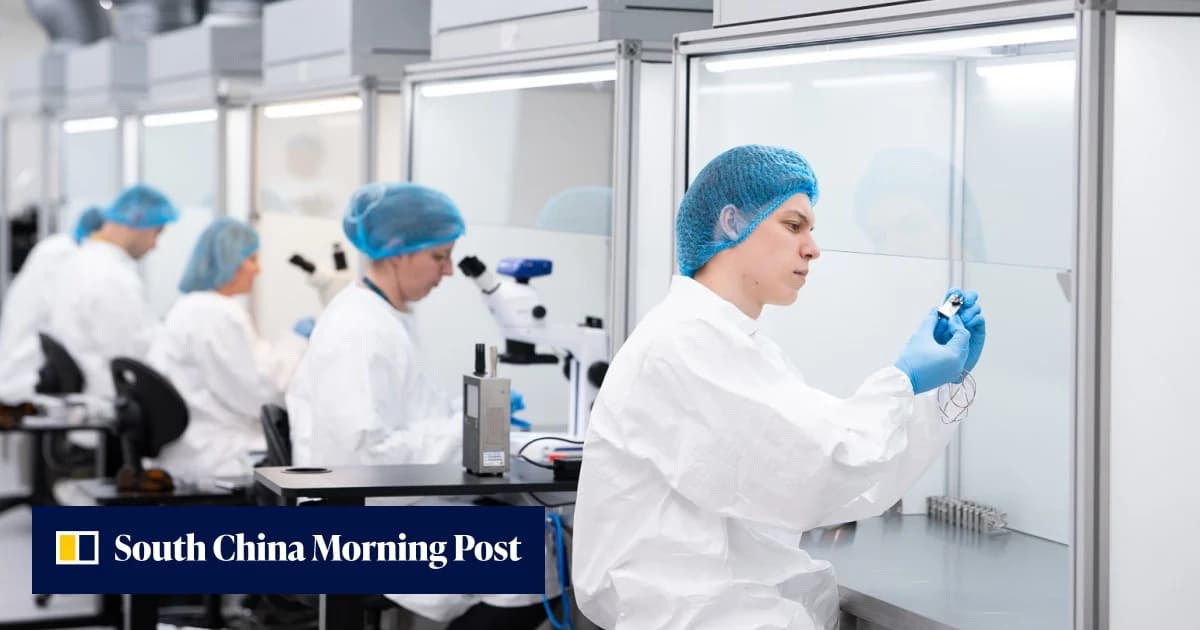
The new facility is designed to produce 3,000 femtosecond lasers per year at full capacity. These lasers emit light pulses so brief they can process materials like glass with high precision and minimal heat damage. This technology is becoming vital for chipmakers exploring glass as a substrate for next-generation AI infrastructure. Litilit plans to produce 1,000 units in its first year before scaling up, with most output destined for Europe, North America, and Asia.
The expansion occurs as Lithuania navigates difficult relations with Beijing. In 2021, the country allowed a Taiwanese representative office to open in Vilnius, which Beijing viewed as a violation of the one-China principle. In response, China downgraded diplomatic ties and imposed trade restrictions, including banning certain Lithuanian food and alcohol products and blocking many exporters from the Chinese market. While Lithuania’s new government pledged to normalize ties earlier this year, friction remains. In June, Beijing stated it hoped Lithuania would "take early and decisive action to correct its mistakes, return to the right track of adhering to the one-China principle and create conditions for the normalisation of China-Lithuania relations." In July, the Chinese commerce ministry placed Lithuanian manufacturer Ekspla on its European dual-use exports control list.
Litilit’s co-founder and CEO, Nikolajus Gavrilinas, stated that commercial realities often outweigh political posturing. Gavrilinas said the company is "absolutely in line with Lithuanian official policies about US, Chinese, European and [other] political alignments" and is seeking partnerships across all three regions. He noted that while tensions exist between Europe and China, businesses are not easily stopped from trading if they are part of each other’s global supply chains, stating, "Until it becomes a real resistance for each other, everything is very smooth."
Gavrilinas explained that the growth of AI data centers is driving demand for manufacturing tools like femtosecond lasers. As AI models require more power, data centers are moving toward "advanced packaging," which stacks multiple chips on a single board using a glass interposer. Because conventional lasers pass through transparent materials, femtosecond lasers are used to focus energy directly within the glass to form internal structures. Gavrilinas said this could be used to carve electrical paths in a method similar to 3D printing, which he said "opens a lot of possibilities." He also noted the technology could be used on polycrystalline diamond.
The Litilit facility utilizes approximately 85 per cent automation with a workforce of 100 to 200 people, allowing the company to scale production and limit the effects of "turbulence" in labor costs or politics. Gavrilinas is currently evaluating potential production hubs in Singapore, Japan, the United States, and Europe. Regarding the future of the technology, Gavrilinas stated that femtosecond technology would be the industry standard for the next 20 years, suggesting attosecond lasers might come later.
Lithuania’s laser industry dates back to 1962. According to Vilnius University, the country now has more than 60 laser and photonics companies and over 2,000 specialists, exporting more than 90 per cent of its laser output. Despite Chinese blacklists, the sector is seeking partnerships with Taiwan. Last month, 60 researchers from Lithuania and Taiwan exchanged knowledge at a three-day workshop in Lithuania, organized under a 2023 agreement between the Research Council of Lithuania and Taiwan’s National Science and Technology Council.