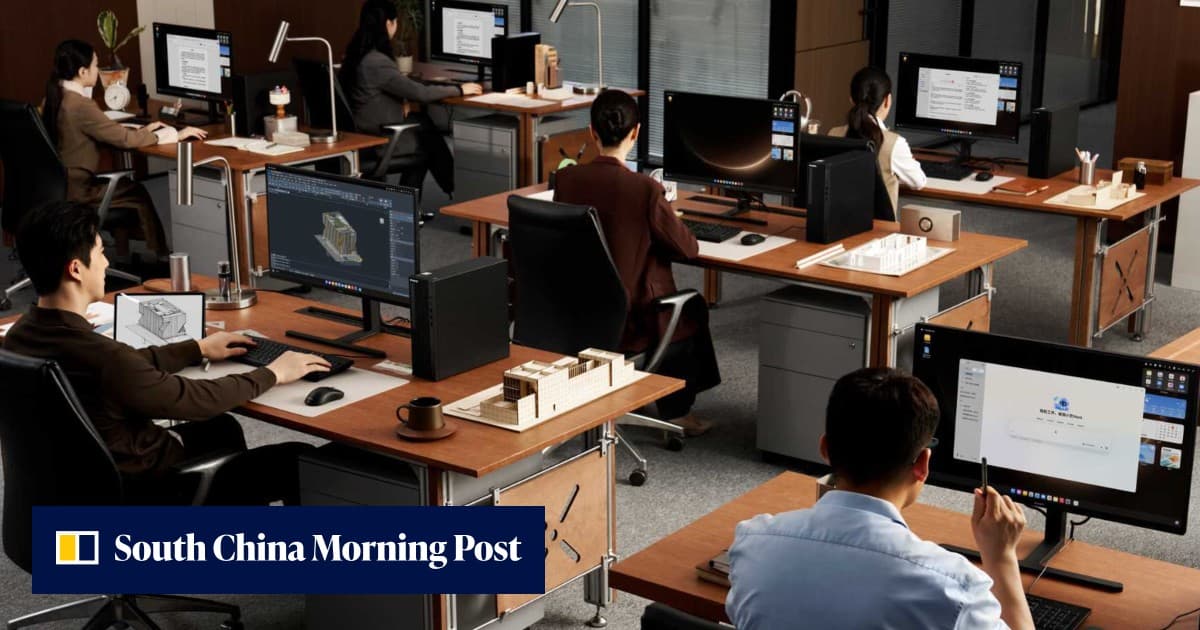
Huawei Technologies has released its first desktop computer powered by its own HarmonyOS operating system, claiming the device is “100 per cent domestically made.” The Shenzhen-based company unveiled the Qinyun HM650 series on Thursday, targeting government and enterprise users.
According to Huawei’s website, the new desktop line-up uses entirely China-made components, ranging from the memory modules to the processor. This makes it the first desktop computer in the country to receive certification as “100 per cent domestic.”
Zhu Dongdong, an executive at Huawei’s tablet and personal computer (PC) unit, stated that the company reached this domestic component rate by combining in-house development of core technologies, joint development for key parts, and large-scale production of general-purpose hardware. Speaking at a launch event in Wuhan on Thursday, Zhu said the achievement reflected collaboration across China’s broader computer supply chain, according to a report by Chinese tech outlet ITHome.
The Qinyun HM650 series runs on HarmonyOS V1.0, which the company says is the first time it has deployed this enterprise version of its self-developed operating system on desktop products. The launch is part of Huawei's effort to achieve technological self-reliance following US sanctions that restricted its access to advanced foreign technology.
Huawei has been moving to replace American technology in its PC business since Washington revoked special licenses in 2024 that allowed Qualcomm and Intel to sell older-generation semiconductors to the company. Previously, most Huawei consumer laptops used Intel’s Core processors, while some utilized Qualcomm’s Snapdragon chips.
The new desktops are powered by the Kirin X90 processor, developed by Huawei’s chip-design arm HiSilicon. The chip debuted in Huawei’s consumer laptops and tablets last year and received a Level 2 national certification for security and reliability.
Zhu Dongdong reported that Huawei had sold over 1 million HarmonyOS PCs as of October and expects that figure to reach 1.2 million by the end of this year. Huawei did not immediately respond to a request for comment.