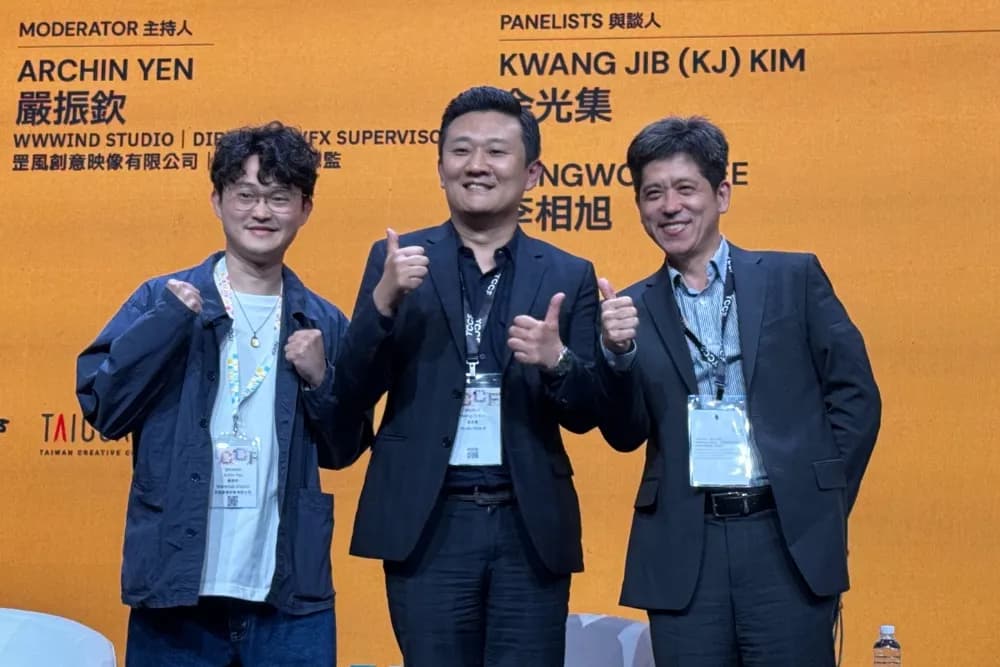
A Korean AI production pioneer warned at the Taiwan Creative Content Fest (TCCF) in Taipei that runaway token fees and piecemeal revisions could leave feature producers paying more than they did during the 35mm film era. Kim Kwang-jib, founder and CEO of Studio Meta-K, stated that using the most expensive commercial tools can result in a token bill exceeding KRW500 million ($366,000) for a 100-minute film.
Kim noted that AI companies are currently losing money and keeping prices low as a marketing play. He warned that if these companies raise token costs roughly tenfold, costs could exceed current shooting prices, potentially jumping from KRW500 million to KRW5 billion ($3.66 million). While Hollywood budgets of KRW200 billion ($146.6 million) could absorb such costs to produce very cheap AI films, Kim said Korean, Taiwanese, and other Asian features—which typically cost between KRW3 billion and KRW5 billion ($2.2 million-$3.66 million)—would have to question if AI is efficient at all.
Kim compared the current situation to the transition from celluloid to digital. He explained that while digital allowed crews to shoot and cut freely without extra cost, every re-render in AI is paid for again. He illustrated the risk of revisions, noting that if a client sends 10 changes at once, Studio Meta-K can re-render a single time. However, if those same 10 changes arrive one per day over 10 days, the studio must pay for 10 separate re-renders. Kim concluded that unless preproduction is made solid, AI could end up spending even more money than in the 35mm film era.
Lee Sang-wook, head of the AI Content Lab at MBC C&I, added that budgeting is difficult because tools are constantly moving. He noted that his lab’s 139-minute feature "Raphael" took about a year and four months to produce, during which new tools and updates arrived weekly. Lee observed that applying technology from a year ago can make scenes look very old. He shared that a single shot on "Raphael" sometimes tied up around 10 artists for an entire day.
Regarding the market, Lee said the reaction to AI short films in 2024 was very cold in Korea. He chose a cinema release for "Raphael" on Nov. 25 to face audiences directly, noting that moving from cinema to streaming is easier than the reverse. He also aimed to show that AI studios can take commercial bets through IP development rather than just outsourcing.