LIVE Watch Now Punjabi News Channel from Pakistan
Breaking
Pakistan loses USD2 billion annually to post-harvest crop lossesExperts warn of dire climate impact on Sindh’s coastal communitiesPakistan Extends Airspace Closure for Indian AircraftPRA pledges support to travel agents in tax issuesPakistan and China to Explore Joint Venture in Baby Diaper ManufacturingPunjab’s Flooding Exposes Critical Infrastructure FailuresSapphire Fibres Joins Bid for FESCO PrivatisationCTPL Launches Campaign for Mandatory Side-View MirrorsGovernment and Industry Disagree on New Vehicle Tariff PolicyHBL Expands Services in Sindh with Prestige Lounges and Trade CentersSafe Ways to Watch a Solar EclipseNaqvi Sets September 30 Deadline for Islamabad Safe City ExpansionPIA Boosts Flights for Students, Expatriates Returning to ChinaCommissioner Launches MTP Campaign and District Accounts OfficeGovernment Streamlines Approval for Small Rooftop Solar SystemsSindh Labs Declare Five IV Sets SubstandardPTA Introduces New eSIM Pricing Policy Effective Mid-AugustMedico-legal board reconstituted for exhumation of Mir Raza Ali’s bodyGovernment Aims to Overhaul Gas Sector with New Pricing ModelSBP Tightens Rules for Prize Bond ReportingPakistan loses USD2 billion annually to post-harvest crop lossesExperts warn of dire climate impact on Sindh’s coastal communitiesPakistan Extends Airspace Closure for Indian AircraftPRA pledges support to travel agents in tax issuesPakistan and China to Explore Joint Venture in Baby Diaper ManufacturingPunjab’s Flooding Exposes Critical Infrastructure FailuresSapphire Fibres Joins Bid for FESCO PrivatisationCTPL Launches Campaign for Mandatory Side-View MirrorsGovernment and Industry Disagree on New Vehicle Tariff PolicyHBL Expands Services in Sindh with Prestige Lounges and Trade CentersSafe Ways to Watch a Solar EclipseNaqvi Sets September 30 Deadline for Islamabad Safe City ExpansionPIA Boosts Flights for Students, Expatriates Returning to ChinaCommissioner Launches MTP Campaign and District Accounts OfficeGovernment Streamlines Approval for Small Rooftop Solar SystemsSindh Labs Declare Five IV Sets SubstandardPTA Introduces New eSIM Pricing Policy Effective Mid-AugustMedico-legal board reconstituted for exhumation of Mir Raza Ali’s bodyGovernment Aims to Overhaul Gas Sector with New Pricing ModelSBP Tightens Rules for Prize Bond Reporting
◕ SundialUpdated 5 hours ago
Business

Pakistan, Uzbekistan to Use China Corridor for Trade

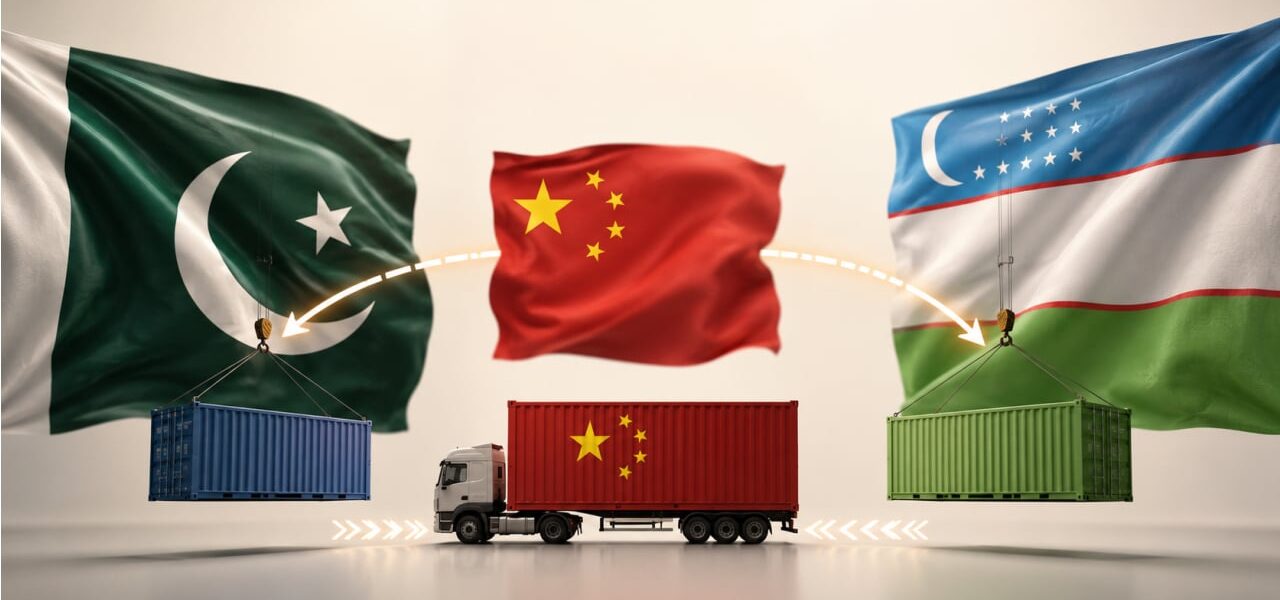
Pakistan and Uzbekistan have agreed to use the China corridor for transit trade, diversifying routes and reducing dependence on traditional corridors.

Add Sun News on Google News
Pakistan, Uzbekistan to Use China Corridor for Trade

Key Takeaways

  • Pakistan and Uzbekistan have agreed to use the China corridor for transit trade.
  • The agreement aims to diversify routes and reduce dependence on Afghan and Iranian corridors.
  • Officials expect a Protocol signing during an upcoming visit by Uzbekistan’s Deputy Prime Minister.

Pakistan and Uzbekistan have reached an agreement in principle to utilize the China corridor for bilateral transit trade, providing an alternative route following disruptions along traditional corridors. This move is part of efforts to ensure uninterrupted movement of goods despite regional security challenges.

The understanding was formalized during recent discussions between the two countries, with officials emphasizing that the revised transit framework will diversify routes and reduce dependence on the Afghan and Iranian corridors, which have faced disruptions due to regional instability.

According to official statements, the Protocol for Incorporation of Additions and Amendments into the Pakistan-Uzbekistan Transit Trade Agreement is expected to be signed during the visit of Uzbekistan’s Deputy Prime Minister to Pakistan from July 20-21, 2026. This agreement will allow Pakistan to use the China corridor as an additional transit route for trade with Uzbekistan and other Central Asian republics.

AdvertisementFollow Sun NewsWatch Live

Uzbekistan currently stands as Pakistan's second-largest trading partner in Central Asia, with bilateral trade reaching $445.9 million in 2025. Pakistan exported goods worth $120.9 million while importing $325 million from Uzbekistan during the same period.

The existing Pakistan-Uzbekistan Transit Trade Agreement, which has been in force since March 2022, covers various aspects including customs infrastructure, transport permits, warehousing facilities, multiple entry visas for truck drivers, and dispute resolution mechanisms. The agreement allows the movement of goods through designated routes, ports, and border crossings agreed upon by both countries.

Officials highlighted that the revised transit framework is aimed at ensuring the uninterrupted flow of goods despite evolving regional security challenges. They noted that Uzbekistan’s continued access to Pakistani seaports will be maintained under this new arrangement, further enhancing trade relations between the two nations.

The agreement underscores Pakistan's commitment to diversifying its trade routes and strengthening economic ties with Central Asian countries through alternative corridors. This move is expected to bolster regional cooperation and enhance trade flows in the broader South Asia-Central Asia corridor.