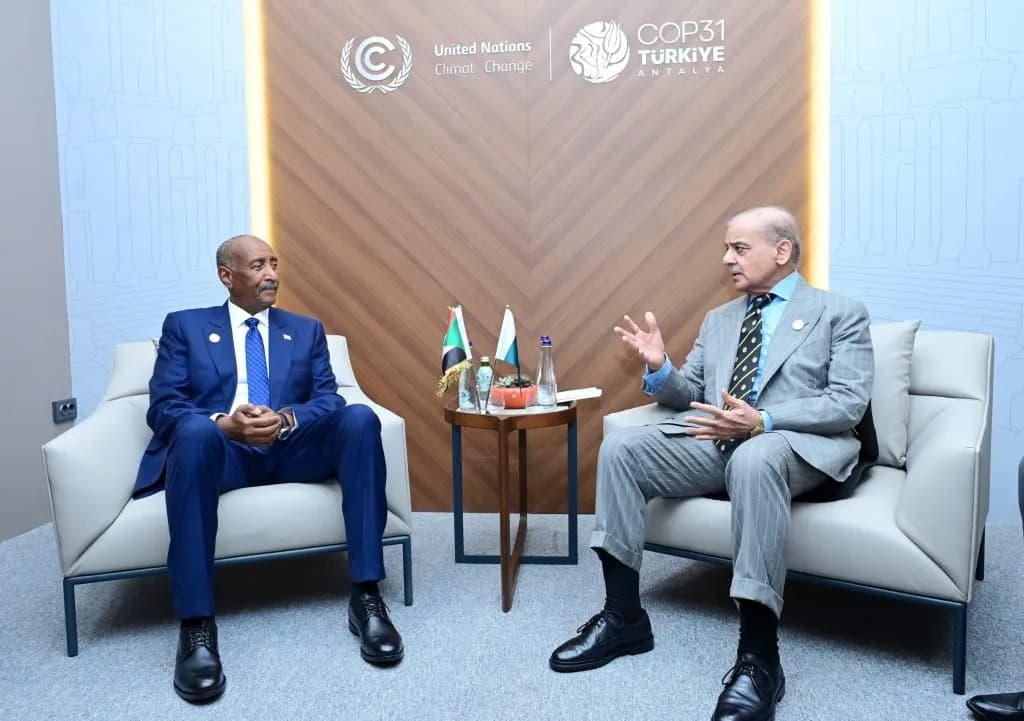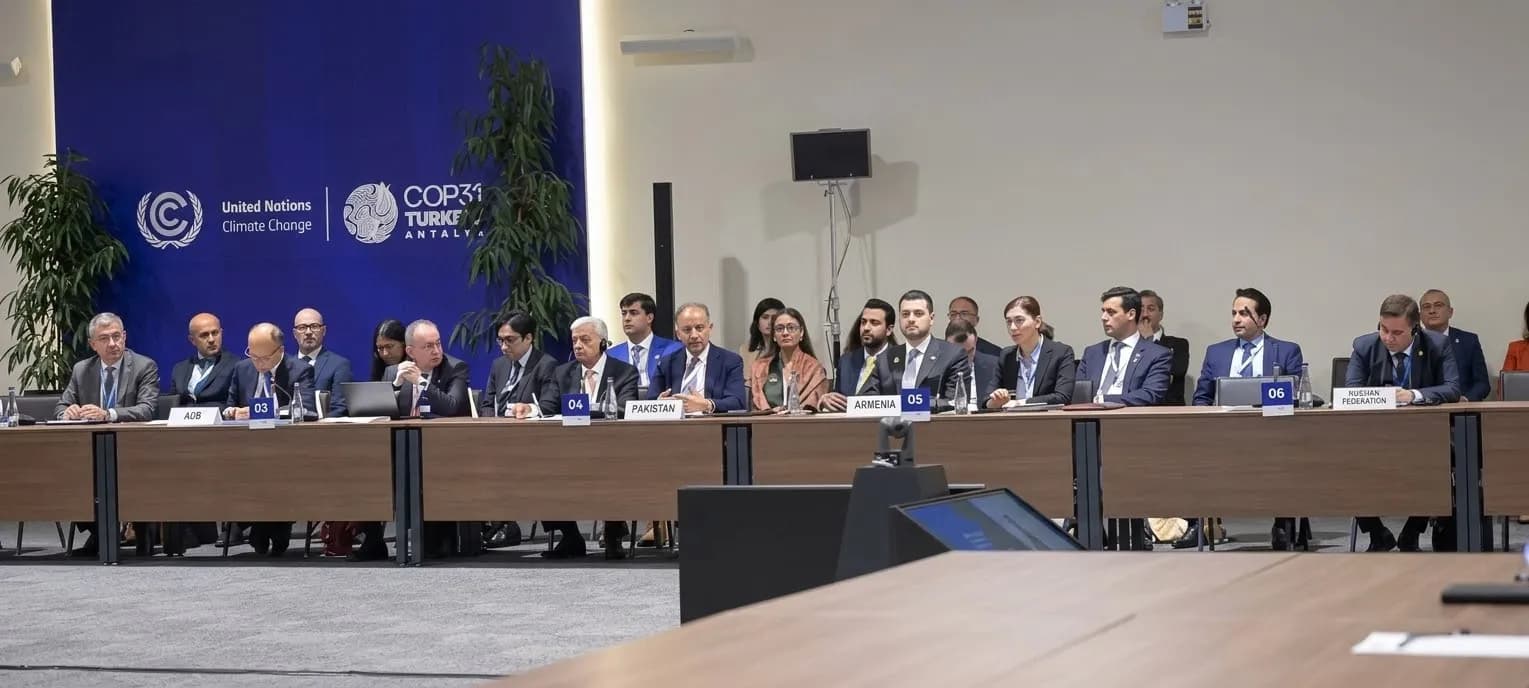
Federal Minister for Climate Change and Environmental Coordination Senator Dr Musadik Masood Malik has called for climate justice and a faster delivery of international climate finance. Speaking at a high-level event titled “Advancing the Mountain Agenda” during the 31st UN Climate Change Conference (COP31) in Türkiye on November 13, Dr Malik stated that glacier-related disasters are pushing vulnerable mountain communities in Pakistan back into poverty for generations.
The minister argued that countries contributing the least to global greenhouse gas emissions are bearing some of the heaviest consequences of climate change, while international financing remains concentrated in major emitting economies. According to figures presented in his speech, global estimates suggest around $40 billion is required annually to address loss and damage caused by climate change. However, Dr Malik noted that only $822 million had been committed and $422 million collected, with no money disbursed to affected countries.
Dr Malik contended that the international financing system focuses more on emissions than on the devastation experienced by affected communities. “The green financing of the world is chasing emissions, not vulnerabilities, not disruptions, not devastations,” he said, urging a reconsideration of financing priorities.
To illustrate the human cost, Dr Malik recounted the experience of Zahra, a resident of Hasanabad in Gilgit-Baltistan. He described how her husband rescued her and their children as boulders crashed down a mountainside, though the family lost their home and livelihood. Dr Malik stated that around 1,000 households were devastated in that incident. He noted that families in mountain communities often require three or four generations to recover from the economic consequences of such disasters. “People in other parts of the world measure devastation in dollars and GDPs. We measure devastation in generations,” he said.
The minister also recalled a disaster where a shepherd named Khan alerted downstream villages via mobile phone, allowing for evacuations before around 3,000 homes were destroyed. Dr Malik criticized the current situation, stating, “No man in the mountains, no nation should have to trust the lives of its people to a shepherd standing at the bottom of a glacier with a mobile phone with signals. This is not an acceptable early warning system.”
He stressed the necessity for institutionalized early-warning mechanisms, improved glacier monitoring, and scientific research. Dr Malik noted that Pakistan has identified more than 13,500 glaciers, making international scientific cooperation essential for understanding glacier dynamics and developing adaptation strategies. He warned that changes in high-altitude regions could eventually affect downstream plains within five, 10, or 15 years. “The mountains are the first to hit, so take the hit,” he said.
Regarding Pakistan's role, the minister stated the country accounts for less than one per cent of greenhouse gas emissions but remains severely affected, citing the 2022 floods where around one-third of the country was submerged. He questioned the distribution of global climate finance, noting that developing countries often must borrow at higher interest rates than wealthier economies despite lower emission contributions.
Dr Malik called for a rights-based approach to climate action, asserting that vulnerable communities have a right to timely warnings, dignified recovery, and water access. He urged countries to move beyond pledges toward practical support for infrastructure, research, and recovery. “I bring to you the voice of Zahra, I bring to you the voice of Khan, and to you, the voice of all of those who could not afford a ticket to come to COP and represent themselves,” he said.