The Executive Committee of the National Population Council (NPC) has agreed that Pakistan's rapidly growing population constitutes a national emergency requiring urgent and coordinated action. During the committee's first meeting held at the Planning Commission on Friday, November 13, 2026, officials discussed strategies to stabilize growth while capitalizing on the country's demographic potential.
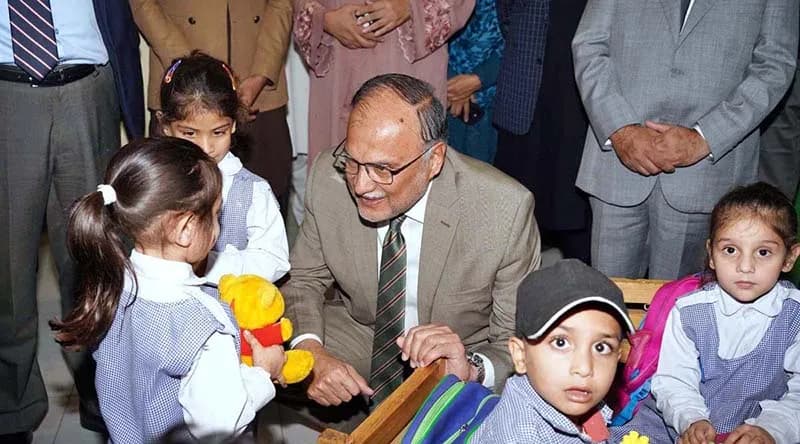
Planning and Development Minister Ahsan Iqbal co-chaired the meeting alongside Health Minister Mustafa Kamal. Iqbal expressed serious concern over recent data, noting that while the population growth rate had gradually declined to 2.4 per cent since 1980, it rose again to 2.55pc in the 2023 census.
"We have taken our foot off the brake and put it on the accelerator. This trend must be reversed," Iqbal remarked during the session. He argued that population figures are directly linked to the well-being of children and the sustainability of national resources, stating that economic prosperity would be difficult to achieve without balancing growth with available resources.
Iqbal provided an economic analysis, observing that if the economy grows by 5pc while the population increases by 2.5pc, actual per capita growth is reduced to just 2.5pc. He warned that unchecked growth would make it harder to meet needs for healthcare, education, and employment. Furthermore, Iqbal pointed out a contradiction in the existing National Finance Commission (NFC) award formula, which gives 82pc weightage to population in resource distribution. He proposed linking the NFC award to development and sustainability indicators to reward provinces that maintain balanced population growth.
The committee reviewed the National Health and Population Policy and the National Population Stabilisation Programme presented by the health ministry. Provinces and regions were instructed to notify provincial population councils and executive committees, prepare costed implementation plans, and link missing data streams with the Contraceptive Logistics Management Information System.
In a separate consultative dialogue held by the Population Council in collaboration with the United Nations Population Fund, religious scholars, health experts, and policymakers discussed maternal and child health and birth spacing. Dr Ali Mohammad Mir, country director of the Population Council Pakistan, highlighted the importance of involving religious leaders.
"Every 37 minutes, a mother loses her life in Pakistan. Religious scholars can play a transformative role in guiding families and communities towards informed and responsible decisions," Dr Ali Mohammad Mir said.
Maulana Abdul Khabeer Azad, Ruet-i-Hilal Central Committee Chairman, stated that protecting mothers and children is consistent with Islamic teachings. Allama Raghib Hussain Naeemi, Council of Islamic Ideology (CII) Chairman, added that protecting mothers' health and fulfilling children's rights are responsibilities shared by both parents and society.