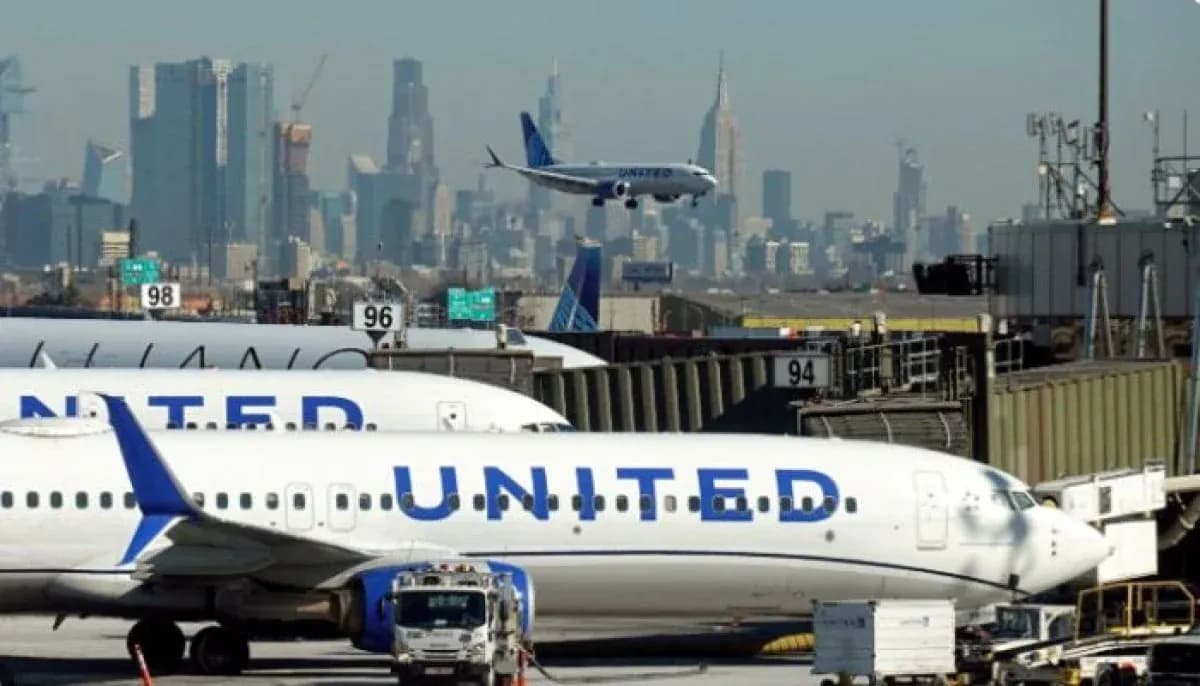
The Federal Aviation Administration (FAA) issued a nationwide ground stop for all departing flights across the United States on Friday following a critical communications outage. The disruption impacted all Air Route Traffic Control Centers nationwide, causing thousands of flights to be delayed or canceled and creating widespread confusion for travelers.
US Homeland Security Secretary Markwayne Mullin stated there was no evidence that the outage was caused by a deliberate attack. However, he noted that officials were keeping all possibilities open. "There was no indication, as of yet, that this was a nefarious attack against us; it's just a telecommunications outage, as of right now," Mullin said on Friday, adding that officials were "not ruling out anything at this point".
Under the ground stop order, departing flights were barred from taking off, while aircraft already in the air were permitted to continue to their destinations and land safely. The supplied FAA statement did not indicate that arriving flights had also been grounded. At the Las Vegas airport, a Southwest Airlines check-in desk reportedly told passengers that no flights would be taking off for 24 hours.
The FAA reported that technicians were investigating the telecommunications and communication issue. This event marks only the second nationwide ground stop of all departures in the U.S. since the September 11, 2001 attacks. The previous occurrence was a brief computer system malfunction in January 2023 involving the Notice to Air Missions (NOTAM) system, which provides pilots with information regarding hazards and airport facilities. That 2023 disruption lasted just under two hours.
The incident has reignited debates over the aging infrastructure of the U.S. air traffic control system. On Thursday, a day before the outage, Transportation Secretary Sean Duffy formally requested $30.1 billion from Congress to modernize the system. In a letter to lawmakers co-authored with Office of Management and Budget Director Russell Vought, Duffy wrote: "This investment is critical to complete the modernisation of our national airspace -- delivering a resilient telecommunications backbone for air traffic controllers, modern hardware and software, state-of-the-art control towers, and world-class airport infrastructure,"
The funding request aims to upgrade communications networks, control towers, and operational technology.