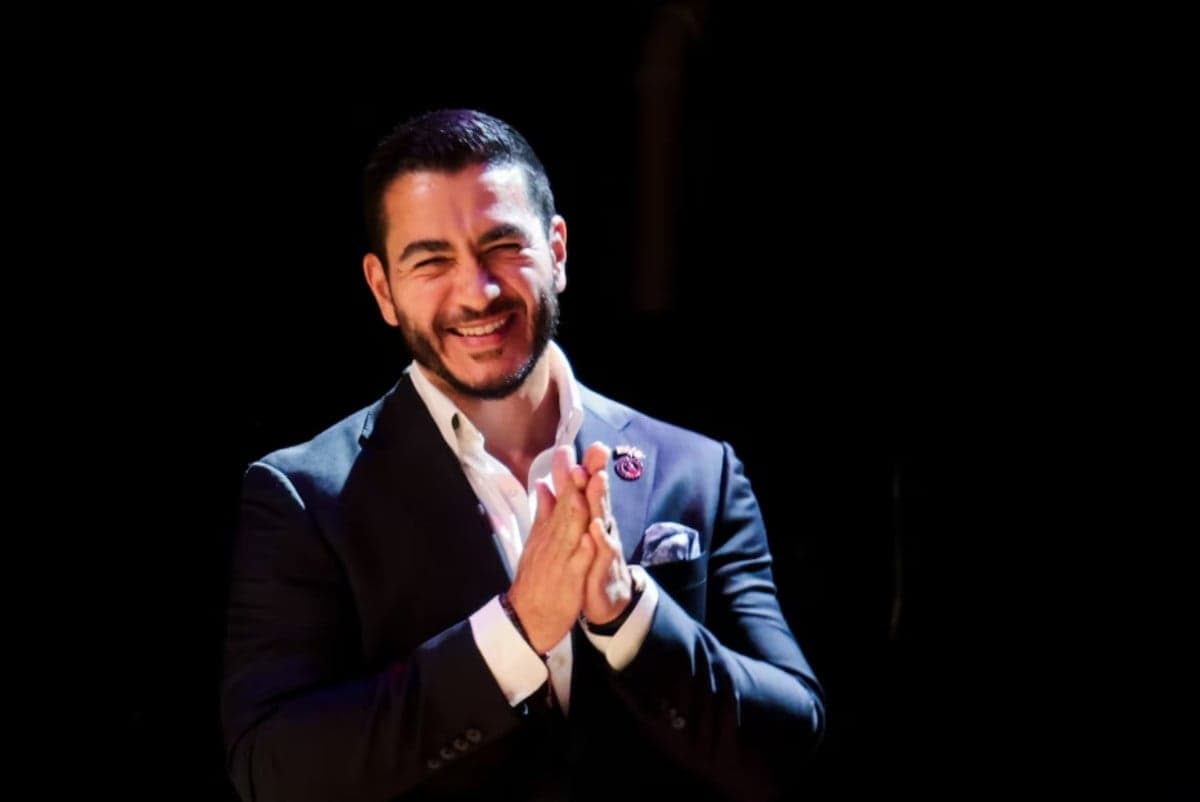
Abdul El-Sayed has become the first Muslim elected to the US Senate, winning his seat in Michigan’s midterm elections on Tuesday. El-Sayed, a 42-year-old Egyptian American and former health director of Detroit, ran as a progressive candidate focused on healthcare and the cost of living.
El-Sayed characterized his victory as a rejection of the rhetoric used by his Republican opponent, Mike Rogers. In a victory speech, El-Sayed described Rogers' campaign as "historically ugly" and "hate-based," stating, "You chose hate, and Michigan chose hope."
The campaign against El-Sayed was marked by what critics described as overtly Islamophobic tactics. President Donald Trump repeatedly branded El-Sayed a jihadist and compared him to the September 11 hijackers. Rogers, who claimed his objections were ideological rather than religious, portrayed El-Sayed as a national security threat. Rogers campaigned alongside Senator John Kennedy, who claimed El-Sayed sleeps "in a bin Laden jersey," and Senator Ted Cruz, who called El-Sayed a "jihadist leprechaun" and warned that Americans would die if he were elected.
Nazita Lajevardi, an associate professor at the University of Michigan, described the campaign as the "most egregious and most bigoted Islamophobic campaign" she has seen. She noted that unlike after September 11 or during Trump's first-term Muslim ban, there was little pushback from Republican party elites, observing that hostility came from "rank-and-file members of the Republican Party."
Republicans attempted to link El-Sayed to the Muslim Brotherhood using his half-sister's social media posts and his own decade-old writings on political change in Egypt. El-Sayed disavowed the group and denied any association; no evidence has emerged linking him to it.
The campaign also featured a controversial remark by El-Sayed where he stated "hurt people hurt people" in a statement denouncing violence. Some Jewish leaders criticized the remark as rationalizing antisemitic violence. El-Sayed later apologized, saying his comments may have been misconstrued and that "it wasn't the time for context." On the eve of the election, the Michigan Republican Party held a press conference with community leaders accusing El-Sayed of offering "SAFE HARBOR TO TERRORISTS," a claim party communications director Ted Goodman linked to the "hurt people hurt people" remark.
While some voters, such as 73-year-old Robin Cook, stated they did not trust El-Sayed because they did not think he was a "true American," many others dismissed the attacks as a distraction from economic issues. Pamela Johnson, a 72-year-old Catholic, stated she voted for El-Sayed because "We all matter, regardless of colour, race or whatever."
Residents in Dearborn reported that the rhetoric fueled safety concerns. Imad Soofi, a business owner, noted a rise in anti-Muslim hostility since Trump began targeting El-Sayed. Michigan House representative Alabas Farhat stated the campaign recycled tropes regarding how American a Muslim or Arab American can be, noting that the community continues to show how American they are.