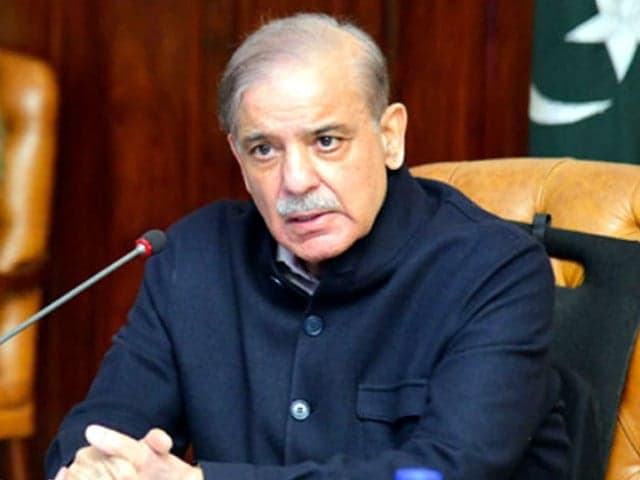
Prime Minister Shehbaz Sharif ordered the Ministry of Foreign Affairs on Monday to use "all possible means" to increase urgent humanitarian assistance to Gaza. In a post on X, the Prime Minister expressed that he was “deeply concerned” by what he described as Israel’s continued illegal actions to deny basic humanitarian assistance to the Palestinian people.
The Prime Minister condemned Israel’s violations of international law and the ceasefire, as well as continued aggression against Palestinians. He highlighted “heart-rending images of tents being flooded and of Gazan children with nowhere to go being trapped and subject to starvation and extreme cold.”
A storm that began late Friday caused heavy rain and strong winds to flood approximately 70,000 tents in the Gaza Strip, leaving displaced families without shelter. The Government Media Office estimated initial losses at about $3 million, noting that the storm also brought down dozens of walls.
Hosni Muhanna, a spokesman for the Gaza Municipality, told Anadolu that families whose tents were damaged have nowhere to stay. He stated that roughly 1 million residents and displaced people are crowded into about 30% of Gaza City’s area, which puts additional strain on infrastructure already devastated by what he called Israel’s genocidal war. Muhanna reported that the city received 60 millimetres of rain in 12 hours, representing about 15% of its annual rainfall.
Muhanna reported that municipal crews received 250 calls regarding blocked drains, erosion, and flooded streets, responding with limited resources. He warned that 270 camps and shelter sites in Gaza City are at risk of flooding because the drainage system’s capacity has been reduced to 20% due to war damage. He called for crossings to be fully opened to allow winter supplies, relief materials, and heavy equipment to enter Gaza.
Abdullah al-Majdalawi, director of public relations for Gaza’s Civil Defence, attributed the lack of safer alternatives to Israel’s blockade and restrictions on reconstruction materials and mobile homes.
According to UNRWA data from June, about 94% of Gaza’s population, or 1.98 million people, need shelter and essential supplies. The agency stated that 58% of those people face critical or catastrophic shelter needs. Furthermore, UNRWA reported that people living in displacement sites face moderate or high flood risks, with more than 400,000 located in high-risk areas.
More than a year after the October 2025 ceasefire took effect, shelter and reconstruction needs still far exceed available assistance amid continued Israeli restrictions on materials needed for temporary housing and home repairs.