Pakistan called for an immediate and robust ceasefire during the nearly four-year-old Russia-Ukraine war during a UN Security Council briefing on Monday, Nov. 10.
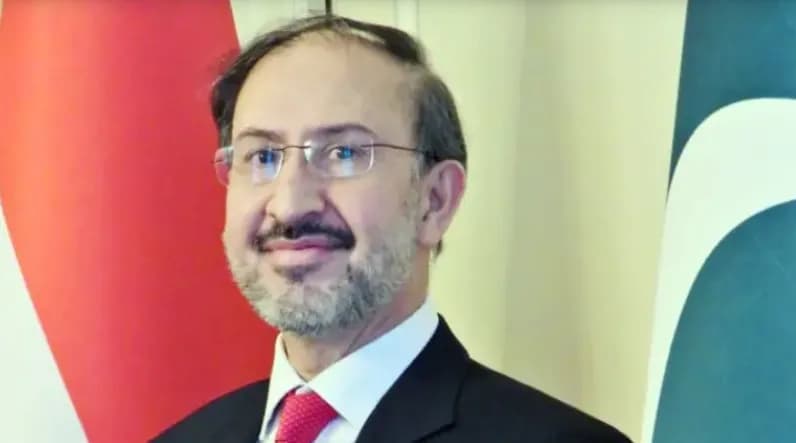
Ambassador Syed Haider Ali Shah, the permanent representative of Pakistan to the UN, expressed deep concern over the continued escalation of fighting and the harm caused to civilians and infrastructure. The briefing followed Russian attacks on Oct. 29 in Dnipro, Chernihiv, and Kremenchuk, which killed at least 19 people and injured more than 50.
The meeting, which was requested by Ukraine and supported by the Council’s five European members, was chaired by Latvia’s Foreign Minister, Baiba Braze. Ambassador Shah emphasized that an immediate ceasefire is necessary to pause hostilities, rebuild trust, and create a path for a peaceful political settlement. He stated that pursuing a military solution only risks further escalation and prolongs suffering.
The Pakistani envoy noted that the humanitarian fallout and shocks to global food and energy markets disproportionately harm developing countries. He pointed to recent scenes in Oleshky as evidence that meaningful progress can only be achieved through dialogue and cooperation. Ambassador Shah called on both parties to stop expanding the conflict, de-escalate, follow International Law and International Humanitarian Law obligations, and recommit to dialogue. He warned that military escalation shrinks diplomatic options and deepens the suffering of innocent populations.
Pakistan welcomed reports of working-level diplomatic meetings between Ukraine and Russia in Abu Dhabi and encouraged earnest, structured dialogue. Ambassador Shah stated that any durable peace must align with the UN Charter and international law while addressing the legitimate security concerns of all parties.
During the briefing, UN Assistant Secretary-General for Humanitarian Affairs and Deputy Emergency Relief Coordinator Mohamed Yahya warned that winter is no longer a distant threat. He noted that Russian attacks on energy infrastructure are causing power and water outages for millions as temperatures fall, putting pressure on hospitals and essential services. While aid is being provided to more than 2 million people, Yahya stressed that aid cannot replace an electricity grid repeatedly destroyed by attacks.
Yahya welcomed a humanitarian ceasefire in Russian-occupied Oleshky, which allowed for road clearing, supply movement, and civilian evacuation. He noted that the arrangement also allowed humanitarian teams to reach previously inaccessible communities in Government-controlled areas of Kherson. He stated that these practical arrangements demonstrate that cooperation is possible even amid intense hostilities, but stressed that Oleshky must not remain an isolated opening.