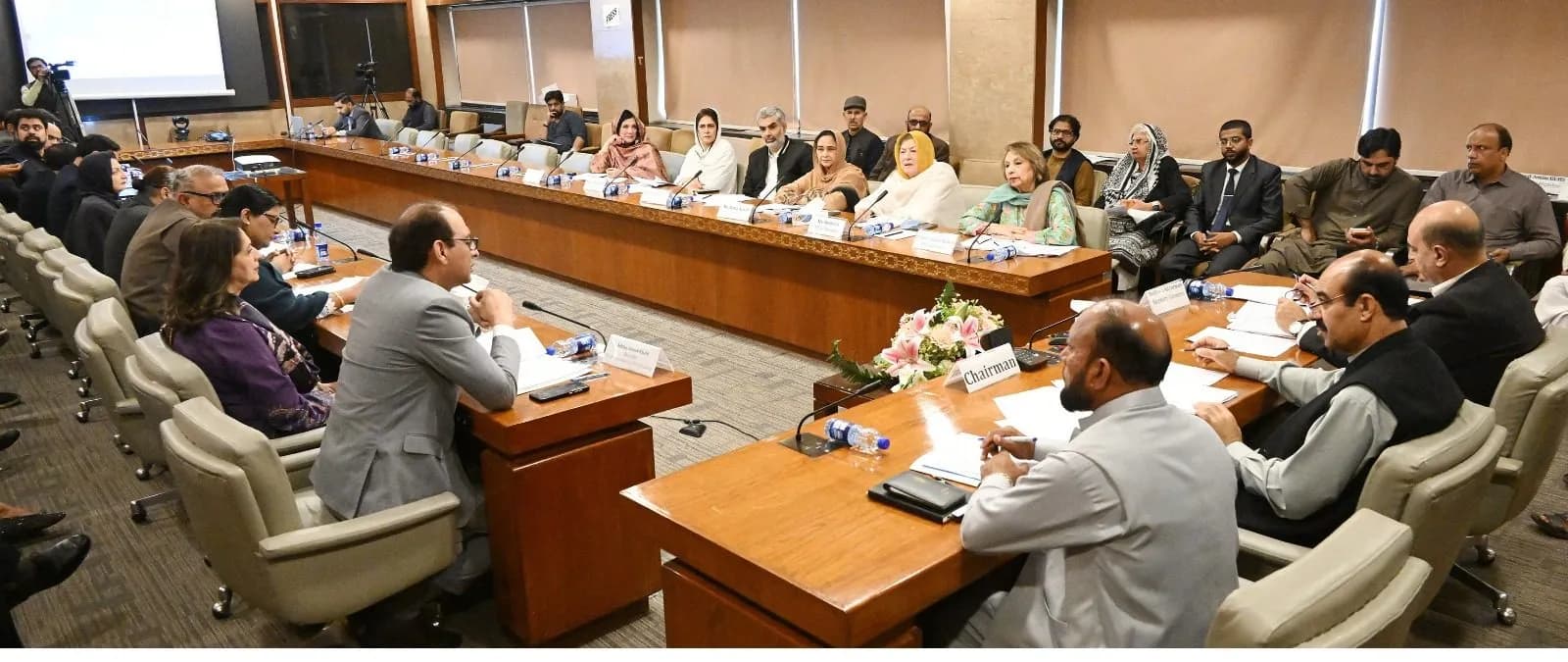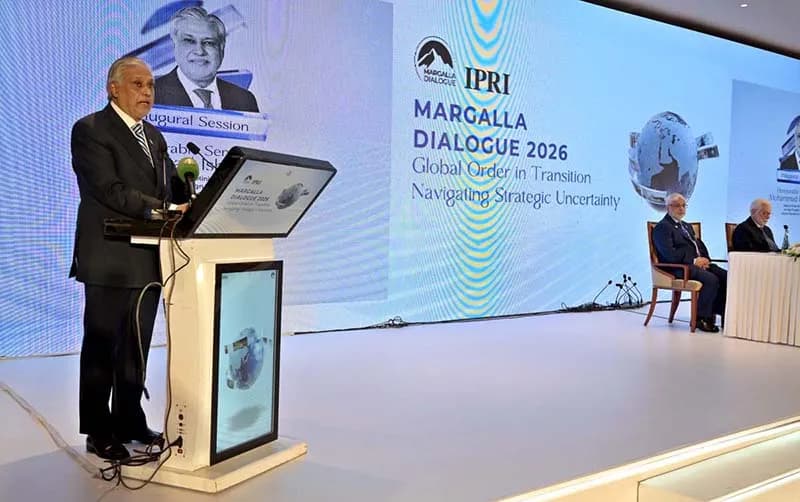
International scholars and strategic affairs experts called for the development of new international arrangements and greater regional cooperation during a forum on Tuesday. Speaking at the Margalla Dialogue 2026 in Islamabad, the experts stated that the changing global power balance and the weakening of traditional alliances are reshaping the international order.
Senator Mushahid Hussain Sayed, Chairman of the Pakistan-China Institute, delivered the keynote address, stating that recent developments in West Asia have changed traditional regional alignments. He said this has created more space for regional powers, including Pakistan and Türkiye, to influence the region's future. Sayed described the emergence of Muslim middle powers—specifically Pakistan, Iran, Türkiye, and Indonesia—as an important development that could shape regional politics over the coming decade.
Sayed noted that Pakistan’s foreign policy has never been confined to South Asia, recalling that Quaid-e-Azam Muhammad Ali Jinnah described Pakistan as a source of strength for Muslims in the Middle East during a December 1946 interview in Cairo. He stated that Pakistan’s engagement with Türkiye, Gulf states, and Iran reflects a longstanding interest in regional peace and stability.
Professor Dr Vali Reza Nasr of Johns Hopkins University stated that the international liberal order is weakening and the world is entering a new era of uncertainty. He said recent conflict involving Iran challenged the assumption that the United States could exercise unrestricted global power, demonstrating the limits of military superiority against a determined middle power. Nasr said the conflict accelerated the weakening of existing alliances and reduced Washington’s ability to manage regional developments.
Nasr warned that the United States and Israel failed to achieve strategic objectives through military action, and that the vulnerability of American military bases has raised questions among Gulf countries regarding the reliability of US security guarantees. He warned that the changing environment could encourage an arms race involving missiles, drones, and nuclear capabilities. He predicted the future security architecture of West Asia would likely involve a greater role for Iran and China and a reduced American presence, while noting that the rivalry between Iran and Israel remains a major source of instability.
Ambassador Robin Raphel of the Centre for Strategic and International Studies (CSIS) stated that the international system is undergoing a major transition, with the United States contributing to uncertainty by departing from the rules it helped establish. She said the weakening of institutions offers an opportunity to develop new arrangements. Raphel stated that the balance of power is shifting from West to East and from North to South, with China and emerging powers like Brazil, Indonesia, Nigeria, and South Korea gaining influence.
Raphel discussed a proposal for a “global concert” of major powers—including the United States, China, Russia, Japan, and the European Union—alongside regional organizations like ASEAN, the African Union, and the Arab League. She said such an arrangement could complement the United Nations by facilitating dialogue on issues such as trade, climate change, and artificial intelligence. She advocated for "competitive coexistence," where diplomacy takes precedence over military confrontation, and noted that Pakistan could contribute to regional mediation.
Dr Timofei Bordachev of the Valdai Discussion Club said the international system is passing through a transition where the United States faces limitations while China strengthens its position. He said competition between Washington and Beijing will remain the central feature of international politics, potentially taking the form of a new Cold War based on mutual containment focused on maritime trade routes and advanced technologies like artificial intelligence. Bordachev highlighted a paradox where the main strategic competition is between the US and China, but the greatest concentration of nuclear military power remains with the US and Russia.
Professor Dr Carlo Masala of Bundeswehr University Munich stated it is too early to determine if the shift will result in a bipolar order or a weakened unipolar system. He argued that claims of a multipolar world are not supported by the overall balance of military, economic, and soft power, stating that only Washington and Beijing currently possess the resources to shape the global order at that level. Masala noted that the outcome of Russia’s war against Ukraine will have a greater impact on the future structure of the international system than developments in the Gulf, warning that the conflict carries the risk of further military confrontation in Europe.