Key Takeaways
- The Environment Protection and Climate Change Department (EP&CCD) will introduce a new vehicular emission scanning system in Lahore.
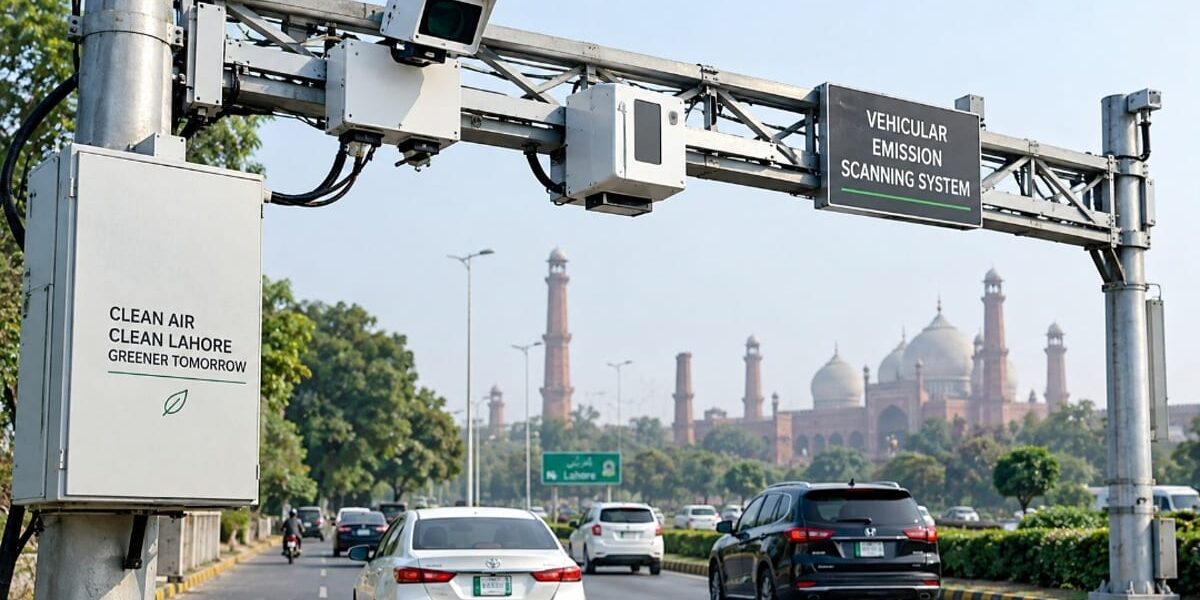
- Remote sensing devices (RSDs) will be used to measure emissions from moving vehicles without stopping traffic.
- The system aims to identify high-emitting vehicles for further inspection or regulatory action.
The Environment Protection and Climate Change Department (EP&CCD) is set to implement a new vehicular emission scanning system in Lahore, with the aim of reducing pollution from vehicles. The system will be deployed at nine entry and exit points of the city and will use remote sensing devices (RSDs) to measure emissions from moving vehicles without causing traffic disruptions.
According to EP&CCD Secretary Silwat Saeed, the system will allow the department to screen large numbers of vehicles under real-world driving conditions. This will provide more accurate data compared to traditional visual smoke checks and roadside testing methods.
The initiative forms part of the Lahore Air Improvement Framework (LAIF), which aims to improve air quality in the city. The VESS component of the LAIF was reviewed on August 24, covering equipment specifications, measurement accuracy, pollutant parameters, detection limits, vehicle speeds, and camera integration.
In addition to RSDs, the system will also use portable emission measurement systems (PEMS) to conduct detailed tests on selected vehicles during actual driving conditions. These tests will help verify the accuracy of the RSD readings and ensure that only high-emitting vehicles are targeted for further inspection or regulatory action.
The Punjab Environmental Protection Agency (EPA) will establish a dedicated Vehicular Emission Testing Unit (VETU) to oversee the technical operations, quality assurance, and implementation of the system. The VETU will ensure that the system operates efficiently and effectively, providing reliable data to support evidence-based regulation.
The introduction of this system is expected to significantly reduce the number of polluting vehicles on the roads, thereby improving air quality in Lahore. By identifying and addressing high-emitting vehicles, the EP&CCD aims to create a cleaner and healthier environment for the city's residents.
The system will record vehicle registration numbers and other relevant information, allowing authorities to connect emission readings with individual vehicles. This will enable the department to take targeted action against vehicles that exceed emission limits, ensuring that the system is both effective and fair.
The use of advanced technology in this initiative marks a significant step forward in the fight against air pollution in Lahore. By leveraging remote sensing and portable emission measurement systems, the EP&CCD is taking a proactive approach to improving air quality and protecting public health.