Key Takeaways
- Research suggests the human brain evolved from two ancient nervous systems that merged.
- Scientists discovered that the front and back brain regions develop from different cell types in embryos.
- Understanding this could aid research into motor neuron diseases like ALS and spinal muscular atrophy.
A groundbreaking study has revealed that the human brain develops from two distinct cell types, rather than a single origin as previously thought. This finding, published in New Scientist, challenges long-held beliefs about brain development and could have significant implications for medical research.
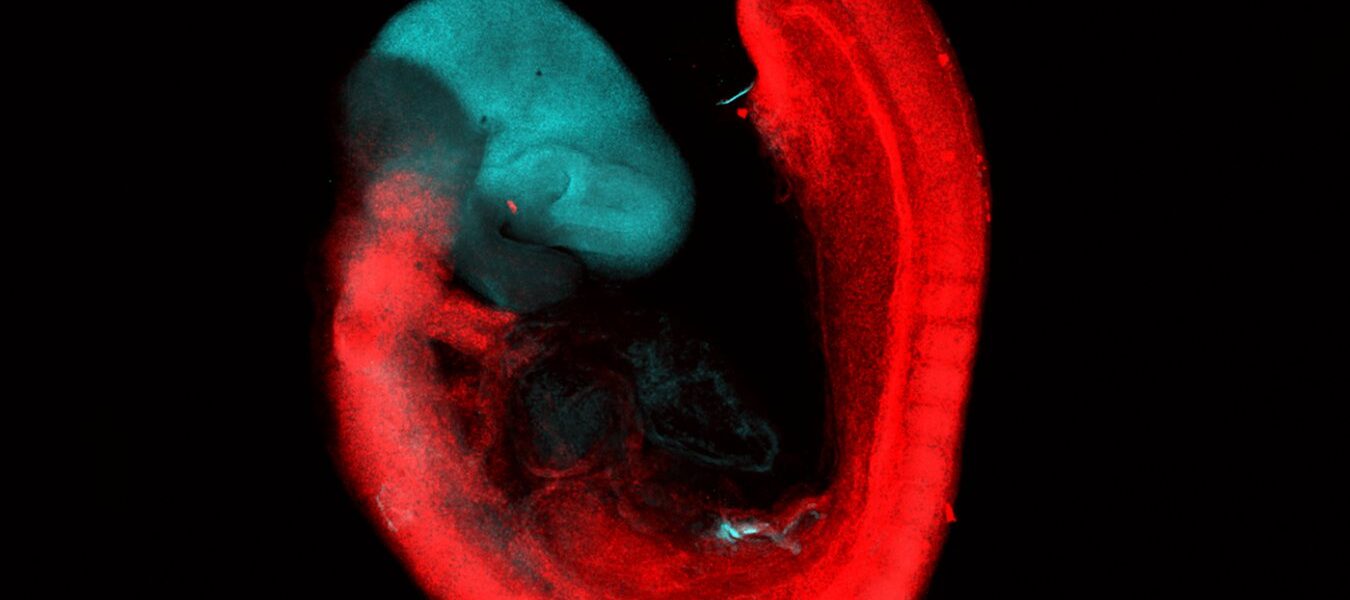
Kyle Loh, a researcher at Stanford University, led the study, which examined the early stages of mouse embryo development. His team found that the brain develops from two types of early progenitor cells: one expressing the gene OTX2 and the other expressing GBX2. These cells give rise to the neurons in the front (forebrain and midbrain) and back (hindbrain) parts of the brain, respectively.

The discovery explains why it has been so difficult to grow human hindbrain tissue in a lab. Typically, researchers have tried using forebrain and midbrain progenitor cells, which do not work. However, with the correct type of progenitor cell, the team was able to grow functional human hindbrain motor neurons for the first time.
The hindbrain is crucial for fundamental life-sustaining processes such as breathing, sleeping, eating, and the beating of the heart. Conditions like amyotrophic lateral sclerosis (ALS) and spinal muscular atrophy, which affect the hindbrain, can cause speech and swallowing difficulties. This new understanding could significantly advance research into these debilitating diseases.
Recently, scientists discovered that GLP-1 drugs like Ozempic and Wegovy suppress appetite in mice by acting on the hindbrain. With the ability to grow human hindbrain neurons in a dish, researchers can now investigate the precise mechanisms of how these drugs work in people, potentially leading to new treatments.
Loh and his colleagues believe that their findings could revolutionize the way we understand and treat neurological disorders. 'Our research suggests that evolution took two existing neural systems and pushed them together spatially,' says Loh. 'Having the brain as one organ would probably be more efficient, but we rely on this primordial way to make the brain as two separate pieces.'
The study also highlights the importance of interdisciplinary research, combining insights from developmental biology and neuroscience. By understanding the unique development of different brain regions, scientists can better target treatments for specific neurological conditions.
This research could lead to significant breakthroughs in the field of neurology, offering new hope to patients suffering from motor neuron diseases. As Loh notes, 'Armed with this knowledge, we can now grow functional human hindbrain motor neurons in a dish, which should assist ALS and spinal muscular atrophy research.'
Our research suggests that evolution took two existing neural systems and pushed them together spatially.
Kyle Loh, Researcher at Stanford University