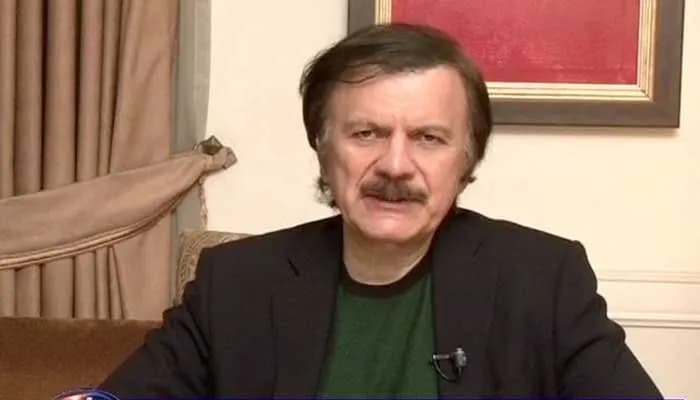
Adviser to the Prime Minister on Industries and Production Haroon Akhtar Khan stated on Wednesday that the Autos and Auto Parts Manufacturing Policy 2026–2031 marks a major shift for Pakistan’s automotive sector. The policy moves the industry away from import-dependent assembly toward export-oriented manufacturing, greater localisation, and internationally competitive domestic production.
According to a news release, the policy reflects Prime Minister Shehbaz Sharif’s vision for an export-led, self-reliant economy. The government intends to empower local manufacturers, strengthen domestic parts production, create jobs, and integrate Pakistani industry into global supply chains.
To ensure growth in domestic value addition, the new policy introduces binding localisation requirements. Khan stated these requirements are designed to ensure market expansion translates into industrial activity, investment, and technological development. Companies that fail to meet minimum domestic value addition requirements will face an additional three percentage points of customs duty on relevant non-localised CKD imports in the following financial year, subject to legal processes.
The government plans to support Pakistan’s approximately 2,200 auto parts manufacturers through a dedicated Vendor Upgradation and Technology Transfer Programme (VUTTP). With an allocation of Rs 2.1 billion, the programme will be implemented by the Engineering Development Board (EDB) and the Small and Medium Enterprises Development Authority (SMEDA). It aims to provide technological upgrades, access to common manufacturing facilities, skills development, and international quality certification. Additionally, the policy targets investment in at least five anchor auto parts manufacturing firms to develop domestic manufacturing clusters.
Export promotion is a defining feature of the policy, which sets cumulative export targets of approximately $6 billion for 2026–2031. Of this, approximately $3.29 billion (55 per cent) is targeted from auto parts manufacturers, while automobile manufacturers are expected to contribute approximately $2.72 billion (45 per cent).
To support exporters, the policy introduces a Drawback of Local Taxes and Levies (DLTL) scheme. This provides eligible exporters with 5 per cent support on net Free on Board (FOB) export value, plus an additional 10 per cent incentive on qualifying incremental exports. Manufacturers will also be required to secure export opportunities within the global supply chains of their international principals.
The government is progressively rationalising customs duties over five years, linking import concessions to manufacturing and export performance. For example, a concessional 5 per cent customs duty on imported battery electric vehicles (BEVs) valued up to $15,000 during the first two years is conditional on the establishment of domestic assembly or manufacturing facilities. Companies seeking this must submit a surety bond and an irrevocable bank guarantee covering the customs-duty differential and must begin commercial production of the imported BEV variant by September 30, 2028.
Khan stated the policy is expected to generate cumulative foreign exchange savings of approximately $17.7 billion during 2026–2031 compared to importing equivalent completely built-up (CBU) automobiles. Furthermore, the policy projects that increased adoption of new energy vehicles will help avoid imports of approximately 1.823 million tonnes of oil during the policy period.
The policy also allows for contract manufacturing to utilize Pakistan’s existing industrial capacity, which currently has estimated idle capacity ranging from 41 to 80 per cent. Khan concluded that the framework is designed to strengthen the domestic industrial base rather than perpetuate dependence on imported vehicles and components, with the ultimate goal of transforming the sector into a driver of export-led economic growth.