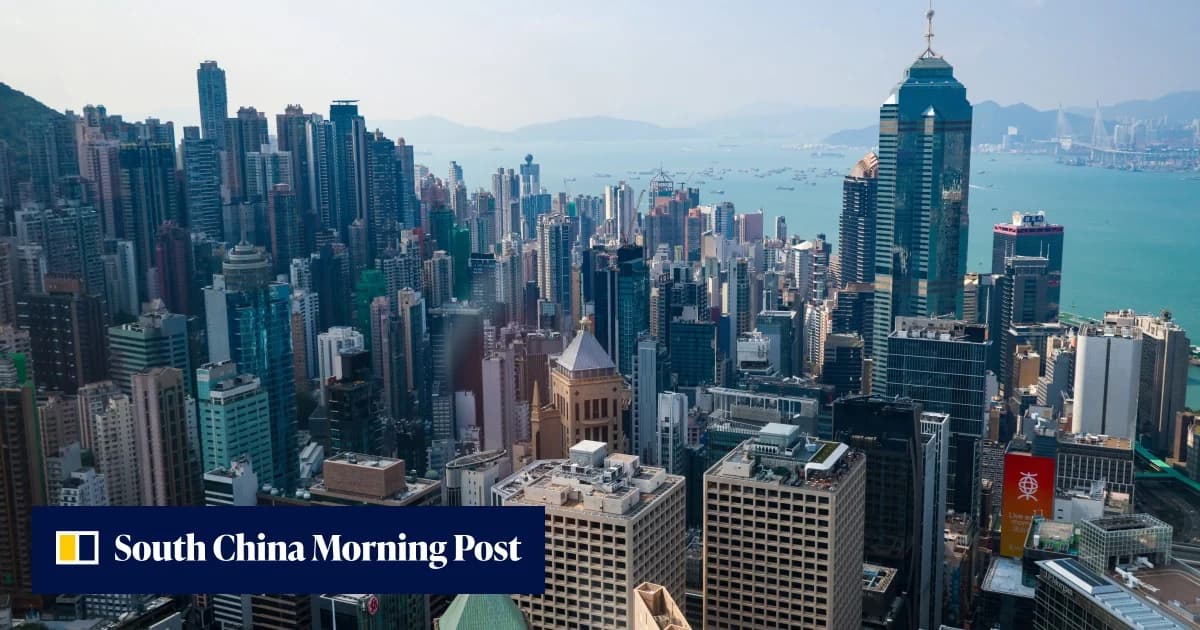
Hong Kong is seeking to move beyond its post-pandemic recovery to establish a new phase of growth as an international financial centre. During a summit held in early November, officials presented the city’s first five-year plan, which aims to strengthen its position by developing new growth engines in technology and innovation.
The summit, organized by the Hong Kong Monetary Authority (HKMA), brought together approximately 280 financial leaders, including about 120 group chairmen and CEOs. This was the largest gathering of its kind since the inaugural event in November 2022. During the 2022 summit, HKMA chief executive Eddie Yue Wai-man told investors "Hong Kong is back." This year, investor Shan Weijian recalled Yue saying "Hong Kong is booming."
Chief Executive John Lee Ka-chiu stated that Hong Kong is adapting its economic strategy to a world shaped by technological disruption and geopolitical tensions. He highlighted efforts to expand into green finance, fintech, gold and commodities trading, and presented the five-year plan as a source of long-term policy direction and certainty for investors.
Kenny Tang Sing-hing, chairman of the Hong Kong Institute of Financial Analysts and Professional Commentators, said the presence of leading financiers and officials is helpful in expanding the city’s international investor base and raising its global profile. Standard Chartered CEO Bill Winters, who attended all five editions of the summit, noted that the 2022 gathering was Hong Kong’s way of saying "we’re back" following the pandemic and social unrest. Winters observed that the Chinese capital markets continue to open up, and the centrality of Hong Kong to that opening is becoming "more and more clear."
A major theme of the summit was Hong Kong’s role as a bridge between mainland China and international markets. Wilson Chan, an adjunct professor at City University of Hong Kong, said key opportunities include helping mainland companies raise capital through Hong Kong listings and helping businesses of all sizes expand overseas. C.S. Venkatakrishnan, Barclays Group Chief Executive, stated that global financial sectors like Hong Kong play a role in helping a country manage dependencies on a few large technology companies.
The summit also featured senior mainland officials and regulators, which was significant following a fresh sell-off in China’s stock market in October, where the CSI 300 index fell 8.5 per cent. Vice-Premier He Lifeng pledged to increase offshore yuan liquidity, expand yuan bond issuance, and support mainland companies’ listings in the city.
However, Chan warned that translating strategic advantages into a sophisticated financial market would "take time." He noted that while investors may reconsider US assets due to geopolitical tensions, a shift toward Chinese markets requires more than just underlying assets; investors also need hedging instruments like interest-rate swaps, options, and a broader range of derivatives.
Artificial intelligence dominated the discussions, moving from a theme of investment appeal to a discussion on risks. Morgan Stanley chairman Ted Pick estimated that investment in AI infrastructure could eventually reach US$10 trillion to US$15 trillion, arguing it could drive significant productivity gains. Goldman Sachs chairman David Solomon said demand for computing power is likely to vastly exceed supply over the next couple of years and cautioned that "there will be winners and losers" as technology advances faster than businesses can deploy it.