Key Takeaways
- State-owned enterprises (SOEs) in Pakistan are generating losses of Rs342.8 billion, according to a recent Cabinet Committee meeting.
- The cumulative losses of failed commercial SOEs have surpassed Rs6.5 trillion over the past 20 years.
- The heavy financial burden of SOEs is restricting government investment in public services and infrastructure.
President of the Pakistan Businessmen and Intellectuals Forum (PBIF) and Chairman of the National Business Group Pakistan, Mian Zahid Hussain, has warned that state-owned enterprises (SOEs) in Pakistan are becoming nearly unsustainable, reflecting a deep-rooted structural problem that requires urgent and sustained reforms.
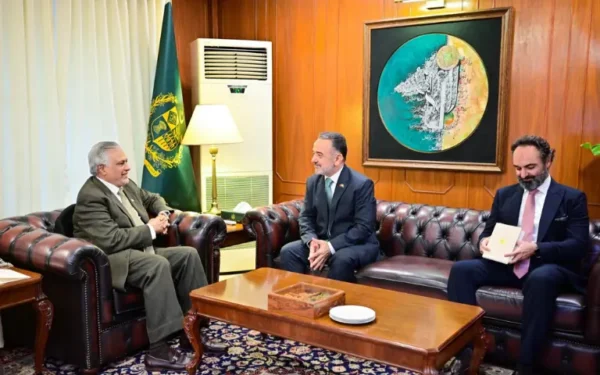
A meeting of the Cabinet Committee on State-Owned Enterprises (CCoSOEs) was held in Islamabad on September 14, chaired by Federal Minister for Finance Senator Muhammad Aurangzeb, to review the performance of federal SOEs during the first half of FY2025-26.
During the meeting, it was reported that profitable SOEs generated Rs423.3 billion, while loss-making entities recorded aggregate losses of Rs342.8 billion. Government support to all SOEs stood at Rs804 billion, contributing Rs839 billion to the national exchequer, resulting in a net positive receipt of Rs35 billion for the government.
Mian Zahid Hussain highlighted that an analysis of the past 20-year trajectory reveals a highly alarming scale of financial burden. As of December 2025, the cumulative losses of failed commercial SOEs have now surpassed Rs6.5 trillion. In the 2000s, the annual aggregate loss ranged between Rs40 and Rs90 billion, but with continuous increases, these failing entities are now losing approximately Rs2.5 to Rs3 billion every single day.
This persistent drain of the national exchequer restricts the government’s ability to invest in essential public services and infrastructure. Ultimately, the heavy cost of this continuous wastage is borne by the business community and the public through heavy taxation and exorbitant utility bills.
Over the past two decades, successive governments have sustained these failing entities through direct budgetary subsidies, development grants, equity injections, and sovereign loan guarantees, the volume of which has exceeded Rs10 to Rs12 trillion. The total debt of SOEs, which stood at around Rs250 billion in FY2005-06, has multiplied 38 times to reach Rs9.57 trillion by the first half of FY2025-26.
This debt includes Rs2.16 trillion in off-balance-sheet sovereign guarantees and over Rs2.03 trillion in unfunded pension liabilities owed by entities like PIA, Pakistan Railways, and power distribution companies (DISCOs). Such an unproductive utilization of national capital is crowding out private sector borrowing, making it difficult to provide the capital required for industrial growth in Pakistan.
Mian Zahid Hussain pointed out that over 85 percent of these long-term losses stem from the power sector DISCOs. The National Highway Authority (NHA) is weighed down by heavy non-performing loans, while Pakistan Railways are crippled by historical overstaffing and legacy commercial debt. Pakistan Steel Mills continues to swallow billions of rupees annually in maintenance and salaries, despite being closed since 2015, reflecting sheer administrative negligence.
While progress on privatization represents a step forward, PIA – auctioned in December 2025 with management transferred in June 2026 – remains a glaring example of the heavy price paid for decades of delayed privatization. He pointed out that to make the airline commercially viable for private investors, significant reforms are necessary.