Key Takeaways
- Female literacy stands at 47pc, with rural women at 27.52pc.
- Over 4.08m girls between five and 16 remain out of school.
- Women account for only 4.34pc of the police force and 13.7pc of judges.
The Sindh government has unveiled its first-ever Gender Parity Report, highlighting significant progress in maternal health and political participation, but also identifying persistent gender gaps in education, workforce representation, and digital access.
According to the report, female literacy in Sindh stands at 47 percent, with a stark contrast in rural areas where only 27.52 percent of women are literate. Over 4.08 million girls between the ages of five and 16 remain out of school, underscoring the urgent need for intervention.
In the justice sector, women continue to be underrepresented, accounting for only 4.34 percent of the police force, 18.3 percent of prosecutors, and 13.7 percent of judges. The report also documented 3,085 cases of gender-based violence in 2024, emphasizing the need for stronger protection mechanisms and improved access to justice.
Despite these challenges, the report notes steady progress in the health sector. Maternal mortality has declined significantly from 314 to 224 deaths per 100,000 live births, while neonatal mortality stands at 24 deaths per 1,000 live births. Public allocations for health have increased, with a projected rise to Rs318.22 billion in 2025-26.
In governance and political participation, women’s voter registration has exceeded 12 million, and the number of women contesting general elections has increased from 23 in 2018 to 53 in 2024. However, barriers related to digital connectivity, financial inclusion, skills development, entrepreneurship, and access to decent work continue to limit women’s full economic participation.
The report concludes that while Sindh has achieved measurable progress in several sectors, sustained reforms, stronger institutions, improved district-level data systems, and focused investments will be essential to achieving inclusive, equitable, and gender-responsive development throughout the province.
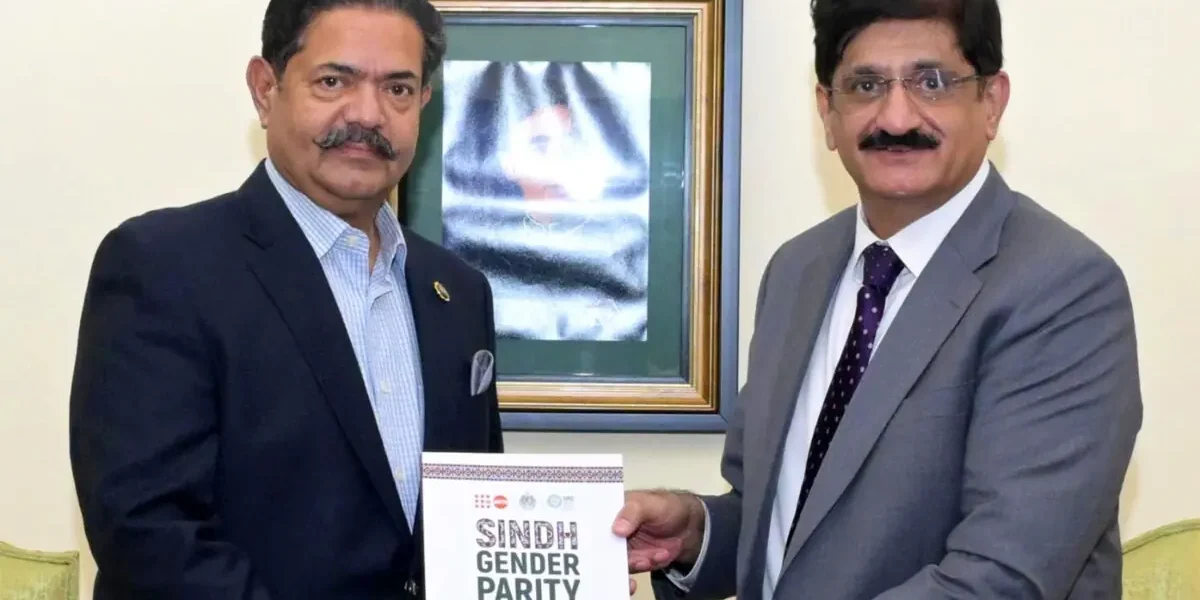
Speaking at the unveiling of the report, Sindh Chief Minister Murad Ali Shah directed all provincial departments to undertake targeted reforms, strengthen gender-responsive governance, and improve access to education, healthcare, economic opportunities, and representation for women and girls.
The report provides a comprehensive baseline on gender disparities and progress across key sectors, including health, education, justice, governance, economic participation, and demographics, offering a roadmap for future policy interventions.