Key Takeaways
- Former SPD chief warns of no space for war between nuclear-armed states.
- Growing reliance on hard power and emerging technologies pose new challenges.
- Pakistan emphasizes its nuclear deterrence and conventional capabilities.
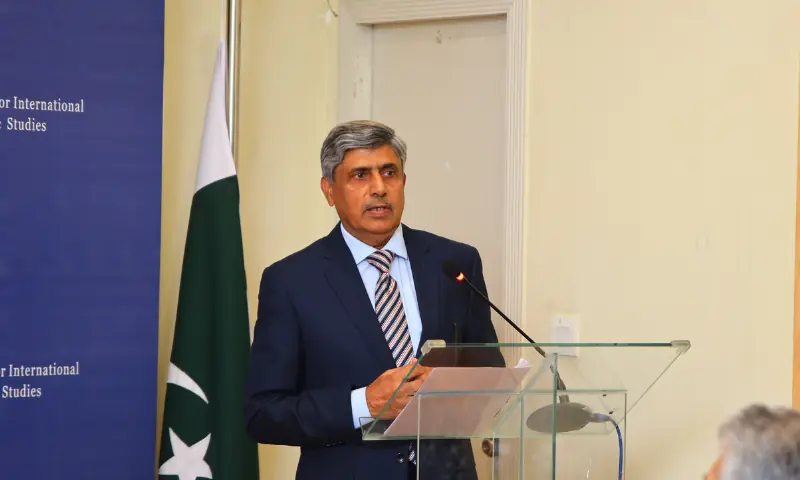
Adviser to the National Command Authority and former director general of the Strategic Plans Division (SPD) Lt Gen (retd) Mazhar Jamil has warned that the erosion of traditional arms-control frameworks and shrinking space for diplomacy are creating new challenges to strategic stability in South Asia.
Speaking at the seventh edition of the ‘Training of the Trainers’ workshop on strategic matters organised by the Centre for International Strategic Studies (CISS), Islamabad, Gen Jamil highlighted the increasing complexity of the global and regional strategic environment.
He stressed that persistent threat perceptions, unresolved disputes such as Kashmir, and India’s military posturing have contributed to continuing security tensions in the region.
Gen Jamil warned that Indian military adventurism and hegemonic approaches in a nuclearised South Asia carry unacceptable risks, emphasizing that there is no space for war between two nuclear-armed states.
Referring to the experience of May 2025, Gen Jamil highlighted Pakistan’s nuclear deterrence, conventional capabilities, national resilience, and cohesive response framework, including the principle of Quid Pro Quo Plus.
He stated that these measures are aimed at ensuring that no aggressor can achieve its political or military objectives through force.
Maj Gen (retd) Syed Shahab Shahid, director general of Arms Control and Disarmament Affairs at the SPD, called for a balanced, equitable, and non-discriminatory approach to the global arms-control, disarmament, and non-proliferation architecture.
Gen Shahid warned that the selective application of non-proliferation norms and security arrangements could undermine confidence in the existing international security architecture.
He stressed the need for a consistent and inclusive approach to strengthening strategic stability, reducing risks, and advancing meaningful arms-control and non-proliferation objectives.
The officials also pointed to disruptive technologies and growing reliance on hard power as factors complicating efforts to reduce risks and prevent conflict in the region.
The workshop brought together senior professors and academics from universities across Pakistan, along with think-tank professionals, foreign policy experts, and diplomats, aiming to strengthen understanding of contemporary strategic issues.