Key Takeaways
- Xiaomi has introduced the Xring O100, a new AI accelerator chip.
- The chip offers up to 330 tokens per second for AI inference.
- Commercial devices using the chip are expected in 2027.
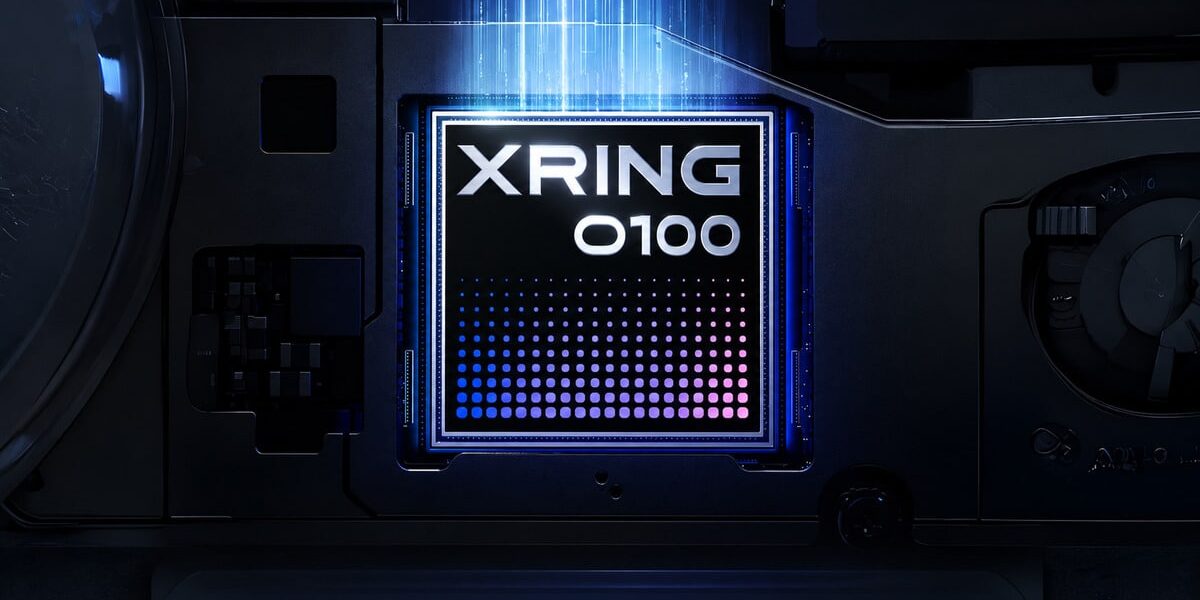
Xiaomi has unveiled the Xring O100, a dedicated AI accelerator chip designed to enhance on-device artificial intelligence capabilities. The new chip is part of Xiaomi’s broader semiconductor strategy, which includes the development of advanced packaging solutions and multi-core NPU architectures.
Founder, chairman, and CEO Lei Jun announced the Xring O100 during Xiaomi’s Autumn flagship product launch event. The chip is built on a 6nm 3D wafer-level stacked advanced packaging solution, providing up to 1.22TB/s of memory bandwidth. This is 16 times the memory bandwidth of traditional mobile phones, significantly boosting on-device AI performance.

According to Xiaomi, the Xring O100 is the world’s first 6nm 3D wafer-level stacked advanced packaging solution. It uses an advanced hybrid bonding process, which reduces the physical distance between processing components and memory, allowing for faster data transfer and improved token-generation speeds for local AI models.
The chip employs a multi-core NPU architecture optimized for different stages of AI inference and supports dynamic data routing. This allows for more efficient handling of workloads depending on the task. Xiaomi has already demonstrated prototype devices using the Xring O100, including tablet-style systems and its Xiaomi AI Cube mini-PC.
Xiaomi expects commercial applications for the Xring O100 to begin in 2027. The chip is intended for use in a range of devices, including smartphones, tablets, and robotics, where powerful local AI processing is required. The company’s goal is to make generative AI faster, more private, and usable even without an internet connection.
The Xring O100 forms part of Xiaomi’s wider Xring chip strategy, which also includes flagship mobile processors and chips designed for vehicles. Xiaomi is investing in improved memory bandwidth and advanced packaging technologies, rather than focusing solely on smaller manufacturing processes.
The new chip is designed to address a major limitation for running large language models on edge devices. By reducing the memory bottleneck, the Xring O100 aims to improve AI performance and make on-device AI more efficient and reliable.
Xiaomi’s commitment to developing its own semiconductor technology is a significant move in the tech industry. The company’s strategy is to enhance the capabilities of its devices and provide users with more private and efficient AI experiences.