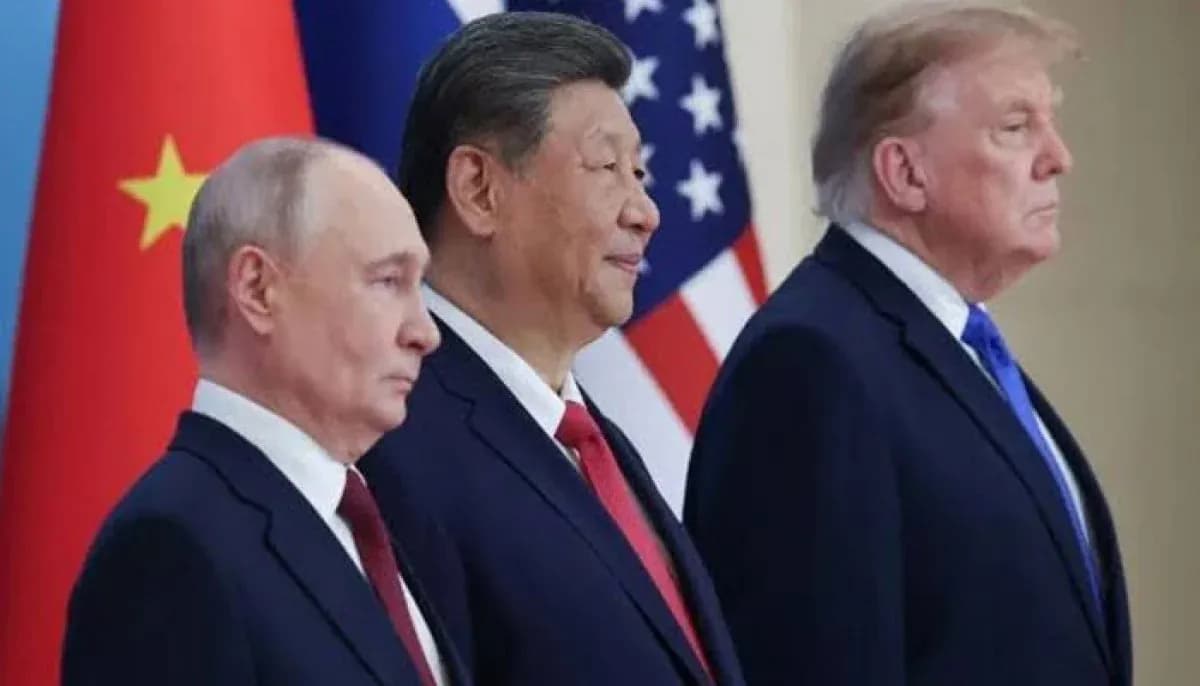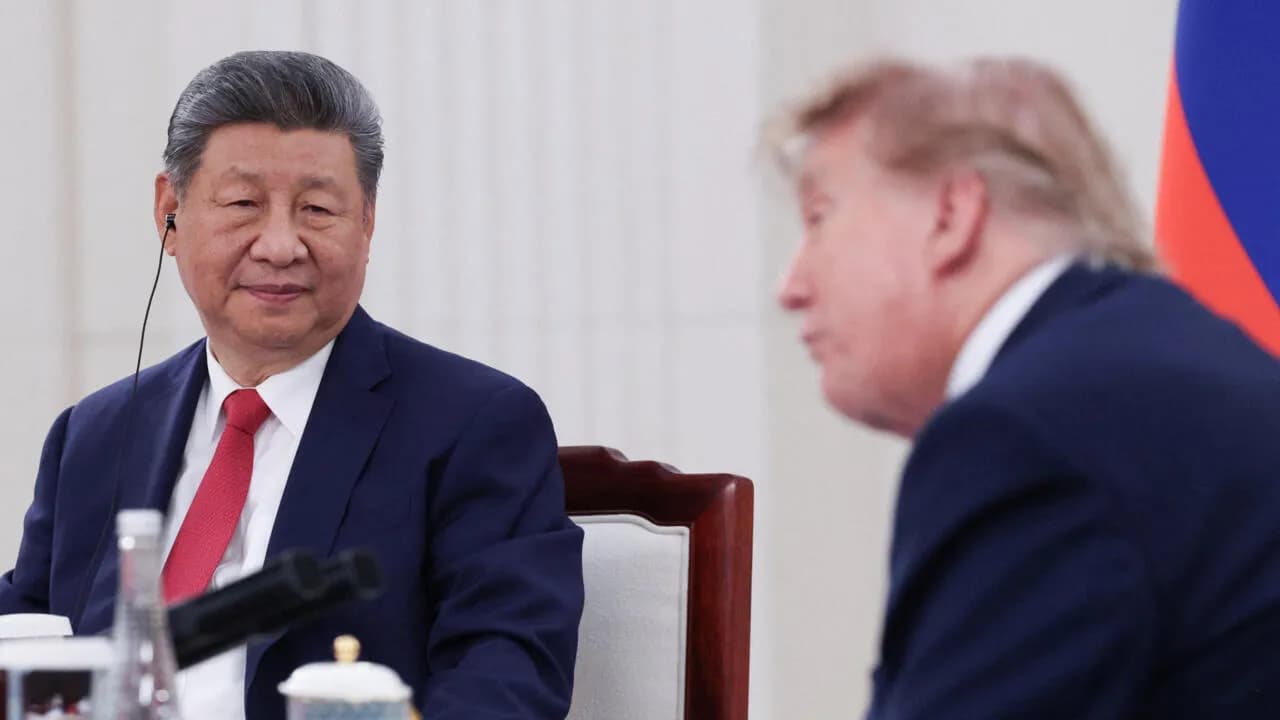
The trade war between the United States and China appears no closer to a resolution following a three-way meeting between US President Donald Trump, Chinese President Xi Jinping, and Russian President Vladimir Putin in the Chinese tech hub of Shenzhen on Thursday.
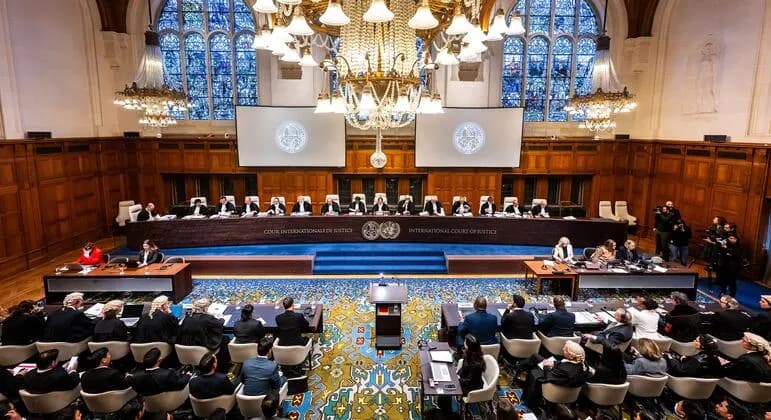
The meeting lasted 90 minutes, leaving the specific details of the discussions between the three leaders a mystery. The subsequent joint “Declaration toward Peace” issued by Beijing and Moscow contained only limited information, including unspecified UN reforms, an agreement to increase global oil production, a terse warning to the International Criminal Court and other global bodies not to “abuse their jurisdiction,” and a shared agreement that nuclear wars leave no winners.
While some watchers feared the meeting on the sidelines of the Asia-Pacific Economic Cooperation forum would mirror the 1945 Yalta Conference, Jean-François Di Meglio, steering committee chair of the Asia Centre think tank, told France24 that the comparison does not hold up. Di Meglio stated, “The term ‘multipolarity’ is essential – and that’s why the comparison that’s often been made with Yalta doesn’t work,” and explained, “Because there was a form of membership, a system where each participants’ differences were recognised … Whereas here, what matters most is China’s refusal in principle of a single world order under the aegis of common principles.”
Di Meglio noted that China’s push for multipolarity is a guiding principle intended to give more weight to the Global South, but he suggested it may be driven by self-interest rather than altruism. He told France24, “While this multipolarity – which is being preached with a certain degree of opportunism, as we can see all too clearly in the way this meeting has been organised – is indeed China’s guiding principle, is it a sincere one or not? It is obvious that everything is being done in China’s best interest.”
The trade tensions remain high despite the warm words exchanged between Trump and Xi. A reprieve from Beijing's threat to withhold rare earth exports ends in January. China has leveraged its dominance in rare earth and critical mineral supply chains to counter US tariffs, while the US tightened rules on Monday regarding the export of advanced computing chips for AI development and restricted Chinese access to overseas data centres.
Di Meglio suggested that with Democrats now holding the House and Senate, foreign policy will be a priority for Trump in his final two years. He noted, “Artificial intelligence has raw materials, and those raw materials are rare earths,” and added, “And in Donald Trump’s mind, figuring out how to break this deadlock must be very, very high on his list of priorities.”
While the US is investing in its own rare earth supply chains, Di Meglio said these projects will take years. He observed that both nations are attempting to manage a decoupling from their economic interdependence. “There is both a willingness to decouple and, at the same time, the recognition that this decoupling can’t happen overnight, that it has to be managed,” Di Meglio said, noting that China may have a head start by entering an autonomous war economy.