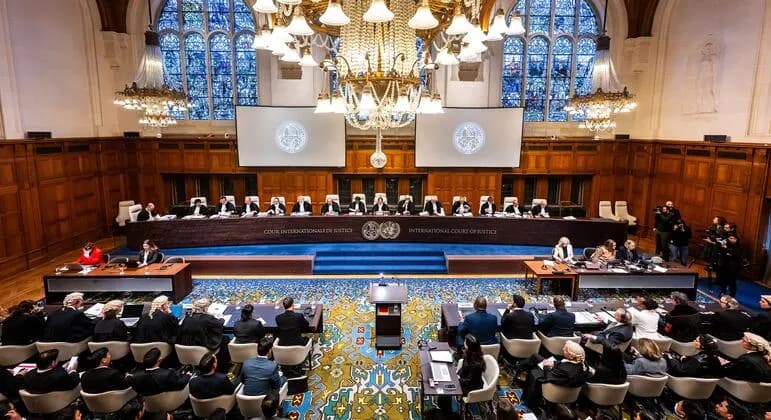
The International Court of Justice (ICJ) delivered its judgment on Thursday, finding Myanmar responsible for the crime of genocide against the country’s ethnic Rohingya. This marks the first time the court has held a state responsible for genocide. The ruling follows a case initiated by The Gambia in November 2019.
Presiding Judge Yuji Iwasawa of Japan delivered the ruling, stating that the Republic of the Union of Myanmar has committed genocide against the Rohingya group in Northern Rakhine State. Iwasawa detailed how Myanmar’s military perpetrated “extreme violence” against mainly Muslim Rohingya communities. He stated, “The court finds that Myanmar’s security forces killed thousands of Rohingya civilians, perpetrated widespread acts of sexual violence as well as acts of extreme violence against children and attacked fleeing Rohingya.”
The court found that Myanmar’s security forces and other State organs intentionally committed acts prohibited by Article II of the Genocide Convention. These include killing members of a group, causing serious bodily or mental harm, and imposing measures intended to prevent births within the group. The court noted that the murder of infants “supports the inference that Myanmar’s security forces acted with the intent to prevent births among the group.”
The judgment was based on graphic evidence and testimonies from survivors in the villages of Min Gyi, Chut Pyin, and Maung Nu. The court heard that nearly 400 villages—approximately 40 per cent of the almost 1,000 villages in the three townships of northern Rakhine state—were partially or totally destroyed during and after the 2017 clearance operations. Judge Iwasawa explained that “Bulldozing and large-scale terrain clearance often followed the destruction…in turn, rapid construction took place on the cleared sites, including security installations, new villages and houses, and other civilian infrastructure.”
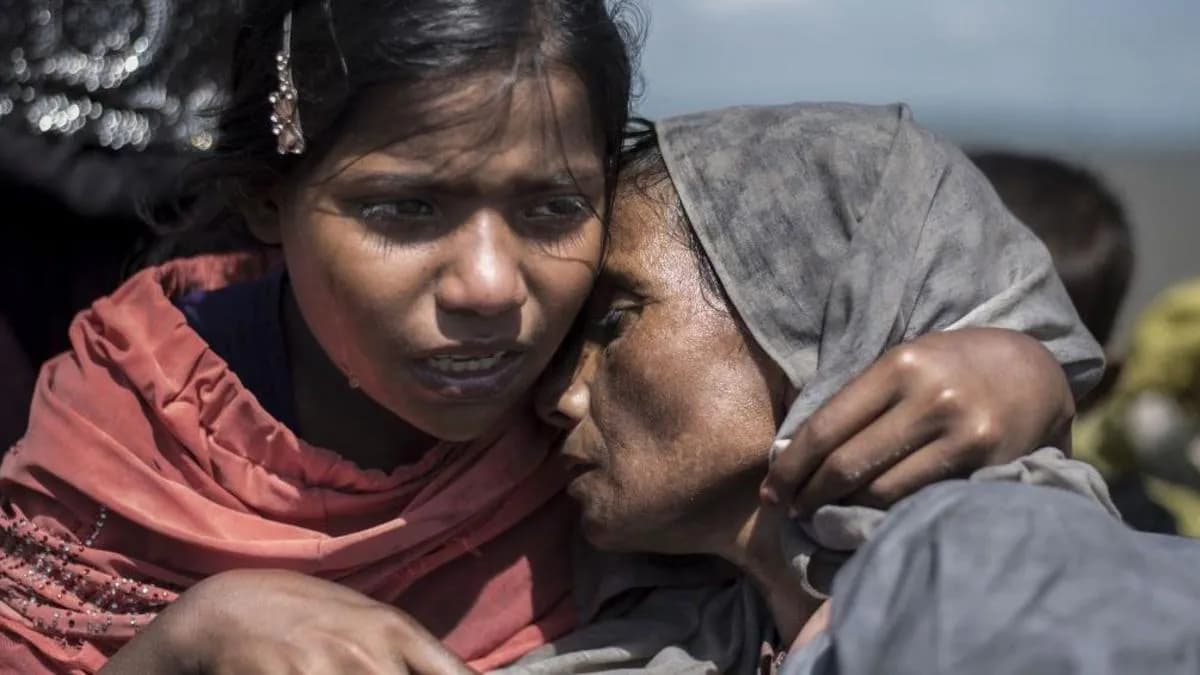
The court cited supporting evidence that an estimated 10,000 Rohingya were killed during the operations, which prompted roughly 700,000 Rohingya to flee across the border to Bangladesh. The panel of 15 judges concluded that “the only reasonable inference that can explain Myanmar’s actions is an intention to destroy a substantial part of the protected group namely the Rohingya population in Northern Rakhine state.”
UN Secretary-General António Guterres welcomed the judgment as a “powerful recognition of the Rohingya victims of genocide. It is a demonstration of international justice and a reaffirmation that impunity for such horrific acts must not stand.” Guterres added that the judgment “will be studied carefully within the United Nations. International law, including the Genocide Convention, must be respected by all.”
As a consequence of the breaches, the Court ordered Myanmar to cease ongoing violations by enacting legislation to give full effect to its obligations under the Convention. Myanmar must take immediate steps to investigate and, if warranted, prosecute and punish all persons reasonably suspected of committing acts contrary to the Convention. The ruling also orders Myanmar to provide assurances of non-repetition, adopt measures of restitution—including allowing the safe, voluntary, and dignified return of displaced Rohingya and the reunification of families—and to compensate the Rohingya group for the damage caused. Myanmar is required to transmit a report within two years of the judgment regarding the measures of restitution adopted and the amount and modalities of compensation.
The judgment is final and binding on the parties to the case and without appeal. While the ICJ settles disputes between states and rules on breaches of international treaties, it has very limited options to enforce its rulings and is distinct from the International Criminal Court, which prosecutes individuals.