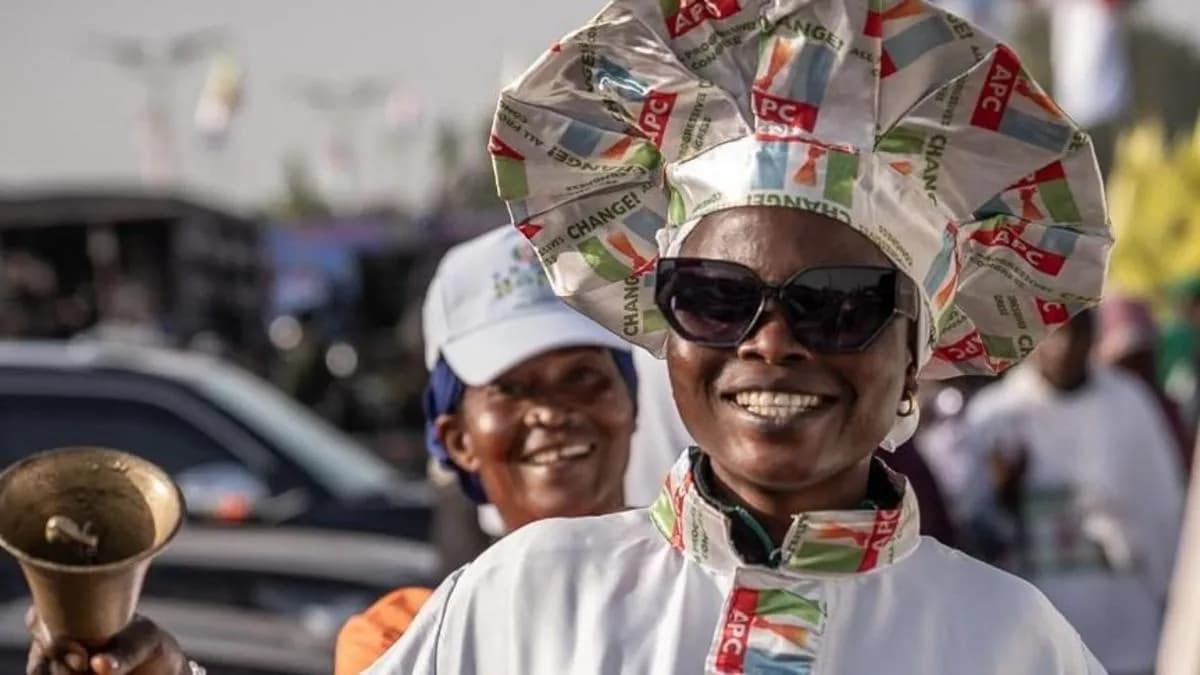
Nigerian youth are struggling to shape the country's political future despite making up about 80% of the population. While young people have demonstrated the ability to mobilise for change in the past, high costs and cultural attitudes remain significant obstacles to their participation in the upcoming January general elections.
Abdulhadi Dalhatu, a 38-year-old candidate for a seat in the northern Kano state assembly, highlights the disparity between the youth population and the current political leadership. "Younger people are the majority in this country and should be deciding the future," Dalhatu told the BBC. However, the current political landscape is dominated by older figures. President Bola Tinubu is 74, and his main challengers include 79-year-old Atiku Abubakar and 65-year-old Peter Obi. Of the 18 presidential candidates, only 35-year-old businessman Moses Olusoji Adebisi is under 40.
The movement had built on the momentum of the EndSars protests in 2020, which grew into one of Nigeria's biggest youth-led movement in decades. Initially sparked by anger over police brutality, the demonstrators developed into a wider call for political reform, accountability and greater youth participation in governance. But the protests were eventually crushed by the authorities. About 56 were reportedly killed, although officials dispute this figure, while hundreds were arrested and some had their bank accounts frozen. Both EndSars and the Obedients demonstrated the capacity of young Nigerians to mobile around political causes. But turning that enthusiasm into sustained electoral participation has proved much harder. The "Obedients" movement, which supported Peter Obi, was built on a promise of a break from the established political order, appealing particularly to young people struggling to find jobs and earn a decent living. But his failure to win the presidency left many of his supporters disillusioned. Former Obedient Nonso Chukwudi told the BBC, "At the time we were so hopeful, but unfortunately the result wasn't what we wanted, which made many lose hope in the system."
This disillusionment is reflected in voter registration. While total registered voters increased by 10 million to over 103 million since the last election, enrolment of those under 35 fell by about seven million. Young people now account for just 29% of registered voters, down from 40% in 2023. Hajara Musa, 33, stated she has no plans to vote because "I just feel like things are already determined and I'll just be wasting my time. It is going to be the same people all over again."
Dalhatu argues that many young people choose social media over active involvement, stating, "Unfortunately, many prefer to just post on social media." However, he identifies money as a primary barrier. Dalhatu, who runs under Obi's Nigeria Democratic Congress, has had to abandon campaigns in the past due to a lack of funds. He noted, "I have been in politics for many years and I will tell you that young people in this country lack the resources to become president."
The financial barriers are high. The cost of running for office in Nigeria is notoriously high, with the spending limit for presidential campaigns doubling since the 2023 elections. Furthermore, the ruling All Progressive Congress (APC), the Peoples Democratic Party (PDP), and the African Democratic Congress (ADC) have each set presidential nomination fees at 100m naira ($74,000; £56,000).
Fatima Zahra Umar, a young politician in the APC, noted that "Young Nigerians are poor. Nigerian politics is cash-intensive, so participation is guided by money." She added that young people are often content with small roles as special advisors. Political analyst Seun Ajayi suggested that some brilliant young people are simply not interested or are satisfied with small roles, noting, "The old men are not going to sit idle and allow us to push them out. We have to fight for the big positions, but at the moment I don't see the zeal."
Umar also pointed to cultural barriers, stating, "Culturally, we are not primed to trust or accept the brilliance of a younger person, so it will be very difficult."
Entertainer Charly Boy recently used the success of young candidates in the US midterm elections to urge Nigerians to take action. He wrote on X that the results served as a warning to Nigerian politicians and called on youth to interrogate candidates on jobs and security, writing: "Democracy is not a spectator sport, nor is it about sharing rice."