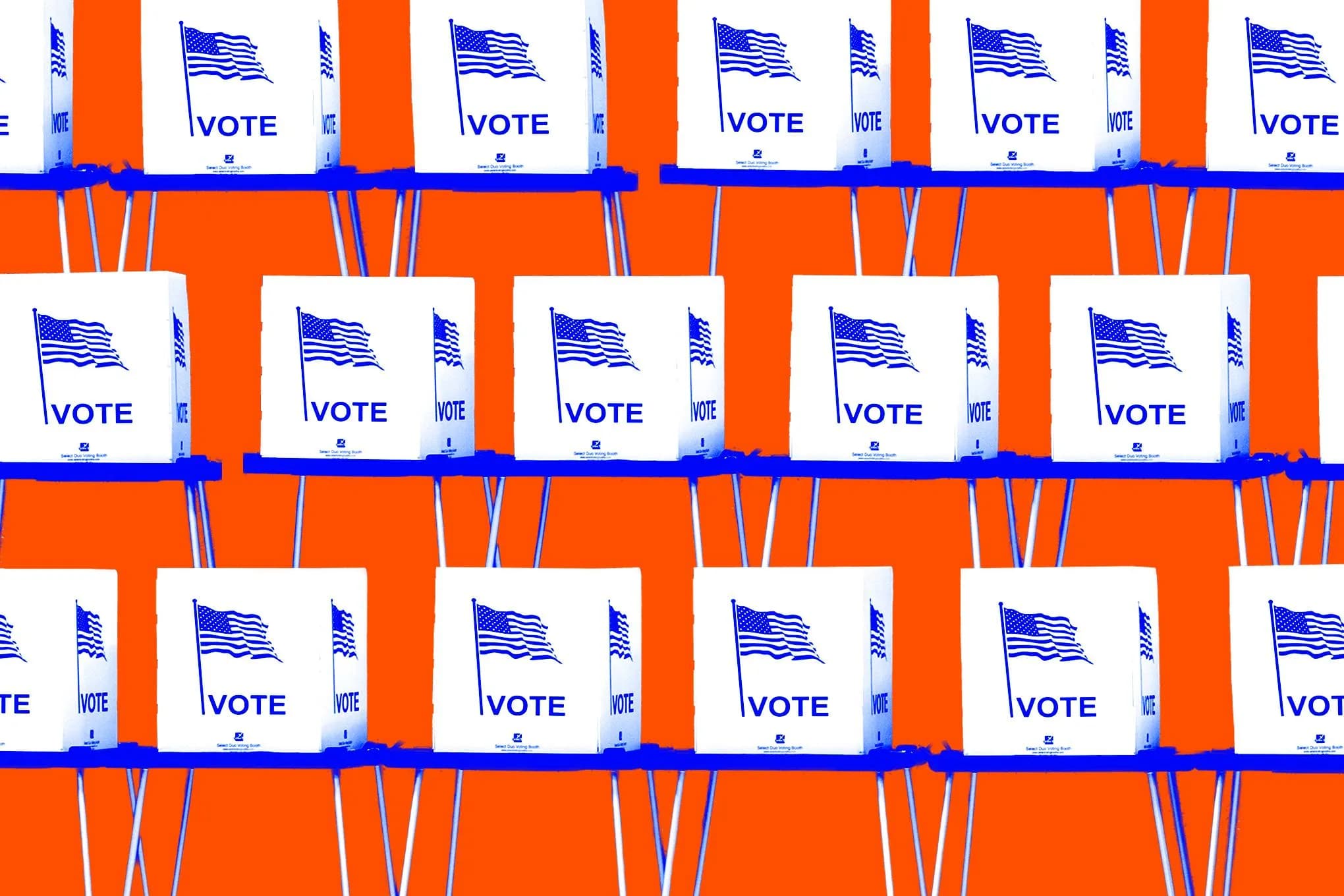
Democrats secured a historic victory on Tuesday night, taking control of the House and the Senate while winning key seats in traditionally red and swing states. The "blue wave" included the election of the nation’s first Black woman governor in Georgia, the country’s first Native American woman governor in New Mexico, and a Democrat winning a Maine Senate seat after 30 years of Republican control. A central theme of these campaigns was holding AI companies accountable to the American people.
The results are being described as a "total repudiation" of the AI field by Wes McEnany, former Deputy Labor Policy Director of the Senate Committee on Health, Education, Labor, & Pensions. McEnany stated that AI affects every aspect of life, from job applications to electricity bills, and that people are tired of lacking agency in those conversations.
The most immediate impact is a bipartisan backlash against data center construction. On Tuesday's ballots, 43 out of 44 local data center moratoria passed. In Texas, a key battleground, governor-elect Gina Hinojosa announced plans to issue a moratorium on all data center approvals until the legislature can pass laws to protect residents. Guru Sethupathy, GM of AI governance at Optro, noted that data centers were clearly on the ballot. An NBC News poll conducted on Tuesday showed 76 percent of voters opposed data centers in their communities due to concerns over noise and electricity rates.
Industry leaders are reacting with private concern. According to The Wall Street Journal, CEOs have discussed significant compute capacity constraints following the results, specifically regarding OpenAI. Dina Powell McCormick, Meta’s platforms president, said many are considering moving data center construction abroad. While some executives may blame the results for a lack of revenue for investors, many incoming leaders have promised to drag CEOs to testify.
The victory likely ends attempts by Republicans to bar state-level AI restrictions. Shaunna Thomas of the Guardrails Alliance considers those attempts "completely dead," while McEnany suggested any member voting to wipe out state AI laws would be looking for a new job in the next election. Kyle Jacobs-Morse of The Tech Oversight Project expects to see more "tech accountability bills," noting that Democratic campaigns in Texas, Georgia, and Ohio prioritized local issues like "spillover costs" for residents.
While some tech advocates see the results as a way to prevent an AI bubble burst, others view it as a reckoning on affordability and safety. Analysts at Yorkville Ives & Co. warned of "major hurdles" for AI legislation and a potential slowdown of up to 1,000 planned data centers nationwide.
Regarding safety, Sen. Jon Ossoff (D-Ga.) criticized Silicon Valley "titans" for warning of human extinction while digging bunkers for themselves. Some safety legislation is already under consideration, such as a bill to "ban superintelligence" introduced in September by Sen. Bernie Sanders and Rep. Greg Casar. While President Trump has dismissed AI safety concerns as a "hoax," Republican lawmakers will now have to decide whether to negotiate with Democrats on safety-focused policies. Adam Kovacevich of the Chamber of Progress expects AI safety legislation to continue in blue states, though he noted there are many open questions about whether the next era will resemble the Biden, Obama, or a different era of tech policy.