Key Takeaways
- The Supreme Court is seeking the Attorney General’s opinion on whether it or the Federal Constitutional Court has jurisdiction to hear petitions for Imran Khan’s hospital transfer.
- A three-member bench heard petitions filed by Uzma Khan and PTI leaders on Wednesday.
- The Supreme Court is concerned about the fixation of cases before the Federal Constitutional Court, which it deems unconstitutional.
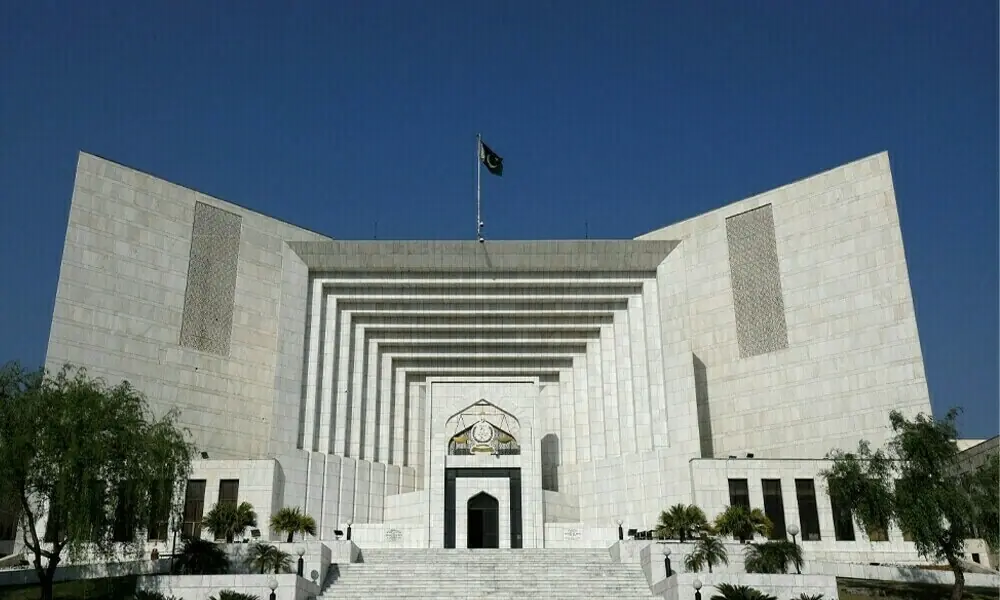
The Supreme Court of Pakistan has sought the Attorney General’s (AGP) views on whether the Supreme Court or the Federal Constitutional Court (FCC) has the authority to hear petitions seeking the transfer of former Prime Minister Imran Khan to a private hospital for medical examination.
The matter was brought to the attention of the Supreme Court following a three-member bench hearing petitions filed by Uzma Khan and Pakistan Tehreek-e-Insaf (PTI) leaders on Wednesday.
On August 18, the bench had directed the government to shift Imran Khan to Shifa International Hospital, Islamabad, for medical examination. However, the FCC, while hearing appeals of three Adiala Jail prisoners, requisitioned the record from the Supreme Court and the High Courts on September 15 and 26.
In its order, the FCC directed its office to requisition the record of cases related to Imran Khan’s medical check-up from the Supreme Court of Pakistan through its Registrar and fix them along with the appeals arising out of these petitions for hearing.
Justice Shahid Waheed, speaking during the proceedings, expressed concern over the fixation of cases before the FCC, stating that such an action does not fall under Article 175-E (5) of the Constitution, which allows the FCC to call for the record of any case pending before any court.
According to the Supreme Court’s written order, the FCC’s order raises questions of considerable constitutional and legal significance, including the interpretation and application of the Constitution, relevant provisions of law, and applicable principles of Islamic law.
The Supreme Court considered it appropriate to seek the assistance of the Attorney General for Pakistan regarding the proper course of action in these proceedings, particularly in light of the FCC order.
Attorney General Mansoor Usman Awan submitted that the situation is unprecedented and requires careful examination. He sought three weeks to prepare his submissions to effectively assist the Court.
Meanwhile, the counsels of Uzma Khan and other petitioners requested the court to pass an order for the non-compliance of its August 18 decision.